


How Rear Seat Infotainment Is Redefining Car Travel
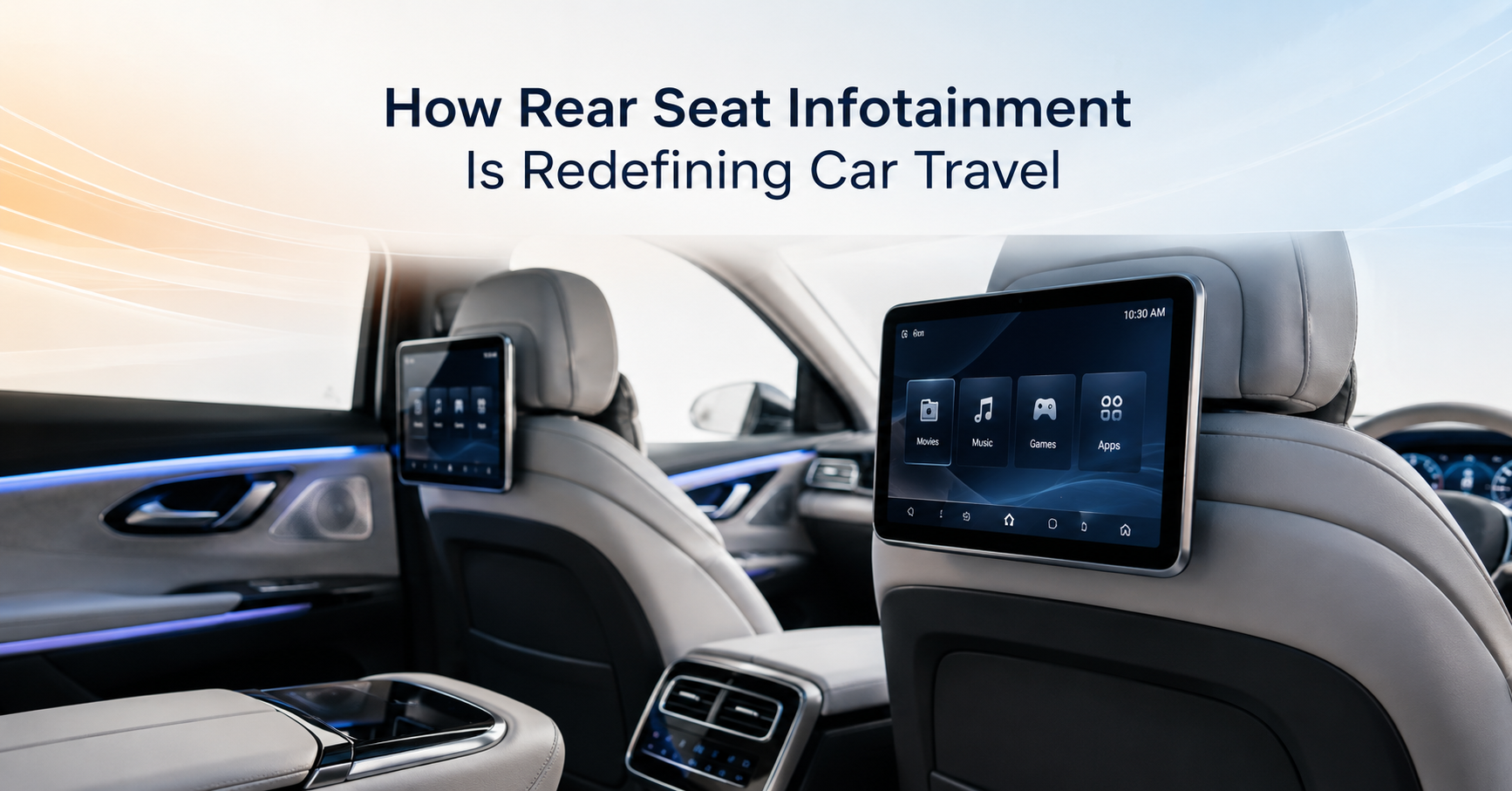
Vehicle interiors are rapidly evolving from functional transport spaces into digitally connected environments designed around passenger experience. Rear seat infotainment is becoming an important part of this transition as automakers rethink how occupants interact with entertainment, information, and connected services during a journey. High-resolution displays, streaming capabilities, interactive interfaces, and personalized digital functions are increasingly influencing the design of modern passenger cabins.
This shift is particularly visible across premium vehicles, electric cars, and technology-focused passenger models, where digital cabin features can contribute to product differentiation. Advances in connected in-car entertainment systems are allowing rear passengers to access content with greater independence instead of relying entirely on a central dashboard interface. The result is a more passenger-oriented approach to automotive digital experience.
According to an analysis published by MarkNtel Advisors, the rear seat infotainment sector is projected to expand from around USD 8.32 billion in 2026 to USD 14.20 billion by 2032, reflecting an estimated CAGR of 9.32% during 2026–2032. The outlook indicates how connected mobility, digital cabin development, and changing expectations for in-vehicle experiences are influencing infotainment strategies across the automotive ecosystem.
Passenger Expectations Are Reshaping Vehicle Interiors
Consumers increasingly carry digital habits from homes and mobile devices into their vehicles. Streaming video, connected audio, gaming, and personalized content access have become familiar parts of everyday life. Rear seat systems are adapting to these behaviors by offering more flexible interfaces and entertainment choices, particularly during long-distance journeys or regular urban travel. Modern rear-seat displays can support music, video, games, and real-time streaming through connected vehicle systems.
The change is also encouraging automakers to consider rear passengers as distinct digital users. A single entertainment feed may no longer meet the expectations of families or groups travelling together. Individual screens, wireless audio connections, user profiles, and separate content controls can allow occupants to choose different experiences. Such personalization is helping move vehicle cabins closer to multi-user digital environments rather than traditional shared entertainment spaces.
Connectivity Is Becoming Central to Infotainment Design
Rear seat entertainment once depended heavily on physical media and locally stored content. Connected vehicle architectures are changing that model. Internet-enabled platforms can support streaming applications, cloud-connected services, software updates, and broader integration with mobile devices. This approach enables infotainment functions to evolve after a vehicle has entered service, provided the underlying hardware and software architecture supports continued updates.
The wider movement toward software-defined vehicles is especially relevant to infotainment development. Software-defined vehicles use software as a primary mechanism for determining and updating vehicle functionality rather than depending solely on fixed hardware configurations. This architecture can support more adaptable digital services and connected experiences across different vehicle domains.
For rear passengers, the impact may be seen through more responsive interfaces, application integration, personalized profiles, and improved synchronization between displays. Infotainment platforms may also connect with broader cabin functions, creating a more cohesive digital environment. However, automakers and technology suppliers must balance expanding software capabilities with system reliability, compatibility, data protection, and long-term support requirements.
Display Hardware Remains a Critical Technology Layer
Although software is gaining strategic importance, hardware remains fundamental to rear seat infotainment performance. The MarkNtel Advisors analysis indicates that hardware is expected to account for nearly 72% of the sector in 2026. Displays, processors, connectivity modules, mounting systems, and audio components collectively shape how passengers experience digital content inside a moving vehicle.
Screen quality is particularly important because automotive displays operate under conditions that differ significantly from home entertainment devices. Variable lighting, vibration, temperature changes, viewing angles, and limited cabin space influence display engineering. Manufacturers must consider brightness, resolution, responsiveness, durability, and efficient integration into seatbacks, headrests, or other cabin surfaces while maintaining the overall interior design language.
Audio technology is another area receiving greater attention. Personal sound zones and headrest-integrated speakers can provide a more individualized listening environment while reducing interference between passengers. Recent research into headrest-integrated loudspeakers has highlighted their potential to improve audio perception in immersive automotive listening scenarios.
Electric Vehicles Are Creating New Cabin Opportunities
Electric vehicles are contributing to a broader reconsideration of the passenger cabin. As automotive manufacturers develop digitally focused EV platforms, interior technology is often treated as an important part of the overall ownership experience. Large displays, connected applications, advanced audio, and integrated software platforms can complement the technology-led positioning of electric mobility and provide additional opportunities for rear seat entertainment integration.
Vehicle charging time may also influence how occupants interact with in-cabin digital systems. When a vehicle is stationary during charging, entertainment functions can offer passengers access to video, gaming, or other digital services. This creates an additional use case beyond entertainment during travel and encourages developers to consider how infotainment interfaces operate across driving, parked, and charging situations.
Regional Automotive Digitization Is Influencing Adoption
Asia-Pacific is expected to represent approximately 39% of rear seat infotainment revenue in 2026, according to the MarkNtel Advisors study. The region's automotive manufacturing base, connected mobility development, and competition around digital cabin technologies are shaping infotainment adoption. Vehicle manufacturers increasingly use interior technology to distinguish models within highly competitive passenger vehicle categories.
Elsewhere, premium vehicle demand and the development of connected car platforms continue to influence infotainment strategies. Adoption patterns can differ according to vehicle pricing, connectivity infrastructure, consumer preferences, and automaker technology roadmaps. Consequently, rear seat entertainment solutions are likely to vary between integrated premium systems and more scalable configurations designed for broader vehicle segments.
Integration and Cybersecurity Remain Important Challenges
Increasing connectivity introduces technical considerations that extend beyond entertainment quality. Infotainment platforms can interact with wireless networks, smartphones, cloud services, and broader vehicle software architectures. Each connection requires careful attention to data management and cybersecurity. Manufacturers must design systems that protect passenger information while maintaining stable access to connected features and supporting secure software updates.
Integration complexity is another challenge. Automotive development cycles are generally longer than consumer electronics cycles, while passenger expectations for digital technology can change quickly. Hardware must remain useful for years even as applications, operating systems, and content formats evolve. Modular architectures and update-capable software may help address this gap, although long-term compatibility remains an important engineering consideration.
A More Personalized Future for the Connected Cabin
Rear seat infotainment is evolving into a broader passenger experience platform shaped by connectivity, display innovation, software integration, and personalization. The technology is no longer limited to playing media on a fixed screen. It is increasingly connected to the wider digital architecture of the vehicle and to the individual preferences of passengers using the cabin.
As vehicle platforms become more software-oriented, infotainment development will require close coordination among automakers, display specialists, software developers, connectivity providers, and automotive suppliers. The direction of development suggests a gradual move toward adaptable and individualized passenger experiences, while cybersecurity, hardware durability, and long-term software support will remain central to responsible implementation.

 Arabic
 French
 Spanish
 Portuguese
 Deutsch
 Turkish
 Dutch
Dutch
 Italiano
 Russian
 Romaian
 Portuguese (Brazil)
 Greek
Greek