


10 Women's Health Screenings You Should Never Skip
I've spent years working with women who come to me with the same story. They knew something felt off. They'd noticed changes. They'd even thought about making an appointment. But life got in the way. Work was busy. The kids needed attention. They convinced themselves it was probably nothing.
And then they finally came in, and we found something that should have been caught earlier.
I'm not telling you this to guilt you. I'm telling you because I want you to understand something important: preventive screenings aren't optional extras in your healthcare routine. They're essential. They're the difference between catching something early when it's easily treatable and discovering it later when the options are more limited.
So let's walk through the ten screenings that should be non-negotiable in your life. Not because I want to scare you, but because I want you to have the information you need to take care of yourself.
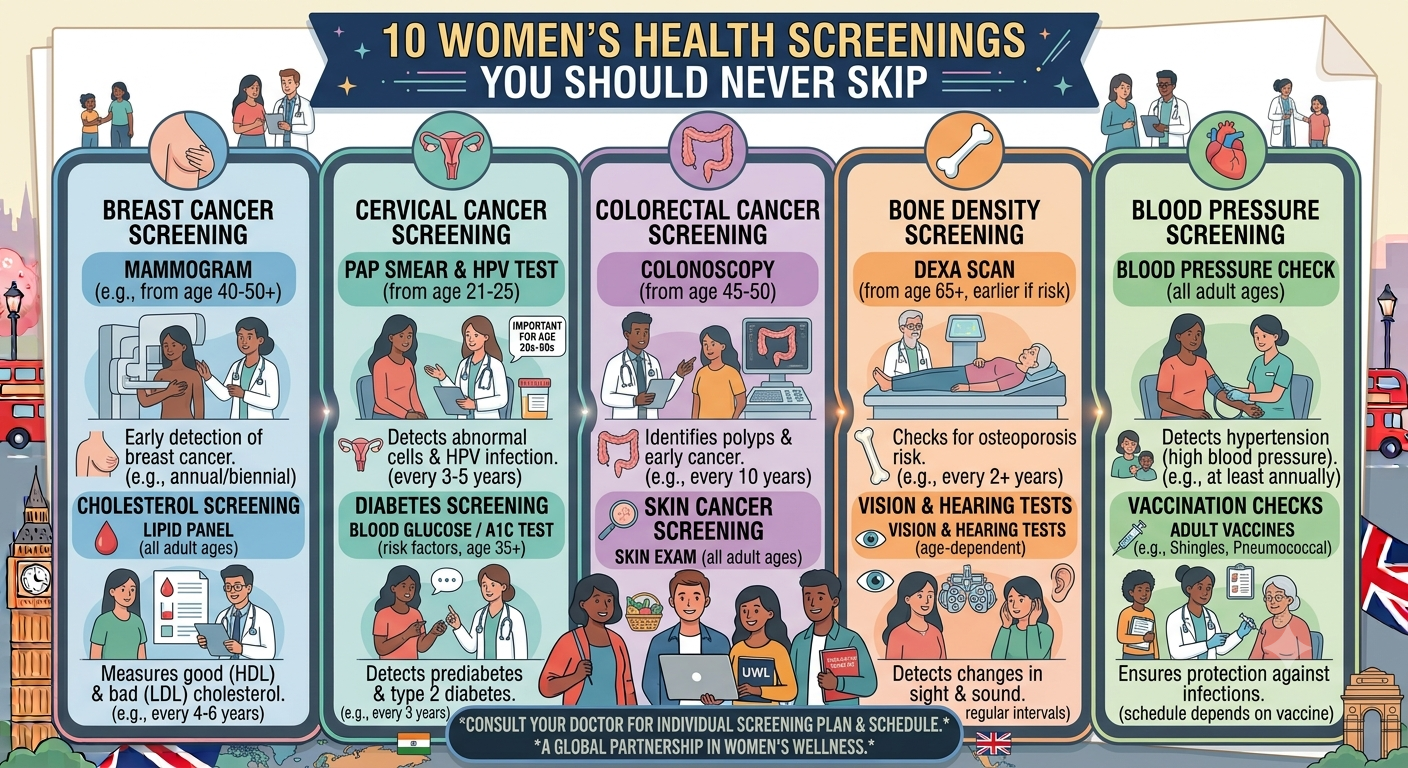
Health screening a women should not miss
1. The Pap Smear: Your Cervical Health Check
This is the screening that most women know about, but too many are still skipping. The Pap smear looks for abnormal cells on the cervix that could develop into cervical cancer if left untreated.
Here's what I want you to understand: cervical cancer is one of the most preventable cancers. When caught early, it's highly treatable. And the Pap smear makes early detection possible.
Current guidelines recommend that women start getting Pap smears at age 21. Between 21 and 29, you should have one every three years. Between 30 and 65, you can have a Pap smear every three years or combine it with HPV testing every five years.
If you've never had one, or if it's been more than three years, it's time. I know it's not comfortable. I know the idea of the exam makes many women anxious. But the peace of mind is worth it.
2. HPV Testing: Understanding Your Risk
Human papillomavirus (HPV) is the most common sexually transmitted infection, and certain strains are linked to cervical cancer. HPV testing is often done alongside the Pap smear for women over 30.
What many women don't realise is that most HPV infections clear on their own. But when high-risk strains persist, they can cause cellular changes that lead to cancer. Knowing your HPV status helps determine how often you need screening and whether further testing is needed.
If you're over 30, talk to your doctor about co-testing. It provides a more complete picture of your cervical health.
3. The Pelvic Exam: More Than Just a Routine
The pelvic exam is often treated like it’s only some add-on, kind of part of the Pap smear process, but really it’s useful in its own way, you know. During a pelvic exam, your doctor checks your reproductive organs for anything unusual. They look for signs of infection, cysts, fibroids, or other problems that could be influencing your health.
I've seen women who came in for a routine pelvic exam and discovered something they had no idea about. An ovarian cyst they'd been living with. An infection they'd mistaken for normal discharge. Changes in their uterus that explained the heavy periods they'd just been accepting as normal.
Your annual pelvic exam is your opportunity to discuss any concerns you have about your reproductive health, and to have a professional check for things you can't see or feel.
4. Breast Cancer Screening: Mammograms Matter
Breast cancer is one of the most common cancers in women, and mammography remains one of the most effective tools for early detection. The guidelines have changed over the years, and there's been some confusion about when to start and how often to go.
Here's my recommendation: start having annual mammograms at age 40. If you have a family history of breast cancer or other risk factors, talk to your doctor about starting earlier.
I've had patients tell me they were nervous about mammograms. They'd heard about the discomfort. They were worried about radiation. But I've also had patients tell me that their mammogram saved their life. Caught early, breast cancer has a five-year survival rate of over 90%.
Don't skip this one. It's too important.
5. Clinical Breast Exam: A Complementary Check
The clinical breast exam is done by your healthcare provider when you’re in for your regular visits, like the ones you schedule routinely. They look around for lumps, see if there are changes in the breast tissue, and also notice other oddities that might ask for more investigation later.
This isn't a replacement for mammography, but it's a valuable complement. Some cancers aren't visible on a mammogram. Some changes are better detected through physical examination. And for women under 40 who aren't yet eligible for mammograms, the clinical breast exam is an important screening tool.
Between your clinical breast exams, you should also be doing monthly self-exams. Know your breasts. Understand what feels normal for you. If you notice any changes, bring them up with your doctor.
6. Bone Density Testing: Protecting Your Skeleton
Osteoporosis is basically a condition where bones get weaker, they turn out brittle too, and that makes fractures more likely. It hits huge numbers of women, in particular once menopause starts, when estrogen levels drop.
Bone density testing, or DEXA scanning, is what people use to check bone mineral density. With that result, you can get a clearer idea about fracture risk. Usually the exam is quick, pretty much painless, and it’s non-invasive. For many women it starts around age 65, but honestly, if you have certain risk factors—like a family history of osteoporosis, early menopause, or long-term steroid use—then you might need to start sooner, no later, depending on your clinician.
This kind of screening matters a lot, because osteoporosis is largely preventable, and also manageable once you catch it. Lifestyle changes and medication can help, but you can’t manage what you don’t know about.
7. Cholesterol and Lipid Profile: Heart Health Matters
Heart disease is the leading cause of death in women, and high cholesterol is a major risk factor. Yet many women assume heart disease is a "man's problem." It's not.
Your cholesterol and lipid profile measure different types of fats in your blood: LDL (bad cholesterol), HDL (good cholesterol), and triglycerides. High levels of LDL and triglycerides increase your risk of heart disease and stroke.
The screening should begin at age 20 and be repeated every four to six years, or more frequently if you have risk factors like obesity, diabetes, or a family history of heart disease.
8. Blood Pressure Screening: The Silent Killer
High blood pressure is called the silent killer for a reason. Most people with high blood pressure have no symptoms. They feel fine. But their blood vessels are being damaged every single day.
High blood pressure increases your risk of heart attack, stroke, kidney disease, and other serious conditions. It's also completely manageable with lifestyle changes and medication.
Your blood pressure should be checked at every routine healthcare visit. If it's elevated, your doctor will discuss treatment options and recommend a monitoring schedule.
9. Diabetes Screening: Know Your Numbers
Type 2 diabetes seems to be showing up more often in women, particularly if there are risk factors like obesity, family history, or even a past of gestational diabetes. The good news is, you can prevent it or at least delay it with lifestyle changes, though it is still important to figure out where you stand. so the first step is knowing if you are at risk.
For screening, doctors usually use a simple blood test that checks your blood sugar levels. In many cases it begins around age 45, but if you have risk factors you may need to start sooner than that, and sometimes sooner is a must.
10. Thyroid Function Tests: The Overlooked Hormone
Thyroid disorders show up way more often in women than in men, and in a lot of cases they slip by without being properly diagnosed. With an underactive thyroid, also called hypothyroidism, people may feel tired, gain weight, sink into depression, and deal with very heavy periods. On the other hand an overactive thyroid, or hyperthyroidism, can bring on a jittery sort of anxiety, sudden weight loss, and menstrual cycles that become irregular.
The thyroid screening is a simple blood test that measures thyroid-stimulating hormone (TSH) levels. If you've been experiencing unexplained fatigue, weight changes, or mood changes, this is a test to discuss with your doctor.
Finding the Right Care
If you're due for any of these screenings, please don't delay. Your health is not something to postpone or compromise.
Consult with Gynecologist in South Delhi today if you're in the region and need these essential screenings. Book your consultation with best gynecologist in south delhi to ensure you're getting comprehensive, personalised care.
A Final Word
I understand that healthcare can feel overwhelming. The appointments, the tests, the waiting for results. It's natural to feel anxious or to want to avoid it. But what I've learned is that the women who prioritise their preventive health are the women who catch problems early, who have fewer complications, and who live healthier lives.
Don't wait until something goes wrong. Don't assume you're fine because you feel fine. Many conditions that affect women's health don't have symptoms in their early stages. That's why screenings are so important.
Make the call. Schedule the appointment. Get the tests done. It's not selfish to take care of yourself. It's essential.
Consult with Gynecologist in South Delhi today. Book your consultation with best gynecologist in south delhi and invest in your health and future. Your family needs you. But first, you need yourself.

 Arabic
 French
 Spanish
 Portuguese
 Deutsch
 Turkish
 Dutch
Dutch
 Italiano
 Russian
 Romaian
 Portuguese (Brazil)
 Greek
Greek