


What Legal Grounds Does a Supreme Court Criminal Lawyer Use in Criminal Appeals?
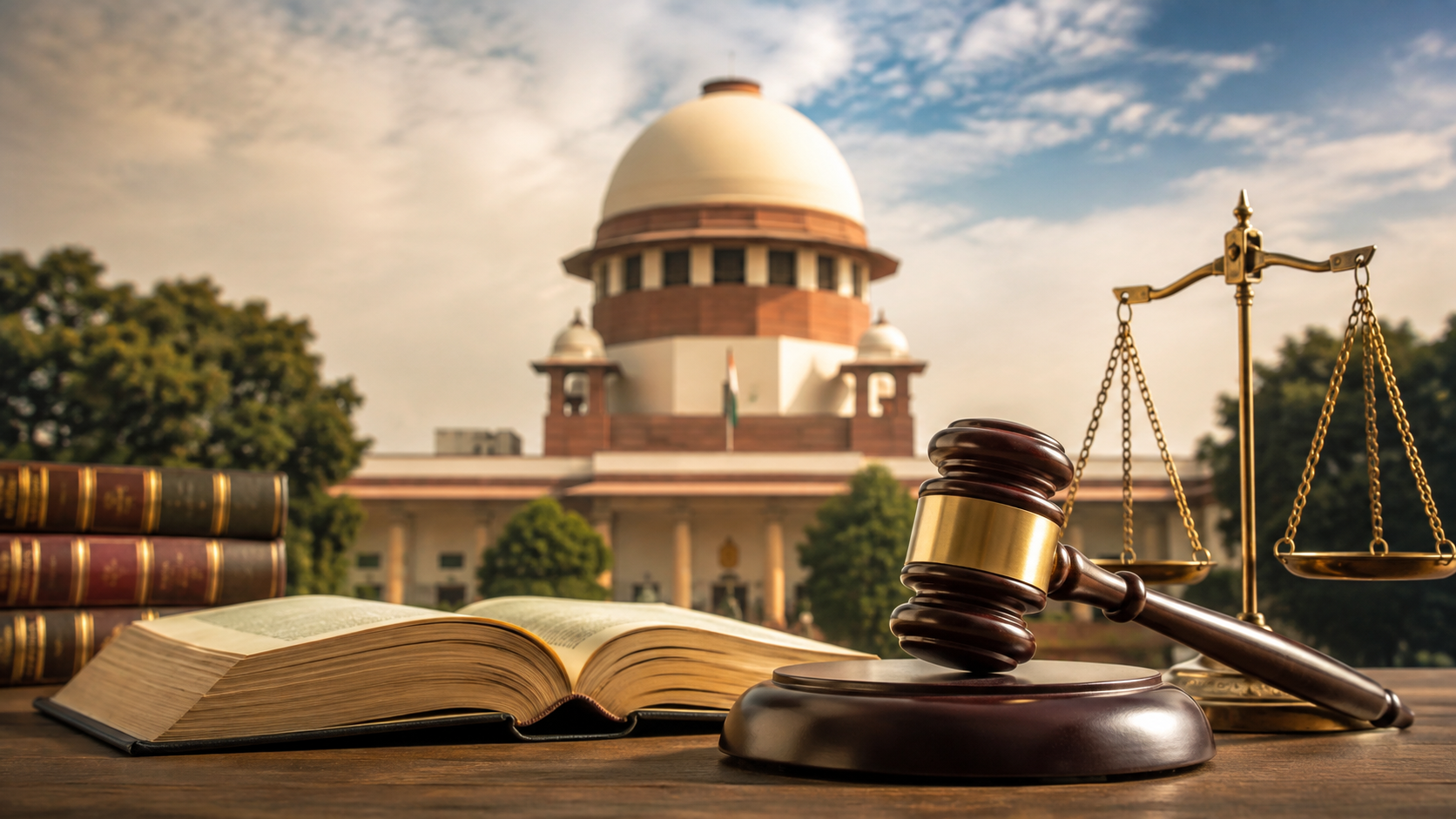
A criminal conviction does not always mark the end of the legal process. Indian law provides the right to challenge judgments before higher courts where valid legal grounds exist. However, a criminal appeal before the Supreme Court is not simply another opportunity to argue the facts of the case. It requires identifying substantial legal errors, constitutional issues, or procedural irregularities that may have influenced the outcome.
An experienced Supreme Court Criminal Lawyer carefully examines the complete case record, previous judgments, applicable statutes, and Supreme Court precedents before advising whether an appeal has merit.
At Advocate Sahil Goel, every criminal appeal is approached with detailed legal research, strategic preparation, and careful analysis to ensure that every available legal ground is properly examined before approaching the Supreme Court of India.
Criminal Appeals Before the Supreme Court: What the Court Examines
The Supreme Court generally hears criminal appeals involving substantial questions of law, constitutional interpretation, serious procedural lapses, or cases where Special Leave is granted under Article 136 of the Constitution of India.
Unlike a trial court, the Supreme Court usually does not conduct a fresh examination of witnesses. Instead, it reviews whether the law has been correctly interpreted and whether the proceedings complied with established legal principles.
This makes the role of a Supreme Court Criminal Lawyer crucial in identifying errors that may justify interference by the Court.
1. Incorrect Interpretation of Criminal Law
One of the strongest grounds for filing a criminal appeal is an incorrect interpretation of legal provisions.
If a lower court has misunderstood the scope of a penal provision or applied the wrong legal principles while deciding the case, these issues may become significant grounds before the Supreme Court.
At Advocate Sahil Goel, every appeal begins with a comprehensive review of statutory provisions and relevant Supreme Court judgments to identify whether the law has been correctly applied.
2. Violation of Constitutional Rights
Every accused person is entitled to constitutional protections throughout the criminal justice process.
A Supreme Court appeal may arise where there has been:
- Denial of a fair trial
- Violation of principles of natural justice
- Improper restriction of personal liberty
- Failure to provide procedural safeguards guaranteed under law
These constitutional issues often require careful legal interpretation supported by authoritative judicial precedents.
3. Procedural Errors That Affect Fairness
Even when evidence exists against an accused, criminal proceedings must strictly comply with legal procedures.
Examples include:
- Investigation conducted contrary to statutory requirements
- Failure to follow mandatory provisions of criminal procedure
- Improper admission or exclusion of evidence
- Serious irregularities during trial proceedings
Advocate Sahil Goel carefully reviews the complete trial record to determine whether procedural lapses may have affected the fairness of the conviction.
4. Failure to Follow Supreme Court Precedents
Indian courts are required to follow binding judgments delivered by the Supreme Court.
If a lower court overlooks or incorrectly applies settled legal principles, this may provide valid grounds for challenging the judgment.
Preparing such appeals requires extensive legal research and comparison of earlier Supreme Court decisions with the facts of the present case.
5. Conviction Based on Legally Insufficient Evidence
Although the Supreme Court generally does not reassess every factual issue, it may interfere where findings are unsupported by legally admissible evidence.
Situations may include:
- Material contradictions ignored by lower courts
- Important defence evidence overlooked
- Essential ingredients of the offence not established
- Findings unsupported by the record
Every criminal appeal handled by Advocate Sahil Goel involves a detailed examination of the evidentiary record to identify legally sustainable grounds.
6. Perverse or Unreasonable Judicial Findings
Sometimes a judgment reaches conclusions that are inconsistent with the evidence on record or contrary to settled legal principles.
Where findings appear arbitrary or unreasonable, a Supreme Court Criminal Lawyer may argue that the conviction cannot legally be sustained.
Such arguments require precise legal drafting supported by established judicial authorities.
7. Challenging an Incorrect Sentence
A criminal appeal may challenge not only the conviction but also the sentence imposed.
Legal grounds may include:
- Disproportionate punishment
- Failure to consider mitigating circumstances
- Incorrect application of sentencing principles
- Departure from established judicial precedents
Careful legal submissions may assist the Court in reviewing whether the sentence complies with the applicable legal framework.
8. Preventing Miscarriage of Justice
The Supreme Court has consistently recognised that criminal law exists to ensure justice is delivered fairly.
Where legal errors, procedural violations, or incorrect application of law result in substantial injustice, the Court has the authority to intervene.
Identifying these issues requires detailed legal analysis, strategic planning, and thorough preparation before filing an appeal.
Why Choosing the Right Supreme Court Criminal Lawyer Matters
Supreme Court litigation demands far more than knowledge of criminal law. It requires a strong understanding of constitutional principles, appellate procedure, judicial precedents, and persuasive legal drafting.
At Advocate Sahil Goel, every criminal appeal is prepared through:
- Detailed study of trial and High Court records
- Comprehensive legal research
- Analysis of relevant Supreme Court precedents
- Strategic identification of sustainable legal grounds
- Carefully drafted petitions and written submissions
- Client-focused legal guidance at every stage of the appellate process
Every case is evaluated individually because no two criminal appeals present identical legal issues.
Why Clients Trust Advocate Sahil Goel
Individuals seeking representation before the Supreme Court often look for legal counsel that combines thorough preparation with practical courtroom experience.
Advocate Sahil Goel is committed to providing:
- Careful legal evaluation of criminal convictions
- Transparent advice on the merits of an appeal
- Well-researched legal arguments
- Professional representation in complex criminal matters
- A strategic approach tailored to the specific facts and legal issues of each case
The objective is to present every appeal with clarity, precision, and a strong legal foundation.
Conclusion
A successful criminal appeal before the Supreme Court depends on identifying genuine legal grounds rather than merely challenging an unfavourable verdict. Errors in law, constitutional violations, procedural irregularities, insufficient evidence, unreasonable findings, and sentencing issues often form the basis of appellate review.
If you are considering filing a criminal appeal before the Supreme Court, consulting an experienced Supreme Court Criminal Lawyer can help you understand the legal options available. Advocate Sahil Goel offers comprehensive legal evaluation and representation, ensuring that every appeal is prepared with meticulous research, strategic planning, and a commitment to protecting the rights of clients within the framework of Indian law.

 English
 Arabic
 French
 Spanish
 Portuguese
 Deutsch
 Turkish
 Dutch
Dutch
 Italiano
 Russian
 Romaian
 Portuguese (Brazil)