


How Corrugated Box Packaging Helps Businesses Reduce Shipping Damage and Improve Customer Satisfaction
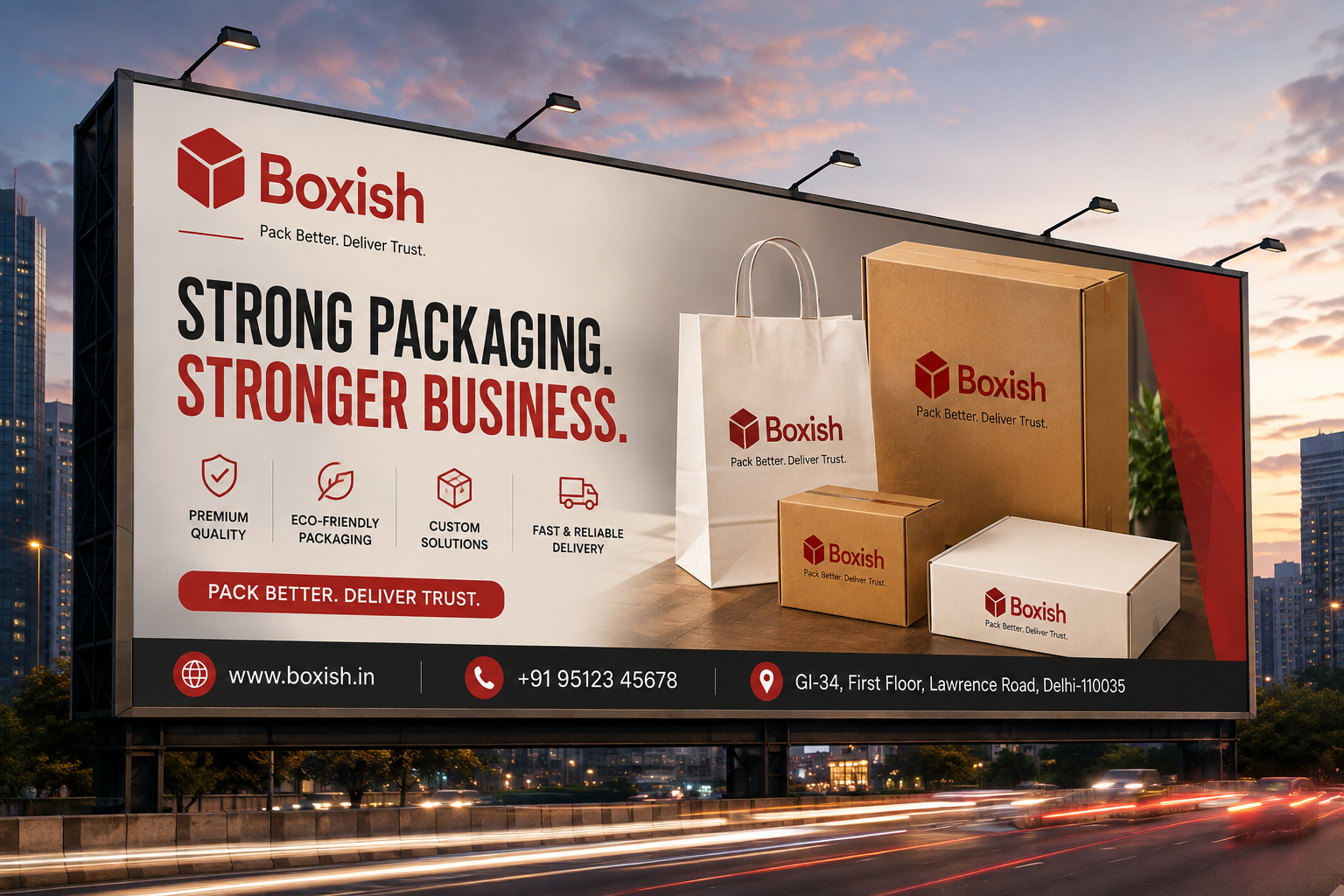
Shipping damage can create significant problems for ecommerce sellers, retailers, manufacturers, and wholesalers. A damaged product may lead to returns, replacement costs, customer complaints, negative reviews, and additional shipping expenses. For businesses handling regular shipments, choosing the right packaging is therefore an important part of the overall delivery strategy.
Well-designed corrugated box packaging helps protect products from impacts, compression, vibration, and repeated handling during transportation. However, effective packaging is not only about choosing a strong box. Businesses also need to consider box size, product weight, internal protection, sealing, storage, and shipping conditions.
Why Packaging Matters During Shipping
An ecommerce package can pass through several stages before reaching the customer. It may be picked from a warehouse, moved to a packing station, loaded into a vehicle, transferred between logistics facilities, sorted, and finally delivered.
During this journey, the package can experience:
-
Impact and vibration
-
Compression from stacking
-
Repeated handling
-
Product movement
-
Loading and unloading
-
Changes in transportation conditions
Choosing suitable packaging helps create a protective layer between the product and these external conditions.
For businesses, effective packaging can reduce avoidable damage while also improving the consistency of the fulfillment process.
Choose the Right Corrugated Box
Different products require different levels of protection. A lightweight product may not need the same box construction as a heavy or fragile item.
Before selecting packaging, businesses should consider:
-
Product dimensions
-
Product weight
-
Product fragility
-
Shipping distance
-
Stacking conditions
-
Internal cushioning requirements
-
Storage conditions
Businesses can explore corrugated boxes to compare suitable packaging options for different product and shipping requirements.
The objective should be to select a box that provides sufficient protection without unnecessary material or excessive empty space.
Box Size Can Affect Product Safety
Choosing the correct dimensions is one of the simplest ways to improve shipping performance.
An oversized box can leave significant empty space around the product. During transportation, the product may move inside the package and experience repeated impacts.
A box that is too small can create pressure against the product and leave insufficient room for cushioning.
A properly sized box can help businesses:
-
Reduce product movement
-
Minimize filler requirements
-
Improve product stability
-
Optimize storage space
-
Reduce unnecessary packaging volume
Businesses shipping large numbers of orders should identify their most frequently used sizes and maintain an efficient range of packaging options.
Match Box Strength With Product Weight
The strength of the packaging should correspond to the product and its shipping conditions.
For example, lightweight apparel may require less structural protection than electronics, glassware, or heavy hardware.
When selecting box strength, businesses should consider the product's:
-
Weight
-
Fragility
-
Stacking requirements
-
Shipping distance
-
Handling frequency
Using packaging that is too weak can increase the risk of crushing or tearing. On the other hand, unnecessarily strong packaging may increase purchasing and transportation costs.
Testing different options with actual products can help businesses identify the most suitable construction.
Use Internal Protection for Fragile Products
A strong outer box alone may not be enough to protect delicate products.
Fragile products can move inside the package and collide with the box walls or other items. Internal cushioning can help absorb impact and keep products securely positioned.
Depending on the product, businesses may use:
-
Paper fillers
-
Foam inserts
-
Protective sleeves
-
Corrugated partitions
-
Suitable cushioning materials
The amount of internal protection should depend on the product's actual risk. Using excessive filler for every shipment can increase material consumption and packing time without providing meaningful additional protection.
Prevent Excessive Product Movement
Product movement is a common cause of shipping damage.
Even when the outer packaging is strong, a product that moves freely inside the box can experience repeated impacts during transportation.
Businesses can reduce movement by:
-
Selecting appropriate box dimensions
-
Using suitable cushioning
-
Separating fragile products
-
Filling major empty spaces
-
Positioning products securely
Before implementing a new packaging format, businesses should physically test the package to determine whether the product remains stable during normal handling.
Secure Sealing Is Important
Packaging performance also depends on how the box is sealed.
An appropriately selected box can still fail if its openings are not securely closed.
Businesses should ensure that:
-
Seams are properly sealed
-
Tape adheres securely
-
Openings are completely covered
-
Heavy packages receive suitable reinforcement
-
Labels do not interfere with sealing
Standardizing the sealing process can help warehouse teams prepare packages more consistently.
Consider Long-Distance Shipping Conditions
A package travelling across multiple cities may experience more handling than one delivered locally.
Businesses should consider:
-
Multiple warehouse transfers
-
Loading and unloading
-
Courier sorting
-
Vehicle transportation
-
Stacking
-
Delivery duration
Packaging that performs well for local deliveries may need additional protection for longer routes.
For this reason, businesses should test packaging under realistic shipping conditions before placing large orders.
How Better Packaging Improves Customer Satisfaction
Customers expect products to arrive safely and in good condition. When an order arrives damaged, the customer may associate the poor experience with the seller even when the damage occurred during transportation.
Frequent packaging failures can result in:
-
Returns
-
Refunds
-
Replacement shipments
-
Negative reviews
-
Customer complaints
-
Reduced repeat purchases
Reliable packaging helps businesses create a more consistent delivery experience.
A package that arrives safely and looks professional can also strengthen customer confidence in the brand.
Packaging Can Improve the Unboxing Experience
Protection should remain the primary purpose of shipping packaging, but presentation also matters.
Businesses can use simple branding elements such as:
-
Logo
-
Brand colours
-
Website details
-
QR codes
-
Product information
-
Thank-you messages
Consistent packaging can make an ecommerce order feel more professional and connected to the brand.
However, branding should not compromise the structural performance of the package.
Combine Different Packaging Formats
Businesses operating through both physical stores and ecommerce channels may need different packaging solutions.
A retail purchase may not require the same protection as a product travelling through a courier network.
For suitable lightweight retail purchases, businesses can use paper bags. These can provide convenient carrying while also supporting brand presentation.
For ecommerce shipments, stronger protective packaging is generally more appropriate.
Using different formats according to the application can help businesses avoid unnecessary material usage while improving customer convenience.
Reduce Shipping Damage Without Creating More Waste
Adding more packaging is not always the best solution to shipping damage.
Businesses should first identify the actual cause of the problem.
If the product moves excessively, improve the box fit.
If the package collapses, review the box strength.
If fragile products collide, improve internal separation.
If packages open during transportation, review the sealing process.
This approach allows businesses to improve protection without automatically increasing packaging material.
Track Packaging Performance
Businesses should measure whether their packaging strategy is actually reducing damage.
Useful performance indicators include:
-
Damaged orders
-
Return rates
-
Customer complaints
-
Replacement shipments
-
Packaging failures
-
Packaging cost per order
If one product category consistently experiences higher damage, businesses should investigate its packaging separately.
For example, the problem may be related to box dimensions rather than box strength. Data can help identify the actual issue.
Improve Packing Efficiency in the Warehouse
Packaging should also be convenient for warehouse employees.
A disorganized packing process can slow fulfillment and increase packaging errors.
Businesses can improve efficiency by:
-
Keeping frequently used sizes near packing stations
-
Organizing packaging by dimensions
-
Clearly labelling stock
-
Standardizing packing methods
-
Training employees on packaging selection
When employees know which packaging to use for each product, the packing process becomes more consistent.
Test Before Ordering in Bulk
Businesses should test packaging with actual products before making a large procurement decision.
Testing should cover:
-
Product fit
-
Box strength
-
Internal movement
-
Sealing
-
Stacking
-
Handling
-
Transportation
Ecommerce businesses can send sample packages through their regular courier network to understand how the packaging performs under real delivery conditions.
Testing can identify weaknesses before they affect hundreds or thousands of customers.
Choose a Reliable Packaging Partner
As businesses grow, packaging quality and supply consistency become increasingly important.
A dependable supplier should provide consistent products, reliable delivery, suitable sizes, and responsive support.
Businesses looking for packaging solutions for ecommerce, retail, food service, and other commercial requirements can explore Boxish Packaging.
A reliable packaging partner can help businesses maintain consistent packaging standards while adapting to changing product ranges and order volumes.
Practical Tips to Reduce Shipping Damage
Before shipping products, businesses should:
-
Measure products accurately.
-
Choose the correct box dimensions.
-
Match box strength with product weight.
-
Use cushioning where necessary.
-
Prevent excessive product movement.
-
Seal packages properly.
-
Test packaging before bulk procurement.
-
Monitor damage and return rates.
-
Review packaging performance regularly.
-
Adjust packaging based on actual shipping data.
Common Packaging Mistakes to Avoid
Using Oversized Boxes
Excessive empty space allows products to move and can increase the need for filler.
Choosing Packaging Only by Price
Low-cost packaging may become expensive if it increases product damage and returns.
Ignoring Product-Specific Requirements
Fragile, heavy, and lightweight products require different levels of protection.
Using Excessive Protective Material
Too much filler increases packaging waste and packing time without necessarily improving protection.
Skipping Real-World Testing
Packaging should be tested under realistic shipping conditions before being adopted at scale.
Conclusion
Effective corrugated box packaging can help businesses reduce shipping damage, control avoidable costs, and improve customer satisfaction. However, successful packaging depends on more than simply choosing a strong box. Businesses should consider box dimensions, product weight, internal protection, sealing, storage, and transportation conditions.
The best packaging strategy balances product protection, cost efficiency, operational convenience, and material efficiency. Businesses can also combine packaging formats based on their requirements, using paper bags for suitable retail purchases and protective boxes for ecommerce shipments.
By testing packaging, tracking damage rates, improving warehouse processes, and choosing a dependable packaging partner such as Boxish Packaging, businesses can create a more reliable shipping system that protects products and delivers a better customer experience.

 Arabic
 French
 Spanish
 Portuguese
 Deutsch
 Turkish
 Dutch
Dutch
 Italiano
 Russian
 Romaian
 Portuguese (Brazil)
 Greek
Greek