


Can Silhouette Threads Improve Nasolabial Folds Without Adding Volume?
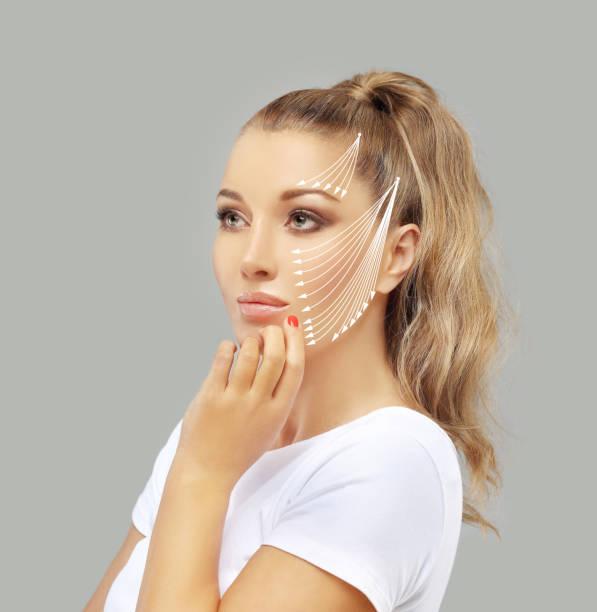
Nasolabial folds—the lines running from the nose to the corners of the mouth—are among the most commonly treated facial concerns, yet they are frequently mismanaged. Facelift with Silhouette Threads in Dubai offers a distinct advantage over traditional filler-based approaches: it reduces the fold by lifting the descended cheek tissue rather than by adding volume directly into the line. The primary benefit is a smoother transition between the cheek and upper lip without the heaviness or overfilled appearance that excessive filler can create.
The Misunderstood Fold
Why Filler Is Not Always the Answer
The nasolabial fold is not a line—it is a boundary. It marks the transition between the fixed tissue of the upper lip and the mobile tissue of the cheek. As the malar fat pad descends with age, it pushes against this boundary, deepening the fold. The fold itself is not caused by a loss of volume in the fold; it is caused by excess tissue above the fold.
This distinction is critical. Injecting filler directly into the nasolabial fold treats the symptom, not the cause. The fold may appear smoother temporarily, but the descended cheek tissue remains. As the filler dissolves, the fold returns. Worse, repeated filler injections into this area create a heavy, puffy appearance that distorts the natural facial anatomy.
A facelift with Silhouette Threads in Dubai addresses the root cause by lifting the cheek tissue back to its original position. When the malar fat pad is repositioned, the pressure on the nasolabial boundary is released, and the fold softens naturally.
The Dubai Context
In Dubai's climate, the skin experiences accelerated elastin degradation. The constant UV exposure weakens the dermal matrix, allowing the cheek tissue to descend more rapidly than in cooler climates. This means that nasolabial folds often appear earlier in Dubai patients, and they progress more quickly. Early intervention with a lifting approach—rather than a filling approach—prevents the fold from becoming entrenched.
Data Comparison: Nasolabial Fold Treatment Options
Choosing the Right Approach
Patients seeking to improve nasolabial folds have three primary options. The table below compares these modalities across clinical parameters relevant to fold reduction.
| Parameter | Silhouette Threads | Direct Fold Filler | Cheek Filler (Indirect) |
|---|---|---|---|
| Primary Action | Lifts descended cheek tissue | Fills the fold directly | Adds volume to malar area |
| Mechanism | PLLA cones reposition malar fat pad | HA gel injected into fold | HA gel injected into cheek |
| Result Character | Natural smoothing, no added bulk | Immediate smoothing, risk of overfilling | Indirect improvement, subtle |
| Longevity | 18-24 months | 12-18 months | 12-18 months |
| Risk of Heaviness | Low | Moderate to high | Low to moderate |
| Addresses Root Cause | Yes | No | Partially (supports tissue) |
| Ideal Candidate | Fold caused by tissue descent | Fold caused by volume loss | Fold caused by malar deflation |
Silhouette threads are uniquely suited for patients whose folds are caused by tissue descent—the most common etiology in patients over 35.
Clinical Protocol: The Lift-First Approach
The Assessment Process
At Tajmeels Clinic, the evaluation for a facelift with Silhouette Threads in Dubai targeting nasolabial folds begins with a simple test. The practitioner gently lifts the cheek tissue upward and observes the fold. If the fold softens or disappears when the tissue is manually repositioned, the patient is an ideal candidate for a thread lift. If the fold remains unchanged, the issue is likely intrinsic volume loss, and filler may be more appropriate.
This test is diagnostic. It predicts the outcome of the procedure before a single thread is placed. Patients who respond well to the manual lift test can expect significant improvement from Silhouette threads.
The Vector Planning
For nasolabial fold improvement, the threads are placed along a superior-lateral vector—from the mid-cheek toward the temple. This direction mirrors the natural position of the malar fat pad in youth. As the threads are tensioned, the cheek tissue is lifted off the fold, releasing the pressure that creates the deepening line.
Typically, two to three threads per side are used. The placement is in the subcutaneous plane, just beneath the dermis. The cones engage the tissue and hold it in the elevated position. The result is immediate: the fold appears softer, and the cheek appears lifted and more youthful.
"I had been getting filler in my nasolabial folds for years. My face started to look heavy, especially around my mouth. The Silhouette threads at Tajmeels lifted everything up. My folds are smoother now, and my face looks lighter."
— Reem A., Al Wasl
The Combination Approach
In some cases, a combination approach yields the best result. The thread lift addresses the descent, but there may be residual volume loss in the malar area that benefits from a small amount of filler in the cheek, not in the fold. This sequence—lift first, then support—produces a natural result that avoids the overfilled appearance.
The key principle is that filler should never be the primary treatment for nasolabial folds. It is a supplementary tool, used sparingly, after the structural lift has been achieved.
Expected Results and Maintenance
The Timeline for Fold Improvement
The improvement in nasolabial folds following a facelift with Silhouette Threads in Dubai is immediate but evolves over time. At day three, the swelling begins to subside, and the lift is visible. The fold appears softer, and the cheek appears elevated. At week six, the PLLA cones begin their collagen-stimulating work, and the skin in the mid-cheek area becomes thicker and more resilient.
By month three, the full result is apparent. The fold is significantly reduced—not eliminated, but softened to a degree that looks natural and age-appropriate. The cheek sits in its original position, and the face appears rested and refreshed.
"I didn't want to erase my nasolabial folds completely—that looks fake. I just wanted them to be less deep. The thread lift did exactly that. I still look like myself, just less tired."
— Mariam K., Dubai Hills
Maintenance Protocol
The results of Silhouette threads for nasolabial folds last 18 to 24 months. As the threads dissolve and the collagen matures, the fold may begin to deepen again. A maintenance session at the 18-month mark with fewer threads can sustain the improvement. Patients who combine their thread lift with good skincare—including daily SPF and topical retinoids—will see longer-lasting results.
For those seeking the most effective clinical approach, opting for a professional Facelift with Silhouette Threads in Dubai at a center that prioritizes lifting over filling guarantees a result that addresses the cause, not just the symptom.
The Strategic Investment
Why the Fold Deserves Better Than Filler
The nasolabial fold is a boundary, not a dent. Treating it with filler ignores the biomechanics of facial aging. A thread lift respects the anatomy: it restores the cheek to its original position, allowing the fold to soften naturally. The result is not just smoother—it is more authentic.
The Dubai Context
Dubai patients are increasingly aware of the "overfilled" look and are seeking alternatives that preserve their natural features. Tajmeels Clinic understands that the goal is not to erase signs of aging but to manage them intelligently—with structural interventions that respect the face's architecture.
Frequently Asked Questions
1. Will Silhouette threads completely remove my nasolabial folds?
No. Silhouette threads soften and reduce nasolabial folds by lifting the descended cheek tissue. They do not eliminate the fold entirely. A complete elimination would look unnatural, as the nasolabial fold is a normal anatomical feature present even in young faces.
2. Can I combine Silhouette threads with filler for nasolabial folds?
Yes, but the sequence matters. The thread lift should be performed first to lift the cheek tissue. After four to six weeks, a small amount of filler may be added to the malar area if volume support is still needed. Filler should not be injected directly into the fold as a primary treatment.
3. How do I know if my nasolabial folds are caused by descent or volume loss?
A simple test: gently lift your cheek tissue upward with your fingers. If the fold softens or disappears, it is caused by descent, and threads will help. If the fold remains unchanged, it is likely caused by intrinsic volume loss, and filler may be more appropriate.
4. Will the results look natural?
Yes. Because the threads lift the tissue rather than filling the fold, the result looks like a younger version of your own face. The fold is softened, not erased. The cheek is elevated, not inflated. Most people will notice you look fresher but won't know why.
5. How long does the improvement in nasolabial folds last?
The mechanical lift lasts 18-24 months. The collagen stimulated by the PLLA cones provides additional support that may extend the improvement beyond the lifespan of the threads. Maintenance sessions at 18-24 months can sustain the result.
6. Is the thread lift painful for the mid-face area?
The procedure is performed under local anesthesia. You may feel pressure during thread placement, but not sharp pain. Post-procedure discomfort is mild and resolves within 48 hours. Bruising in the mid-face area is common but temporary.

 English
 Arabic
 French
 Spanish
 Deutsch
 Turkish
 Dutch
Dutch
 Italiano
 Russian
 Romaian
 Portuguese (Brazil)
 Greek
Greek