


Key Differences Between Laparoscopic and Open Surgical Procedures
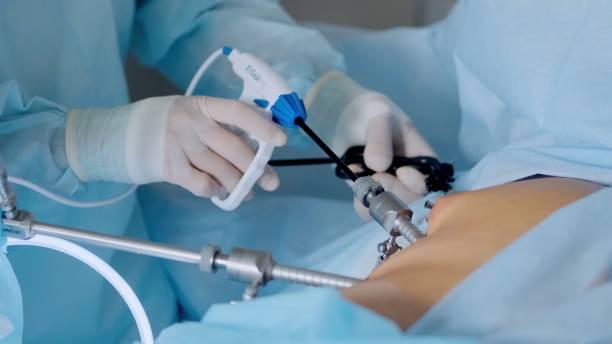
Surgery can be performed using different techniques depending on the medical condition, the complexity of the procedure, and the patient's overall health. Two commonly discussed approaches are lLaparoscopic Surgery in Islamabad and open surgery. While both aim to treat the underlying problem effectively, they differ significantly in incision size, surgical access, recovery, scarring, and potential complications.
Understanding these differences can help patients have more informed discussions with their surgeon and understand why one technique may be recommended over another.
What Is Laparoscopic Surgery?
Laparoscopic surgery is a minimally invasive surgical technique performed through several small incisions. A thin instrument called a laparoscope, which has a camera and light, allows the surgeon to view the internal organs on a monitor. Specialized surgical instruments are inserted through additional small openings to perform the procedure.
Laparoscopic techniques are commonly used for procedures such as gallbladder removal, hernia repair, appendectomy, certain bowel procedures, and several gynecological and urological surgeries. The exact applications vary according to the patient's condition and the surgeon's expertise.
What Is Open Surgery?
Open surgery involves creating a larger incision to provide the surgeon with direct access to the affected organ or tissues. In abdominal procedures, this approach may involve an incision through the abdominal wall, commonly referred to as a laparotomy.
Open surgery remains an important option for complicated, extensive, or emergency cases where a surgeon needs broader access and direct visualization. Some conditions may simply be unsuitable for a minimally invasive approach.
Laparoscopic vs Open Surgery: Key Differences
The main differences can be understood by comparing several important factors.
Incision Size and Surgical Access
Laparoscopic surgery generally uses multiple small incisions, often described as "keyhole" incisions. A camera provides an enlarged view of the surgical area while instruments are introduced through the other openings.
Open surgery, in contrast, usually requires a larger incision that allows the surgeon to directly access and visualize the operative area.
This difference in surgical access is one of the most obvious distinctions between the two techniques.
Pain and Postoperative Comfort
Because laparoscopic surgery generally involves smaller incisions and less disruption of surrounding tissues, patients may experience less postoperative discomfort compared with some open procedures. Minimally invasive approaches are generally associated with less pain and a shorter recovery period, although individual experiences vary.
Pain after laparoscopic surgery can also occur because carbon dioxide gas is commonly used to expand the abdomen during abdominal laparoscopy. Some patients experience temporary abdominal or shoulder discomfort afterward.
Recovery Time
Recovery is another major difference.
Laparoscopic procedures often allow patients to resume normal activities sooner because the incisions are smaller. Depending on the specific operation, some patients may also have a shorter hospital stay.
Open surgery generally involves more tissue disruption and may require a longer recovery period. However, recovery depends heavily on the type and extent of surgery, the patient's health, and whether complications occur.
Scarring
Laparoscopic surgery generally leaves several small scars rather than one larger surgical scar. These incisions may become less noticeable as they heal.
Open surgery typically produces a larger scar because of the larger incision required to access the surgical site.
Risk of Complications
Both approaches carry surgical risks, including bleeding, infection, anesthesia-related complications, blood clots, and injury to surrounding structures. Minimally invasive surgery is generally associated with fewer complications in appropriate patients, but it is not completely risk-free.
In some cases, a laparoscopic procedure may need to be converted to open surgery if continuing minimally invasively is considered unsafe.
When Is Laparoscopic Surgery Preferred?
Laparoscopic surgery may be considered when the condition can be safely treated through minimally invasive access.
Potential advantages include:
- Smaller incisions
- Reduced surgical trauma
- Less postoperative discomfort in many cases
- Shorter hospital stays for many procedures
- Faster return to routine activities
- Smaller scars
- Potentially lower rates of certain postoperative complications
However, minimally invasive does not automatically mean minor. A laparoscopic operation can still be a major surgical procedure requiring general anesthesia and careful postoperative monitoring.
When May Open Surgery Be Necessary?
Open surgery can remain the better or safer choice when a condition is particularly complex, extensive, or urgent. Emergency situations may not always allow sufficient time for minimally invasive planning, while certain large or complicated conditions may require direct access.
The decision can depend on:
- The type and location of the condition
- The size or extent of the problem
- Previous abdominal operations
- The patient's overall health
- Emergency versus planned surgery
- Available surgical equipment
- The surgeon's experience with the technique
Therefore, there is no universal answer to the question, "Is laparoscopic surgery better than open surgery?" The safest technique is the one that provides effective treatment while appropriately managing the individual patient's risks.
Choosing Surgical Care in Islamabad
Patients considering surgery in Islamabad should look beyond the procedure name and evaluate the quality of clinical assessment, surgical expertise, anesthesia support, facility standards, follow-up care, and emergency preparedness. SKN Cosmetics in Islamabad can be considered by patients exploring healthcare and aesthetic treatment options in the capital, but the appropriate surgical provider should always be selected according to the specific procedure required and the qualifications of the treating medical team.
A consultation is particularly important because the same condition may be suitable for laparoscopic treatment in one patient but require open surgery in another.
Laparoscopic or Open Surgery: Which Is Better?
There is no single technique that is best for every patient. Laparoscopic surgery can offer the advantages of smaller incisions and generally faster recovery when it is clinically appropriate. Open surgery, however, provides broad access and may be essential for complex or emergency operations.
The final decision should be based on the patient's diagnosis, medical history, surgical requirements, and the surgeon's professional assessment rather than simply choosing the procedure with the smallest incision.
Frequently Asked Questions
Is laparoscopic surgery safer than open surgery?
When appropriate, laparoscopic surgery generally has fewer complications, but risks vary by procedure and patient.
Which surgery has a faster recovery?
Laparoscopic surgery often allows faster recovery than comparable open surgery.
Does laparoscopic surgery leave scars?
Yes. It usually leaves several small scars rather than one larger scar.
Can laparoscopic surgery become open surgery?
Yes. A surgeon may convert to open surgery if it is necessary for safety or effective treatment.
Which surgery is better for complex conditions?
Open surgery may be necessary for some complex or emergency conditions, but the decision depends on the individual case.

 English
 Arabic
 Spanish
 Portuguese
 Deutsch
 Turkish
 Dutch
Dutch
 Italiano
 Russian
 Romaian
 Portuguese (Brazil)
 Greek
Greek