


How Much Space Do You Need for Shipping Container Delivery?
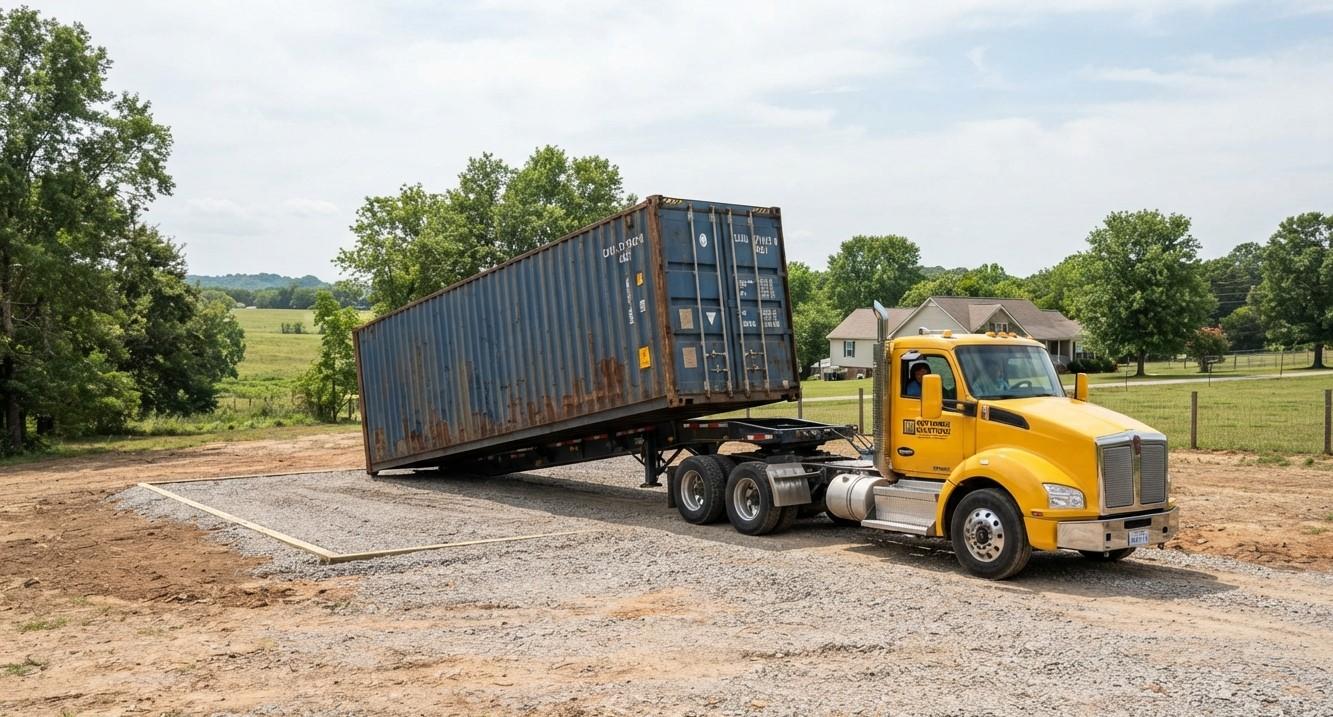
Buying a shipping container is only part of the process. Before your container arrives, you need to make sure your property has enough space for the delivery truck, the container itself, and safe placement.
Whether you're looking at shipping containers for sale, planning to order a shipping container for sale near me, or comparing storage containers for sale, understanding delivery requirements can help prevent delays, property damage, or failed delivery attempts.
In this guide, we'll explain how much space you generally need for shipping container delivery and what to check before your container arrives.
Table of Contents
- How Much Space Is Needed for Delivery?
- Space Requirements by Container Size
- How Much Straight-Line Clearance Do You Need?
- What About Driveway and Road Access?
- Overhead Clearance Matters Too
- Preparing the Ground for Delivery
- Common Delivery Problems to Avoid
- How to Prepare for a Smooth Delivery
- FAQs
- Get Your Shipping Container Delivered With Conex Hub
How Much Space Is Needed for Delivery?
The amount of space required depends on the container size, delivery truck, property layout, access route, and unloading method.
For a typical tilt-bed delivery, Conex Hub recommends approximately 60 feet of straight-line clearance for a 20-foot container. For larger containers and trailer-based delivery, substantially more space may be necessary. Conex Hub notes that delivery of containers up to 45 feet can require 100 feet or more of straight-line clearance.
This does not mean you need an empty rectangular area that is exactly the same length as the clearance requirement. The delivery vehicle needs room to approach, position itself, and unload the container safely.
A Simple Rule of Thumb
Before ordering, consider:
- Container length
- Truck and trailer length
- Straight-line access
- Turning space
- Ground conditions
- Overhead obstructions
- Placement location
- Clearance from buildings and other structures
If you're unsure whether your property can accommodate delivery, it's best to discuss the site with your container supplier before scheduling.
Space Requirements by Container Size
Shipping containers commonly come in 10-foot, 20-foot, and 40-foot sizes, with 40-foot high cube containers also widely available.
| Container Size | Typical Delivery Consideration |
|---|---|
| 10ft | Easier to place on smaller properties, but truck access is still required |
| 20ft | Around 60 ft of straight-line clearance may be required for tilt-bed delivery |
| 40ft | Can require around 100 ft of straight-line clearance |
| 40ft High Cube | Similar length requirements to a standard 40ft container, plus additional height considerations |
A smaller container doesn't necessarily mean delivery is possible through a narrow driveway. The delivery truck still needs adequate access to reach the placement area.
How Much Straight-Line Clearance Do You Need?
Straight-line clearance is one of the most important delivery considerations.
A tilt-bed truck typically needs to approach the property and position itself so the container can slide from the bed onto the prepared area. Conex Hub states that a 20-foot unit may require about 60 feet of straight-line clearance, while larger trailer-based deliveries can require 100 feet or more.
For a 40-foot container, Conex Hub specifically recommends planning for at least 100 feet of straight-line clearance unless another unloading method, such as a crane truck or lift, is available.
Why Straight-Line Space Matters
Even if your driveway looks wide enough, a sharp turn, fence, parked vehicles, landscaping, or nearby structures can prevent the truck from positioning correctly.
Before delivery, look at the entire route:
- Where will the truck enter?
- Can it travel straight toward the unloading area?
- Are there tight turns?
- Is there enough room around the container's final position?
- Can the driver safely unload without hitting structures or landscaping?
What About Driveway and Road Access?
The road leading to your property is just as important as the final placement area.
Check for:
- Narrow residential streets
- Tight corners
- Steep slopes
- Low-hanging branches
- Utility poles
- Overhead wires
- Gates
- Fences
- Vehicles blocking access
- Soft shoulders
- Weight or access restrictions
Conex Hub advises customers to maintain clear access and watch for overhead wires, low branches, and tight turns.
If you're searching for a shipping container for sale near me, don't focus only on the container's price and dimensions. Ask the supplier about delivery requirements for your specific property.
Overhead Clearance Matters Too
Horizontal space isn't the only concern.
The delivery route should also be checked for overhead obstacles such as:
- Power lines
- Tree branches
- Building overhangs
- Low bridges
- Signs
- Carports
- Covered driveways
A high cube container is taller than a standard-height container, so overhead clearance deserves particular attention when ordering one.
The delivery truck itself may also require additional vertical clearance during unloading.
Preparing the Ground for Delivery
Your container needs more than an accessible delivery route. The placement area should be suitable for supporting the container after it arrives.
Conex Hub recommends firm, dry, level ground, with pavement, gravel, or hard-packed dirt generally suitable. Soft soil, mud, or sand can create settling and delivery complications.
Before delivery:
- Remove debris from the placement area.
- Clear vegetation that could interfere with the truck.
- Make sure the ground is reasonably level.
- Avoid placing the container where water regularly collects.
- Prepare a suitable foundation or support system when needed.
- Keep the unloading area free of vehicles and equipment.
Proper site preparation can make delivery faster and reduce the risk of complications.
Common Delivery Problems to Avoid
1. Not Measuring the Access Route
Measuring only the final placement area isn't enough. Measure the entire route from the road to the container's destination.
2. Leaving Vehicles in the Delivery Path
Cars, trailers, equipment, and temporary structures can prevent the driver from positioning the truck.
3. Ignoring Overhead Obstacles
A route may look clear at ground level but become problematic because of tree branches or utility lines.
4. Choosing Soft Ground
Wet or unstable soil can make unloading difficult and may cause the container to settle after placement.
5. Forgetting Local Requirements
Some properties may have permit, zoning, HOA, or other local requirements for container placement. Conex Hub recommends checking with the appropriate local authorities or HOA before delivery.
How to Prepare for a Smooth Delivery
A few simple steps can make the process easier:
Step 1: Measure the site
Determine the available length and width at the proposed placement area.
Step 2: Measure the access route
Check the road, driveway, gates, turns, and approach to the property.
Step 3: Check overhead clearance
Look for branches, wires, structures, and other obstacles.
Step 4: Prepare the ground
Make sure the placement area is firm, dry, and reasonably level.
Step 5: Clear the delivery path
Remove vehicles, equipment, debris, and other obstacles.
Step 6: Confirm delivery requirements
Give your supplier the delivery address and discuss any unusual access conditions before scheduling.
Conex Hub's delivery process includes dispatching a suitable truck, assessing the placement area upon arrival, positioning the container, and completing a walkthrough after delivery.
FAQs
How much space is needed to deliver a 20-foot shipping container?
A 20-foot container may require approximately 60 feet of straight-line clearance for tilt-bed delivery, according to Conex Hub. Actual requirements can vary depending on the property and delivery method.
How much space is needed for a 40-foot shipping container?
A 40-foot container may require around 100 feet of straight-line clearance for delivery. Conex Hub recommends confirming site conditions before scheduling delivery.
Can a shipping container be delivered through a narrow driveway?
Possibly, but it depends on the truck, driveway width, turns, overhead clearance, and unloading method. A supplier should review difficult access situations before delivery.
Does the ground need to be level?
The placement area should be firm, dry, and reasonably level. Gravel, pavement, and hard-packed dirt are generally suitable options, while soft soil, mud, and sand can create complications.
Do I need to clear overhead wires and tree branches?
Yes. Overhead wires, low branches, and other obstructions can interfere with the delivery truck and unloading process.
What should I ask before buying a shipping container?
Ask about the container's dimensions, delivery method, required clearance, ground preparation, placement requirements, and current delivery availability.
Get Your Shipping Container Delivered With Conex Hub
Finding the right container involves more than choosing the size and condition. You also need to make sure your property can safely accommodate delivery.
Whether you're comparing shipping containers for sale, looking for storage containers for sale, or searching online for a shipping container for sale near me, planning the delivery area in advance can save time and prevent unexpected problems.
Conex Hub offers new, used, and custom-fabricated shipping containers and provides delivery solutions for customers across its service area. Its team can help assess delivery requirements and recommend an appropriate solution for your site.
Before placing your order, provide the supplier with your delivery address, container size, access details, and any potential obstacles. Conex Hub's quote process also requests delivery information so availability and delivery options can be evaluated.
Plan the space first, choose the right container, and make delivery day a smooth one.

 English
 Arabic
 Spanish
 Portuguese
 Deutsch
 Turkish
 Dutch
Dutch
 Italiano
 Russian
 Romaian
 Portuguese (Brazil)
 Greek
Greek