


How Ecommerce Development Services Support Omnichannel Retail Growth
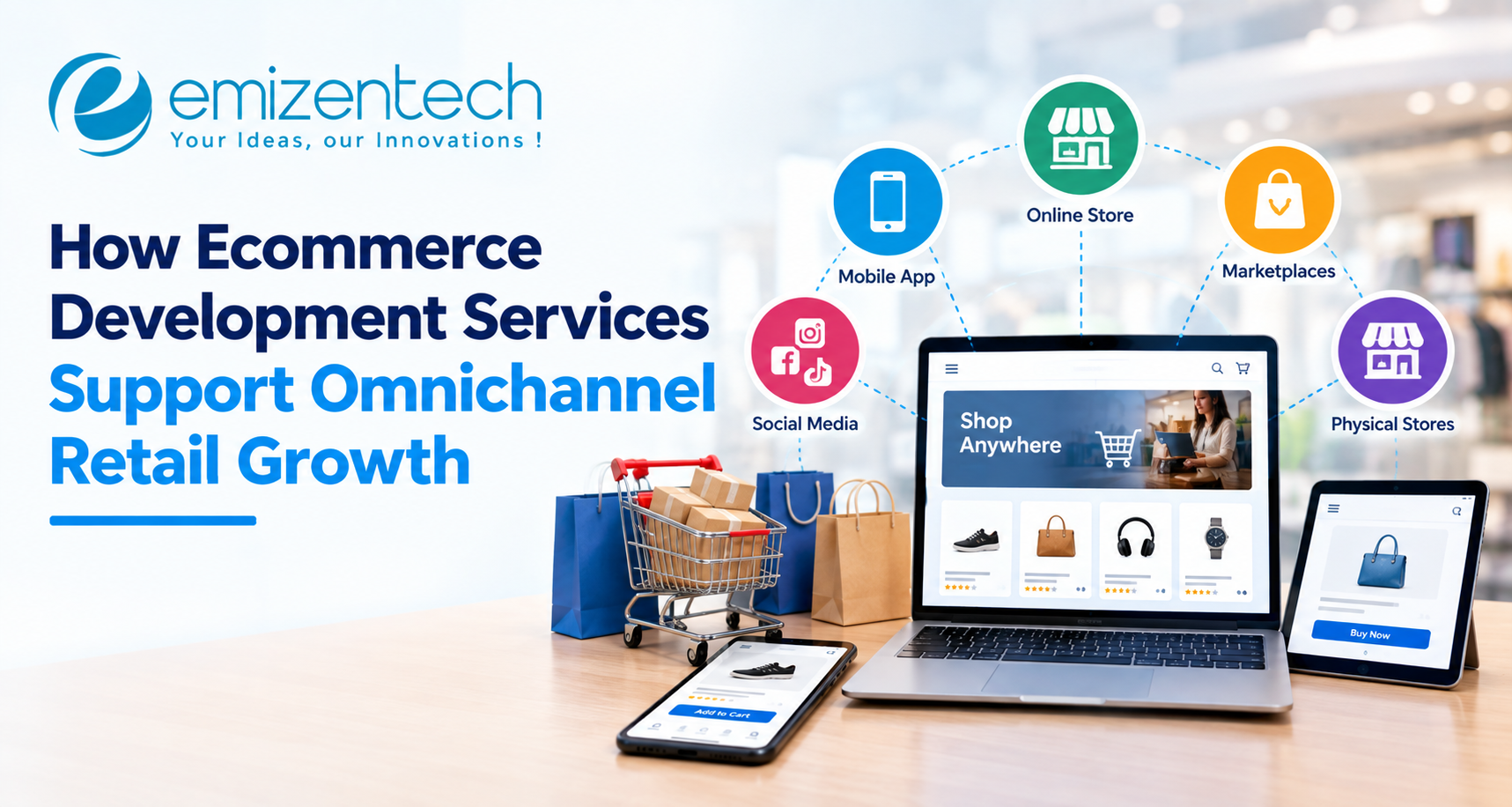
Retail no longer happens in one place. A customer might browse a product on their phone, check reviews on Instagram, try it in a physical store, and finally complete the purchase on a laptop a week later. This shift in buying behavior has made seamless, connected shopping experiences the new standard rather than a nice-to-have. This is what omnichannel retail is about, and more brands are investing in it every year to stay relevant. But behind every smooth omnichannel experience lies a solid technical foundation. Without the right development work connecting these channels together, omnichannel strategy remains just an idea on paper.
What Is Omnichannel Retail Growth?
Omnichannel retail growth refers to a business's ability to scale sales and customer relationships by offering a unified shopping experience across every channel a customer might use, whether that's a website, mobile app, marketplace, social media, or physical store. Unlike multichannel retail, where each channel operates somewhat independently, omnichannel retail focuses on making these channels work together so that customer data, inventory, and interactions stay connected no matter where a purchase happens. Growth in this context isn't just about being present everywhere; it's about creating consistency so customers don't feel like they're dealing with different businesses depending on how they shop.
Why Ecommerce Development Is the Backbone of Omnichannel Strategy
Omnichannel retail sounds like a marketing or business strategy on the surface, but it's fundamentally a technical challenge. Connecting a website, app, physical store, and marketplace listings into one coherent system requires custom development work that most out-of-the-box tools simply can't handle.
-
Unified backend systems: A single backend that manages inventory, orders, and customer data across all channels is what makes omnichannel possible in the first place. Without this, each channel operates in its own silo.
-
Custom integrations are often necessary: Off-the-shelf platforms rarely talk to each other smoothly out of the box. Development work is usually required to connect a POS system with an online store, or a marketplace account with internal inventory.
-
Real-time data sync: For an omnichannel system to work, data has to move between channels almost instantly. A sale in-store should update online inventory immediately, and this kind of sync depends entirely on how the underlying systems are built.
Key Ways Ecommerce Development Powers Omnichannel Growth
Turning omnichannel strategy into something functional involves several specific development efforts, each addressing a different part of the customer journey.
Headless and API-First Architecture
Headless commerce separates the frontend from the backend, connected through APIs. This lets businesses manage a website, mobile app, and in-store kiosks from a single backend. One of the key benefits of eCommerce web development services is the flexibility to add new sales channels without rebuilding the entire system.
Real-Time Inventory and Order Sync
Nothing frustrates a customer more than ordering something online only to find out it's out of stock. Proper development ensures inventory levels update across every channel the moment a sale happens, whether that sale occurred in a physical store, on the website, or through a marketplace listing.
Unified Customer Data
When customer information, purchase history, and preferences are stored in one connected system rather than scattered across different platforms, businesses can offer a more personalized experience. A returning customer's cart, wishlist, or loyalty points should follow them regardless of which channel they're using.
POS and In-Store Integration
For brands with physical locations, connecting point-of-sale systems with the online store enables services like buy-online-pickup-in-store or ship-from-store. These features depend heavily on backend development that links in-store transactions with the same database powering the online experience.
Marketplace and Social Commerce Integration
Selling on Amazon, Instagram Shop, or similar platforms alongside a main website requires syncing product listings, pricing, and stock levels across all of them. API development handles this connection, reducing manual work and the risk of listing errors.
Scalable, Future-Proof Architecture
Retail channels keep evolving, and a business that only sells on a website today might need to add a mobile app or marketplace presence next year. A modular, well-structured tech stack makes it easier to add these channels later without starting from scratch each time.
Benefits of Combining Ecommerce Development with Omnichannel Strategy
When development and strategy work together rather than in isolation, the results tend to show up across several areas of the business.
-
Higher conversion rates: A consistent experience across channels reduces friction and builds trust, which naturally supports better conversion.
-
Improved customer retention: Customers who have a smooth, connected experience are more likely to return, regardless of which channel they used last.
-
Reduced operational friction: Teams spend less time manually reconciling inventory or customer data across disconnected systems.
-
Better decision-making: With unified data, businesses get a clearer picture of customer behavior across all touchpoints, which supports smarter planning.
Common Mistakes Brands Make Without Proper Development Support
Many businesses attempt omnichannel strategies without addressing the technical groundwork first, which often leads to avoidable problems.
-
Using disconnected tools: Relying on separate systems for inventory, POS, and online sales without integrating them creates data mismatches over time.
-
Ignoring real-time sync: Manual updates or delayed syncing between channels often lead to overselling or stock discrepancies.
-
Weak mobile or app experience: Treating mobile as an afterthought rather than a core channel results in inconsistent experiences for a large portion of shoppers.
-
Not planning for scalability: Building systems that only work for current needs makes it harder and more expensive to add new channels later.
How to Choose the Right Ecommerce Development Partner for Omnichannel Growth
Selecting the right team to build this kind of infrastructure matters as much as the strategy itself.
-
Look for API and headless commerce experience: This is central to connecting multiple channels effectively.
-
Check platform expertise: Familiarity with platforms like Shopify, Magento, or BigCommerce, along with custom development capabilities, is useful depending on business needs.
-
Ask about past omnichannel projects: Practical experience with similar integrations tells you more than a general portfolio.
-
Consider long-term support: Omnichannel systems need ongoing maintenance as channels and customer expectations evolve.
Conclusion
Omnichannel retail growth isn't something that happens through strategy alone. It depends on the technical systems working quietly in the background, connecting inventory, customer data, and transactions across every channel a business operates on. Brands that invest in solid development work tend to see smoother operations and more consistent customer experiences over time. EmizenTech focuses on building this kind of connected foundation for retail operations, supporting the technical side of omnichannel growth as channels and customer expectations continue to change.
FAQ
1. What is the role of ecommerce development in omnichannel retail?
It connects the different systems and channels a business uses, like websites, apps, and physical stores, so that data and inventory stay consistent everywhere.
2. How does headless commerce support omnichannel growth?
It separates the frontend from the backend, allowing businesses to manage multiple customer touchpoints from a single connected system.
3. Is omnichannel ecommerce development expensive?
Costs vary depending on the number of channels, integrations, and existing systems involved. Smaller-scale integrations tend to cost less than full-scale custom builds.
4. Which platforms support omnichannel development best?
Platforms like Shopify Plus, Magento, and BigCommerce offer strong omnichannel capabilities, though the right choice depends on business size and specific requirements.

 Arabic
 French
 Spanish
 Portuguese
 Deutsch
 Turkish
 Dutch
Dutch
 Italiano
 Russian
 Romaian
 Portuguese (Brazil)
 Greek
Greek