


The Global Machine Learning Revolution: A Deep Dive Into a Transformative Industry
The Dawn of an Intelligent Era
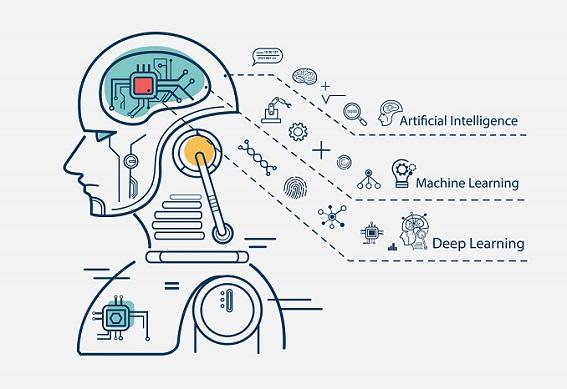
We are living in an age of unprecedented technological advancement, and at its very heart lies machine learning (ML), a powerful subset of artificial intelligence (AI) that enables systems to learn and improve from experience without being explicitly programmed. This technology is no longer confined to research labs; it has permeated nearly every aspect of our daily lives and business operations, from personalized streaming recommendations to sophisticated fraud detection systems. The global Machine Learning industry is a dynamic and rapidly expanding ecosystem, comprising a complex web of hardware manufacturers, software developers, cloud service providers, data scientists, and end-users across countless sectors. It represents a fundamental shift in how we approach problem-solving, moving from instruction-based computing to data-driven, predictive intelligence. This industrial revolution of intelligence is creating trillions of dollars in economic value by unlocking new efficiencies, creating entirely new business models, and providing solutions to some of humanity's most complex challenges. Understanding the structure, components, and players within this industry is crucial for anyone looking to navigate the modern economic landscape, as ML is quickly becoming a foundational pillar of competitive advantage and innovation for businesses and nations alike.
Core Components: The Trifecta of Data, Algorithms, and Compute
The machine learning industry is built upon a powerful trifecta of core components: data, algorithms, and computing power. Data is the lifeblood of ML; without vast quantities of high-quality, relevant data, even the most sophisticated algorithms are useless. The digital transformation of the global economy has created an explosion of data—from social media posts and e-commerce transactions to IoT sensor readings and medical imagery—providing the raw material for ML models to learn from. The second component, algorithms, are the mathematical engines that process this data to identify patterns, make predictions, and generate insights. This includes a wide array of techniques, such as supervised learning (learning from labeled data), unsupervised learning (finding patterns in unlabeled data), and reinforcement learning (learning through trial and error). The continuous innovation in algorithmic design, especially in deep learning with neural networks, has been a key driver of recent breakthroughs. The final, and equally critical, component is computing power. Training complex ML models on massive datasets requires immense computational resources. The advent of powerful Graphics Processing Units (GPUs), Tensor Processing Units (TPUs), and the accessibility of scalable cloud computing infrastructure has made it feasible and affordable for organizations of all sizes to develop and deploy sophisticated ML applications.
Pervasive Impact: Machine Learning Across Key Verticals
The true power of the machine learning industry is evident in its transformative impact across a diverse range of industry verticals. In healthcare, ML algorithms are revolutionizing medical diagnostics by analyzing scans like X-rays and MRIs to detect diseases such as cancer with superhuman accuracy. They are also accelerating drug discovery by predicting the efficacy of new molecular compounds, saving years of research and billions of dollars. In the financial sector, machine learning is the backbone of algorithmic trading, credit scoring, and fraud detection, identifying anomalous patterns in millions of transactions in real-time. The retail and e-commerce industry heavily relies on ML for creating personalized recommendation engines, optimizing supply chain logistics, and forecasting demand to prevent stockouts. In manufacturing, predictive maintenance, powered by ML models analyzing sensor data from machinery, allows companies to anticipate equipment failures before they happen, minimizing downtime and saving millions in repair costs. From agriculture, where ML helps optimize crop yields, to transportation, where it powers self-driving vehicles, the application of machine learning is creating unprecedented value and efficiency, fundamentally reshaping the operational landscape of every major economic sector.
The Competitive Landscape: Big Tech, Startups, and Open Source
The competitive landscape of the machine learning industry is characterized by a fascinating dynamic between established tech giants, agile startups, and the open-source community. Hyperscale cloud providers like Amazon Web Services (AWS), Microsoft Azure, and Google Cloud Platform (GCP) dominate a significant portion of the market by offering comprehensive MLaaS (Machine Learning as a Service) platforms. These platforms provide end-to-end toolkits that simplify the entire ML lifecycle, from data preparation and model training to deployment and monitoring, making the technology accessible to a broader audience. At the same time, the industry is a hotbed for innovation driven by thousands of startups. These smaller, more focused companies often develop highly specialized solutions for niche problems, such as AI for legal document review or ML for agricultural drone imagery analysis. They are a critical source of disruption and are frequently acquisition targets for larger corporations seeking to bolster their AI capabilities. A third, powerful force is the open-source community. Frameworks like Google's TensorFlow and Meta's PyTorch, along with a plethora of libraries and tools, have democratized access to state-of-the-art ML technology, enabling researchers, students, and smaller companies to innovate without massive upfront investment, fostering a collaborative and rapidly evolving ecosystem.
Future Outlook: Democratization, Ethics, and General Intelligence
Looking ahead, the trajectory of the machine learning industry is pointed towards even greater democratization, a stronger focus on ethical considerations, and the long-term pursuit of Artificial General Intelligence (AGI). The trend of democratization will continue, with the rise of AutoML (Automated Machine Learning) platforms that enable individuals with little to no coding or data science expertise to build and deploy effective ML models. This will embed AI capabilities even deeper into business functions. Alongside this expansion, there will be an intensified focus on ethics and responsible AI. Issues surrounding algorithmic bias, data privacy, transparency, and accountability are becoming paramount. The development of Explainable AI (XAI) techniques, which aim to make the decisions of complex "black box" models understandable to humans, will be a major area of research and development, driven by both regulatory pressure and public demand. In the long run, the industry continues its ambitious quest for AGI—a form of AI that can understand, learn, and apply its intelligence to solve any problem, much like a human being. While true AGI remains a distant goal, the incremental progress towards more versatile and capable models, such as large language models (LLMs), will continue to unlock transformative capabilities and define the next era of the machine learning industry.
➤ Featured Insights from Market Research Future:

 English
 Arabic
 French
 Spanish
 Portuguese
 Deutsch
 Turkish
 Dutch
Dutch
 Russian
 Romaian
 Portuguese (Brazil)
 Greek
Greek