


What Is Barcode Label Adhesive and How Do You Choose the Right Type?
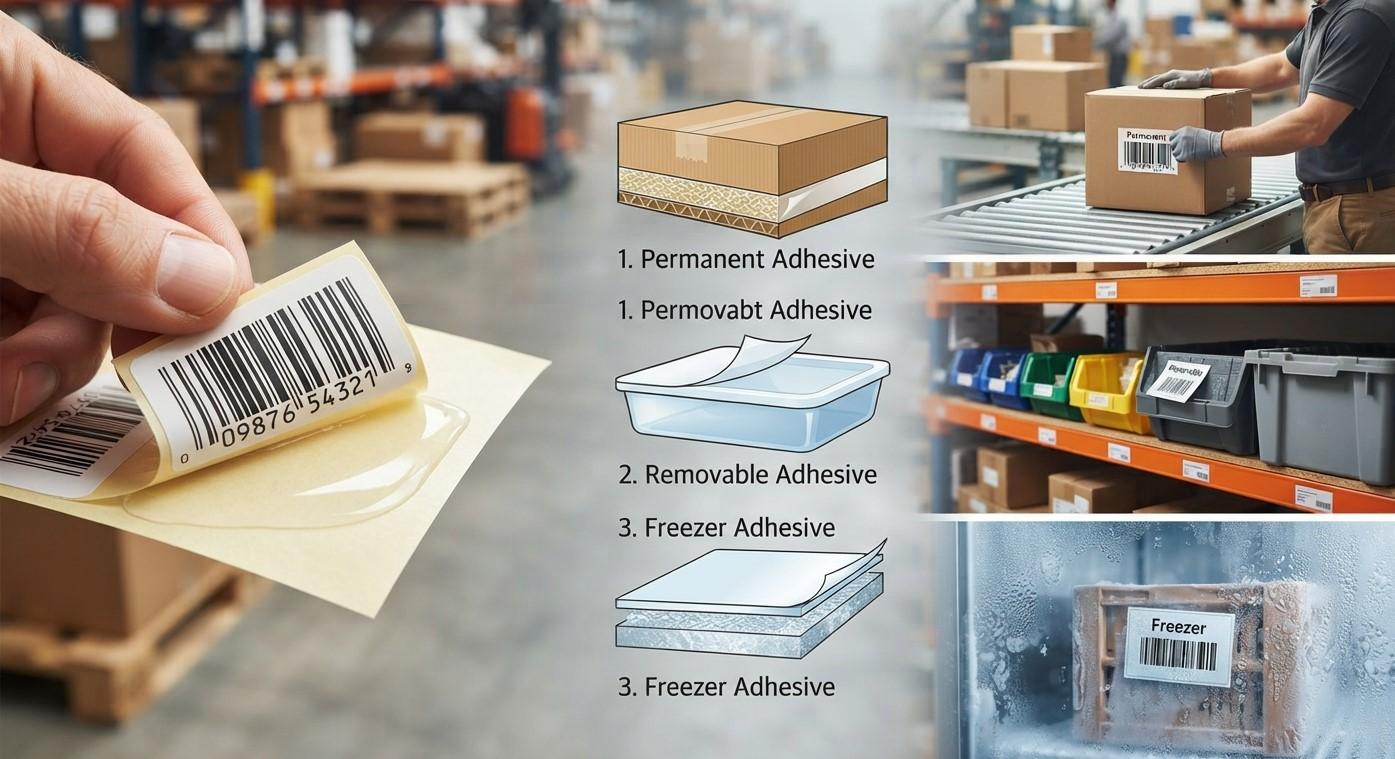
Barcode labels are essential for product identification, inventory tracking, shipping, warehousing, and manufacturing. However, even a clearly printed barcode can cause problems if its label does not stick properly to the product or packaging. Labels that peel off, curl at the edges, or fall away during handling can interrupt tracking processes and create unnecessary costs.
One important factor behind label performance is the adhesive. Barcode label adhesive determines how well a label attaches to a surface and how it performs under different environmental conditions. Choosing the right adhesive helps businesses keep labels securely attached and barcodes readable throughout their intended lifespan.
Pointus Solutions helps businesses explore barcode printing and identification solutions, while Shop Barcode offers access to relevant Printing Products for different labeling requirements.
In this guide, we explain what barcode label adhesive is, the common adhesive types, and how businesses can choose the right option for their products and working environments.
Table of Contents
- What Is Barcode Label Adhesive?
- Common Types of Barcode Label Adhesive
- Factors to Consider When Choosing Label Adhesive
- How to Match Adhesive to Different Applications
- Common Barcode Label Adhesive Problems
- Tips for Improving Label Adhesion
- Frequently Asked Questions
- Conclusion and Call to Action
1. What Is Barcode Label Adhesive?
Barcode label adhesive is the bonding material applied to the back of a label that allows it to stick to a product, package, container, or other surface.
Adhesives are designed for different applications. Some provide a strong permanent bond, while others allow labels to be removed without leaving significant residue. Certain specialized adhesives are formulated for challenging conditions such as cold storage, rough surfaces, or exposure to moisture.
Choosing an unsuitable adhesive can cause labels to peel off, slide out of position, or leave unwanted residue. It can also make scanning more difficult if a label becomes wrinkled or detached.
A complete barcode label solution includes several components:
- Face material: The printable surface that carries the barcode and other information.
- Adhesive: The layer that attaches the label to the intended surface.
- Release liner: The backing that protects the adhesive until the label is ready to be applied.
These components work together to determine label performance. The adhesive should always be selected according to the product surface, environment, and required label lifespan.
2. Common Types of Barcode Label Adhesive
Different adhesive types offer different levels of bonding strength, removability, and environmental performance.
2.1 Permanent Adhesive
Permanent adhesive is designed to form a strong bond that is not intended for clean removal during normal use.
It is commonly used for:
- Product identification labels
- Shipping and carton labels
- Warehouse inventory labels
- Equipment and asset identification
- Packaging that requires long-lasting identification
Permanent adhesives are useful when labels must remain attached throughout storage, handling, transportation, or product use.
However, the strength of the bond depends on the adhesive formulation, surface material, application conditions, and time allowed for the adhesive to develop its bond.
2.2 Removable Adhesive
Removable adhesive is designed to allow a label to be peeled away more easily, often with minimal residue when used under suitable conditions.
Common applications include:
- Temporary product labels
- Retail promotions
- Reusable containers
- Short-term identification
- Labels that must be removed during processing
Removable adhesives are useful when labels are temporary or when the underlying surface must remain clean.
They may not be appropriate for products exposed to heavy friction, moisture, or demanding environmental conditions unless the adhesive is specifically designed for those requirements.
2.3 High-Tack Adhesive
High-tack adhesives are formulated to provide strong initial adhesion, particularly on surfaces where standard adhesives may struggle.
They can be useful for certain textured, rough, or difficult-to-bond materials, depending on the adhesive formulation.
Potential applications include:
- Corrugated cartons
- Rough packaging surfaces
- Industrial containers
- Selected plastic materials
High tack does not automatically mean an adhesive will perform well on every surface. Testing is important, especially on low-surface-energy plastics or materials with coatings and contaminants.
2.4 Freezer and Low-Temperature Adhesive
Labels used in refrigerated or frozen environments may require specialized adhesives designed to bond at low temperatures.
These adhesives can be important for:
- Frozen food packaging
- Cold-storage inventory
- Refrigerated products
- Temperature-controlled logistics
Some products need to be applied at room temperature and then withstand cold storage. Others must be applied directly to chilled or frozen surfaces. These are different requirements, so check the adhesive's application-temperature and service-temperature specifications.
2.5 Heat-Resistant Adhesive
Certain industrial applications require labels that remain attached under elevated temperatures.
Heat-resistant adhesives may be used for equipment identification, manufacturing processes, or products exposed to heat during storage or use.
The maximum service temperature varies by product. Businesses should confirm that the complete label construction—not just the adhesive—can tolerate the expected temperature.
2.6 Specialty Adhesives
Some applications require adhesives formulated for particular surfaces or conditions, such as oily metals, flexible packaging, outdoor equipment, or chemical exposure.
For these situations, consult the label manufacturer's technical specifications and test the complete label system under actual working conditions.
3. Factors to Consider When Choosing Label Adhesive
Selecting the right adhesive requires more than checking whether a label feels sticky. Consider the following factors before purchasing barcode labels.
3.1 Surface Material
The surface receiving the label is one of the most important considerations.
Different materials behave differently:
- Cardboard: Often suitable for standard packaging adhesives, depending on the coating and texture.
- Glass: Can support strong adhesion when clean and dry.
- Metal: May work well with many adhesives, although oil, coatings, and surface treatments can affect performance.
- Plastic: Some plastics have low surface energy and require specially formulated adhesives.
- Rough surfaces: May need a more conformable face material and a suitable high-tack adhesive.
Always consider the actual surface finish rather than relying only on the material name.
3.2 Environmental Conditions
Think about the conditions the label will experience after application.
Will it encounter moisture, sunlight, dust, chemicals, temperature changes, or repeated handling? A label designed for a clean indoor environment may not perform well in an outdoor warehouse or industrial facility.
Choose an adhesive and label construction that match the expected exposure.
3.3 Required Label Lifespan
Temporary labels may need only short-term adhesion, while asset identification labels may need to remain in place for years.
For long-term tracking, consider both adhesive durability and the resistance of the printable surface to fading, scratching, and environmental damage.
The label must remain attached and readable for the entire required period.
3.4 Application Temperature
Application temperature refers to the temperature at which the label is applied. Service temperature refers to the temperatures the label can withstand after application.
These specifications are not interchangeable.
For example, an adhesive may withstand freezing conditions after bonding but may not form a reliable bond if applied directly to a frozen package. Check both specifications when choosing labels for cold storage or temperature-sensitive products.
3.5 Surface Cleanliness
Dust, moisture, oil, grease, and cleaning residues can prevent an adhesive from bonding correctly.
Before applying labels, prepare the surface according to the material and adhesive manufacturer's recommendations. Ensure it is sufficiently clean and dry for the intended application.
3.6 Label Material and Printer Compatibility
The adhesive is only one part of the label. The face material must also work with the printing method and remain suitable for the application.
For example, a durable synthetic label with a compatible adhesive may be preferable to standard paper for certain industrial environments.
Businesses should also verify compatibility with their direct thermal or thermal transfer printer and, where applicable, the selected ribbon.
4. How to Match Adhesive to Different Applications
The following examples can help businesses narrow down their choices.
| Application | Adhesive Type to Consider | Important Consideration |
|---|---|---|
| Shipping cartons | Permanent | Cardboard texture and transit conditions |
| Temporary retail labels | Removable | Clean removal from the product surface |
| Frozen products | Freezer-grade | Application and storage temperatures |
| Industrial equipment | Permanent or specialty | Heat, abrasion, and chemical exposure |
| Rough packaging | High-tack | Surface texture and label flexibility |
| Plastic containers | Plastic-compatible specialty adhesive, if needed | Surface energy and plastic type |
| Reusable containers | Removable or washable-label system | Required removal and cleaning process |
These are starting points rather than universal recommendations. Always check product specifications and test the label on the actual surface before large-scale use.
Businesses looking for suitable barcode labels, printers, ribbons, and related Printing Products can explore options through Shop Barcode and review solutions relevant to their workflows with Pointus Solutions.
5. Common Barcode Label Adhesive Problems
Even when a suitable adhesive is selected, incorrect application or environmental conditions can cause problems.
5.1 Labels Peeling at the Edges
Edge lifting may occur when the adhesive is unsuitable for the surface, the label is applied incorrectly, or the surface is contaminated.
Curved surfaces and small containers can also place extra stress on the label edges.
Solution: Check surface preparation, label dimensions, adhesive compatibility, and application pressure.
5.2 Labels Falling Off During Storage
Labels may detach when exposed to temperatures or moisture levels outside their design limits. The wrong adhesive can also fail to bond to certain plastics, coatings, or rough materials.
Solution: Select an adhesive rated for the surface and expected conditions, then test it during a representative storage period.
5.3 Adhesive Residue After Removal
Some permanent adhesives leave residue when labels are removed. This may be undesirable on reusable containers, retail products, or equipment.
Solution: Use a removable adhesive when appropriate and verify that it can be removed cleanly from the intended surface.
5.4 Wrinkled or Curled Labels
Labels may wrinkle or curl because of incorrect application, unsuitable face materials, or a mismatch between the label and the surface shape.
Solution: Choose a label material that conforms to the surface and apply it according to the manufacturer's guidance.
6. Tips for Improving Label Adhesion
Businesses can improve label performance by following these practical steps:
- Identify the surface: Confirm the exact material and whether it has a coating, texture, or treatment.
- Define environmental requirements: Consider moisture, heat, cold, chemicals, and abrasion.
- Prepare the surface properly: Remove contaminants using a suitable method and allow the surface to dry when required.
- Apply labels correctly: Follow the manufacturer's instructions for pressure, positioning, and application temperature.
- Allow bonding time: Some adhesives need time to develop their full bond strength.
- Test before bulk purchasing: Apply sample labels to representative products and evaluate them under real operating conditions.
- Check barcode readability: Confirm that the label remains flat, secure, and scannable after application and handling.
- Review failures: If labels repeatedly detach, document where and when the problem occurs and reassess the material and adhesive combination.
Testing is particularly important when changing suppliers, packaging materials, or storage conditions.
7. Frequently Asked Questions
Q1. What is the best adhesive for barcode labels?
There is no single best adhesive for every application. Permanent adhesives suit many long-term labeling needs, while removable, freezer-grade, high-tack, and specialty adhesives serve different purposes.
Q2. What is the difference between permanent and removable label adhesive?
Permanent adhesive is designed to maintain a strong bond and is not intended for clean removal. Removable adhesive is designed to peel away more easily under suitable conditions, often with less residue.
Q3. Which adhesive is suitable for freezer labels?
Use an adhesive specifically designed for the required low-temperature application. Check whether the label must be applied to a room-temperature or already chilled surface and verify its service-temperature range.
Q4. Why do barcode labels peel off plastic products?
Some plastics have low surface energy, making them difficult for standard adhesives to bond to. Surface contamination, curvature, and environmental conditions can also contribute. A plastic-compatible adhesive may be necessary.
Q5. Can the wrong adhesive affect barcode scanning?
Yes. If a label peels, wrinkles, shifts, or becomes damaged, the barcode may be difficult to scan. Choosing the right adhesive helps keep the label securely positioned and readable.
Q6. How can businesses test barcode label adhesive?
Apply sample labels to the actual product surface using the intended application process. Evaluate adhesion after the appropriate bonding period and expose the labels to representative storage, handling, and environmental conditions.
Q7. Where can businesses find barcode labels and printing supplies?
Businesses can explore barcode-related Printing Products through Shop Barcode and visit Pointus Solutions to learn more about barcode printing and identification options.
8. Conclusion and Call to Action
Choosing the right barcode label adhesive is essential for keeping labels attached, readable, and reliable throughout their intended lifespan. The best choice depends on the surface material, environmental conditions, application temperature, required durability, and whether the label needs to be removed later.
By understanding the differences between permanent, removable, high-tack, freezer-grade, and specialty adhesives, businesses can reduce peeling, prevent labeling errors, and improve product tracking. Testing labels under real operating conditions is the most reliable way to confirm that an adhesive meets your needs.
Looking for barcode labeling and printing solutions for your business? Visit Pointus Solutions to explore barcode and identification options, or browse Shop Barcode for suitable Printing Products to support your labeling requirements.
Choose the right adhesive and label construction to help your business maintain accurate product identification and efficient day-to-day operations.

 English
 Arabic
 French
 Portuguese
 Deutsch
 Turkish
 Dutch
Dutch
 Italiano
 Russian
 Romaian
 Portuguese (Brazil)
 Greek
Greek