


Why Your Pond Water Is Cloudy: Filtration Problems and Solutions
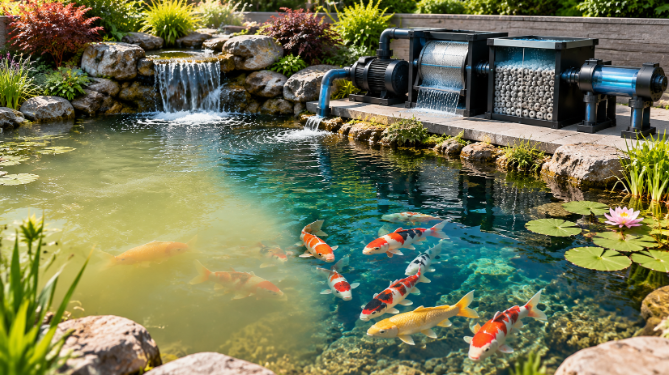
Clear pond water is one of the main goals for every pond owner, but cloudy water is one of the most common challenges faced in koi ponds and water gardens. While cloudy water may appear to be only a visual issue, it often indicates that the pond ecosystem is struggling with waste buildup, poor circulation, insufficient filtration, or an imbalance between different water treatment processes. A healthy pond depends on several factors working together, including mechanical filtration, biological filtration, proper circulation, and regular maintenance. When one part of the system is not performing correctly, water clarity can quickly decline.
A properly designed pond filter system helps remove suspended debris, support beneficial bacteria, and maintain stable water conditions. However, choosing the right filtration approach and understanding the reasons behind cloudy water are essential for long-term pond health.
Understanding the Common Causes of Cloudy Pond Water
Cloudy pond water can develop for different reasons, and identifying the exact cause is the first step toward fixing the problem. Some ponds become cloudy because of excess organic waste, while others may struggle because the filtration system is not properly matched to the pond size or fish population. Many pond owners assume that installing any filter will automatically create clear water. In reality, effective pond water filtration requires the right combination of equipment, proper sizing, and consistent maintenance.
A filtration system should be designed around the needs of the pond rather than simply focusing on the filter itself. Factors such as fish load, feeding levels, water volume, sunlight exposure, and circulation all influence how well a pond maintains clarity.
1. Poor Mechanical Filtration Can Leave Waste Floating in Your Pond
Mechanical filtration is responsible for capturing physical waste before it breaks down inside the pond. Fish waste, uneaten food, leaves, and other organic particles can quickly reduce water clarity when they remain suspended in the water. When mechanical filtration is insufficient, these particles continue circulating throughout the pond. Over time, they begin decomposing and increase the workload placed on biological filtration. A properly selected pond filter system should efficiently remove suspended solids before they create additional water-quality issues. Advanced filtration options, including bead filters and drum filtration systems, are designed to improve solids removal and support cleaner pond conditions.
For ponds with heavy fish loads or higher maintenance requirements, improving mechanical filtration is often one of the first steps toward achieving better water clarity.
2. An Undersized Pond Filter System May Not Handle Your Pond’s Needs
One of the most common reasons for cloudy pond water is using a filtration system that does not match the requirements of the pond. A small pond with only a few fish may require a different filtration capacity compared to a large koi pond with heavy feeding and a high fish population. When the filter is unable to process the amount of waste being produced, water quality can gradually decline. Selecting a pond filter system should involve considering pond volume, fish load, pump flow rate, and future growth. A system that works for a lightly stocked pond may not perform effectively as fish numbers increase.
Many pond owners upgrade equipment only after experiencing water-quality problems. Planning filtration capacity in advance helps prevent these issues and creates a more stable pond environment.
3. Lack of Proper Biological Filtration Can Affect Water Quality
Mechanical filtration removes visible waste, but it does not address all of the dissolved waste produced inside a pond. Biological filtration plays an important role by providing an environment where beneficial bacteria can develop and help process organic waste. Without adequate biological filtration, harmful compounds can accumulate and create unstable water conditions. This can affect fish health and contribute to ongoing water-quality problems. A complete filtration strategy combines mechanical and biological processes to manage different types of waste. Systems using specialized filtration media provide additional surface area where beneficial bacteria can establish and support a healthier pond ecosystem.
For koi ponds especially, biological filtration is an essential part of maintaining consistent water quality throughout the year.
4. Poor Water Circulation Prevents Effective Pond Water Filtration
Even a high-quality filter cannot perform properly if water is not moving efficiently throughout the pond. Poor circulation can create stagnant areas where debris collects and prevents waste from reaching the filtration system. Water movement helps distribute oxygen, transport waste, and ensure that filtration equipment receives a consistent flow of pond water. When designing or upgrading a filtration system, pump selection is just as important as choosing the filter itself. The pump should provide suitable circulation while matching the requirements of the filtration equipment.
A balanced system allows mechanical filtration, biological filtration, and other treatment stages to work more effectively together.
5. Excess Organic Waste Can Overload Your Filtration System
Organic waste enters ponds from multiple sources, including fish waste, uneaten food, fallen leaves, and plant debris. While some organic material is natural, excessive buildup can quickly overwhelm the filtration system. Overfeeding fish is one common cause of increased waste production. Uneaten food breaks down in the pond and adds unnecessary pressure to the filtration process. Regular maintenance, proper feeding habits, and efficient filtration help control organic waste levels. A well-designed pond water filtration system should be capable of managing the normal waste produced by the pond while allowing beneficial bacteria to maintain balance.
6. Green Water Problems May Require Additional UV Treatment
Not all cloudy water problems are caused by solid waste. Green water is often caused by free-floating algae, which can spread rapidly when conditions are suitable. Mechanical and biological filtration help manage many water-quality issues, but UV clarification can provide additional support when algae becomes a recurring problem. UV systems work by exposing circulating water to ultraviolet light, helping control free-floating algae that affects visibility. They are designed to work alongside filtration rather than replace mechanical or biological filtration. A complete pond filtration approach combines different technologies based on the specific challenges of the pond.
7. Incorrect Maintenance Can Reduce Filter Performance
Even the best filtration equipment requires proper maintenance to continue working effectively. Over time, debris buildup, reduced water flow, or neglected components can decrease filtration performance. Maintenance requirements vary depending on the type of equipment, pond conditions, and fish population. Regular inspections help identify problems before they affect overall water quality. Cleaning pumps, checking filtration components, and monitoring water conditions are important steps in maintaining a reliable system. Proper maintenance ensures that your pond filter system continues removing waste efficiently and supporting a healthier pond environment.
How the Right Pond Filter System Helps Improve Pond Water Clarity
Improving water clarity is not usually achieved through one single solution. Clear water comes from creating a balanced filtration system where each component performs a specific role. Mechanical filtration helps remove physical waste, biological filtration supports natural waste processing, and UV clarification helps manage algae-related clarity problems. When these stages work together, the pond becomes easier to maintain and more stable. GC Tek filtration solutions are designed around this complete approach. Systems such as AquaBead Filters provide mechanical and biological filtration support, while additional filtration technologies can be incorporated depending on the pond requirements.
The right filtration design depends on pond size, fish load, maintenance preferences, and long-term goals. A properly planned system helps pond owners achieve clearer water while reducing ongoing maintenance challenges.
Building a Better Pond Water Filtration Strategy
A successful pond filtration strategy starts with understanding the specific problems affecting water quality. Instead of replacing equipment without identifying the cause, pond owners should evaluate circulation, waste levels, filtration capacity, and maintenance practices. A balanced system is designed to handle the complete water-treatment process. This approach helps prevent recurring cloudy water issues and supports a healthier environment for fish.
Whether upgrading an existing setup or building a new pond, investing in the correct filtration design can make a significant difference in water clarity and overall pond performance.
Final Thoughts
Cloudy pond water is often a sign that one or more parts of the filtration process need improvement. From insufficient mechanical filtration and poor circulation to biological imbalance and algae growth, different problems require different solutions. A properly selected pond filter system provides the foundation for maintaining cleaner water and healthier fish. By combining effective filtration stages, choosing suitable equipment, and following regular maintenance practices, pond owners can create a more stable and enjoyable pond environment.
FAQs
1. Why is my pond water cloudy even with a filter?
Cloudy water can occur when the filtration system is too small, maintenance is insufficient, circulation is poor, or the pond has excess organic waste. The entire filtration setup should be evaluated to identify the cause.
2. How does a pond filter system improve water clarity?
A pond filter system improves clarity by removing suspended waste, supporting beneficial bacteria, and helping maintain balanced water conditions through proper filtration stages.
3. How do I know if my pond filter system is too small?
If water remains cloudy, debris accumulates quickly, or the filter struggles to keep up with fish waste, the system may not have enough capacity for the pond requirements.
4. Can better pond water filtration reduce algae problems?
Yes. Proper pond water filtration helps remove nutrients that contribute to algae growth. UV clarification can provide additional support for controlling free-floating algae.
5. How often should a pond filter system be cleaned?
Cleaning frequency depends on the pond size, fish load, debris levels, and filter type. Regular inspection helps determine when maintenance is needed.
6. Do koi ponds need mechanical and biological filtration?
Yes. Mechanical filtration removes solid waste, while biological filtration supports beneficial bacteria that help process dissolved waste. Both are important for maintaining koi pond water quality.
7. What is the best way to improve pond water clarity?
The best approach is to evaluate the complete system, including filtration capacity, circulation, maintenance, and water-quality conditions. A balanced filtration setup provides long-term results.

 English
 Arabic
 French
 Spanish
 Portuguese
 Deutsch
 Turkish
 Dutch
Dutch
 Russian
 Romaian
 Portuguese (Brazil)
 Greek
Greek