


Brake Fluid Flush Near Me: What Drivers Should Know About Brake Maintenance
Introduction
A dependable braking system is essential for everyday driving, whether you are commuting to work, running errands, or traveling on the highway. While brake pads and rotors are easy to understand, brake fluid is just as important because it transfers pressure from the brake pedal to the components that slow your vehicle.
Brake fluid maintenance can seem confusing if you are unfamiliar with automotive service. You may wonder when the fluid should be changed, whether a flush is necessary, or how to know if your vehicle has a problem. Understanding the basics helps you make informed maintenance decisions without paying for services you do not need.
What should I know before getting a brake fluid flush?
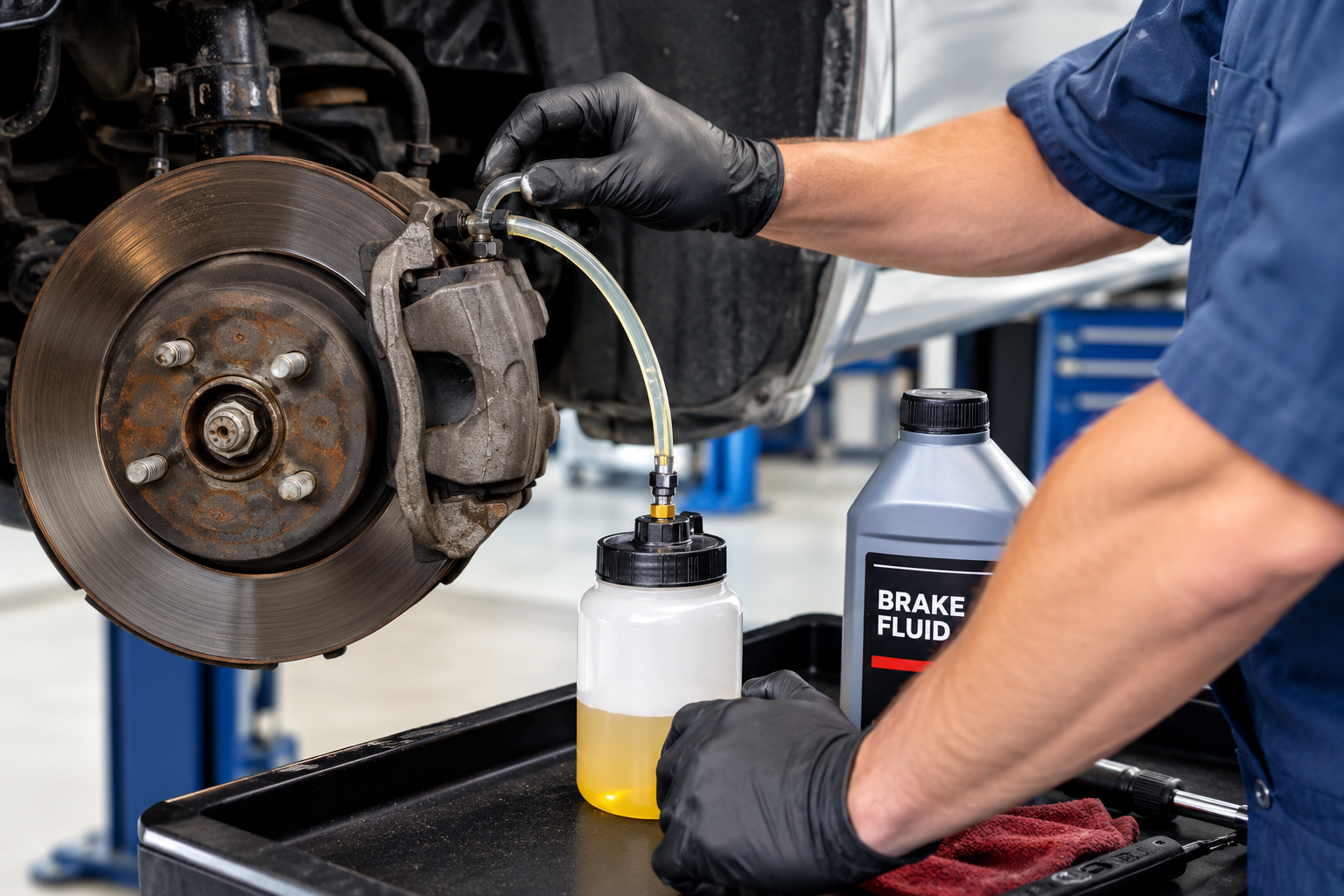
A brake fluid flush replaces old fluid with fresh fluid that meets your vehicle manufacturer's requirements. It is generally recommended according to the vehicle's maintenance schedule or when an inspection indicates that the fluid needs replacement. Drivers searching for a brake fluid flush near me should look for a qualified technician who can explain the service, inspect the braking system, and identify any additional repairs that may be necessary.
Before scheduling service, it helps to understand what brake fluid does and what a flush can, and cannot, accomplish.
What does brake fluid actually do?
Most passenger vehicles use hydraulic braking systems. When you press the brake pedal, the master cylinder creates hydraulic pressure. Brake fluid carries that pressure through brake lines and hoses to components such as calipers or wheel cylinders.
Those components then apply force to the brake pads or shoes, helping slow the wheels.
For this process to work properly, the fluid must have the right properties and remain compatible with the system's internal components. Air in the hydraulic system can interfere with pressure transmission, while moisture contamination can lower the fluid's boiling point.
This is why brake fluid condition matters even when the vehicle appears to stop normally.
Is a brake fluid flush different from a brake inspection?
Yes. A brake inspection evaluates the condition and operation of the braking system. Depending on the scope, a technician may examine brake pads, rotors, calipers, hoses, lines, fluid level, and other components.
A brake fluid flush is a specific maintenance procedure that replaces the old fluid. An inspection may determine whether a flush is due, but the two services are not interchangeable.
For example, a vehicle with worn brake pads may need pad replacement rather than a fluid flush. A vehicle with a leaking brake line needs the leak repaired. If air has entered the system, bleeding may be necessary as part of the repair or service procedure.
The appropriate work depends on the findings, not simply on the vehicle's age.
What happens if you ignore brake fluid maintenance?
Brake fluid naturally changes over time, especially when it absorbs moisture. Most conventional glycol-based brake fluids are hygroscopic, meaning they take in water from their surroundings.
As moisture accumulates, the fluid's boiling point decreases. Under heavy braking, excessive heat can cause the fluid to boil and create vapor. Vapor compresses more easily than liquid, potentially reducing braking effectiveness.
Neglected fluid may also become contaminated, and an overdue service can mean missing an opportunity to identify other developing problems.
Possible warning signs include:
- A brake pedal that feels softer than usual.
- A brake warning light that remains illuminated.
- A fluid level below the recommended range.
- Visible fluid around a wheel or beneath the vehicle.
- Changes in braking response or stopping performance.
These signs do not prove that a flush is the solution. A qualified technician should determine whether the cause is fluid condition, worn parts, air in the lines, a hydraulic fault, or another issue.
If your vehicle experiences a sudden loss of braking performance, do not continue driving. Stop safely and arrange professional assistance.
How do you know which brake fluid your car needs?
Brake fluid comes in different specifications, including DOT 3, DOT 4, and DOT 5.1 glycol-based fluids, as well as DOT 5 silicone-based fluid. They are not all interchangeable.
The correct specification depends on your vehicle's design and manufacturer instructions. Some fluids may be compatible under certain conditions, but compatibility should never be assumed based on the DOT number alone.
Before service, a technician should:
1. Check the owner's manual or manufacturer service information.
2. Confirm the required brake fluid specification.
3. Inspect the system for leaks or damage.
4. Use clean fluid from a suitable container.
5. Follow the correct filling, bleeding, and verification procedure.
Using the wrong fluid can damage components or affect braking performance. Brake fluid should also be kept away from vehicle paint because it can damage painted surfaces.
How can drivers get more value from brake maintenance?
Good maintenance starts with accurate information and a clear understanding of what the vehicle needs. Keep records of brake fluid changes, inspections, and repairs so you know when the next service may be due.
During routine maintenance, ask the technician to explain the condition of the fluid and any recommended work. If additional repairs are suggested, request a clear explanation of the symptoms, inspection findings, and reasons for the recommendation.
You can also help prevent avoidable problems by addressing warning lights promptly, checking your maintenance schedule, and avoiding unnecessary handling of the brake fluid reservoir.
Remember that brake fluid is only one part of the braking system. Pads, rotors, calipers, lines, tires, and other components all contribute to safe stopping.
Frequently Asked Questions
Can I check my brake fluid at home?
You can usually check the reservoir level by following the owner's manual, but this does not reliably establish fluid condition or confirm that the system is safe. Avoid opening the reservoir unnecessarily, and have any abnormal level or warning investigated.
Does every car need a brake fluid flush every year?
No. Replacement intervals vary by manufacturer and vehicle. Follow your owner's manual or maintenance schedule instead of assuming every car needs an annual flush.
Conclusion
Understanding brake fluid maintenance helps you make better decisions about your vehicle's safety. A flush can be valuable when the fluid has reached its replacement interval or its condition requires service, but it will not correct every braking problem. Accurate diagnosis and the correct fluid specification are essential.
For drivers in Plano, Texas, a consistent maintenance routine can help keep the braking system in good condition. Ask questions, follow manufacturer recommendations, and address changes in brake performance promptly to support safer, more predictable driving.

 English
 Arabic
 French
 Spanish
 Portuguese
 Deutsch
 Turkish
 Dutch
Dutch
 Italiano
 Russian
 Portuguese (Brazil)
 Greek
Greek