


Choosing a Drinkware Manufacturing Partner for Custom Products
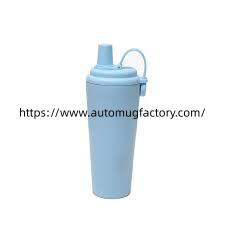
A reusable bottle accompanies people through many parts of the day, from morning routines and workplace activities to travel and outdoor recreation. Choosing a Stainless Steel Bottle involves more than comparing colors or exterior shapes, because the material structure, closure design, carrying experience, and maintenance requirements all influence how naturally the product fits into daily life. Considering these details together helps buyers identify drinkware suited to their habits and expectations.
The main body material establishes the product's basic character. Stainless steel is frequently used for reusable drinkware because it provides a sturdy structure and can accommodate different finishing techniques. Its appearance can range from understated and professional to modern and expressive, depending on the selected surface treatment. Material selection should also account for the intended beverage contact, the manufacturing process, and the conditions in which the finished product will be used.
A bottle is rarely made from a single material. Its lid, sealing ring, handle, grip, and protective base may use different materials to provide particular functions. These components affect how the product opens, closes, feels in the hand, and interacts with surrounding surfaces. Buyers should consider the compatibility of these parts and whether their construction supports convenient use. Attention to smaller components can reveal practical differences that are not obvious from product photographs.
The selection process should begin with the user's routine. Someone carrying water between meetings may prefer a simple design that is easy to open and store. Travelers may value secure closure and comfortable carrying, while people spending time outdoors may appreciate a grip that remains practical during movement. Understanding these situations helps buyers prioritize useful features instead of choosing a product based only on its appearance or novelty.
Closure design has a direct influence on everyday interaction. Screw lids offer a familiar approach, while flip-top openings, push-button mechanisms, and straw arrangements create different drinking experiences. Each option should be considered in relation to ease of operation, sealing, cleaning, and the user's environment. A closure that is convenient to open should also be practical to maintain, since small moving parts and narrow spaces may collect residue during regular use.
Some drinkware designs incorporate insulation to help beverages maintain their temperature. The overall structure, including the body walls, neck, lid, and sealing areas, influences how the product manages heat transfer. Buyers should decide whether this function is important for the intended application. A bottle designed for occasional water consumption may have different priorities from one intended for carrying hot or cold beverages throughout a busy day.
Manufacturing processes translate material and design decisions into a finished product. Depending on the construction, production may involve forming, joining, polishing, coating, assembly, and inspection. Each stage affects the final appearance and component integration. Careful coordination helps manufacturers manage surface consistency and ensure that different parts fit together as intended. For businesses developing a product range, these processes are relevant to both individual product quality and consistency across a collection.
Quality evaluation should consider functional details alongside appearance. Buyers can examine the smoothness of the surface, the fit of the lid, the condition of the joining areas, and the ease of operating removable components. Seals should sit correctly, and the overall construction should feel coherent during ordinary handling. For customized orders, discussing sample approval and inspection expectations in advance can help establish a shared understanding of the intended finish.
Comfort depends on the way the bottle interacts with the hand and the surrounding environment. Body contours influence grip, while surface texture can change the tactile experience. A stable base makes placement more convenient on suitable flat surfaces, and a practical shape can simplify storage in bags or travel spaces. Handles and textured sections may be helpful when they address a specific carrying need, but unnecessary additions can make the product harder to store or clean.
Maintenance should be part of product evaluation from the beginning. Lid threads, drinking openings, and sealing components may require regular attention to remove beverage residue. Designs that allow users to access these areas can make cleaning less troublesome. Buyers should also review care instructions and consider whether the recommended routine is realistic for the target audience. Convenient maintenance can encourage continued use and help preserve the product's appearance.
Visual styling gives drinkware a recognizable identity. Brushed surfaces can create a subtle industrial character, while polished finishes offer a more reflective appearance. Color, body contours, decorative patterns, and branding can help a product fit a particular retail collection or corporate identity. Effective design connects these choices with the practical form of the bottle, so the appearance remains consistent with handling, storage, and cleaning requirements.
For businesses developing customized drinkware, design decisions may extend to surface finishes, color schemes, logos, closure styles, and packaging. Yongkang Xiaoyu Industry & Trade Co., Ltd. works in the reusable drinkware sector, where coordinating product appearance with practical construction is an important part of development. Buyers can clarify their intended audience, preferred design direction, and everyday use requirements before discussing possible product concepts with a manufacturing partner.
Product development benefits from examining the bottle as a complete object rather than a collection of separate features. The body, closure, seals, grip, finish, and packaging all contribute to how the product is perceived and used. Businesses interested in reusable drinkware and related product options can learn more about Yongkang Xiaoyu Industry & Trade Co., Ltd. through its website at https://www.automugfactory.com

 Arabic
 French
 Spanish
 Portuguese
 Deutsch
 Turkish
 Dutch
 Italiano
 Russian
 Romaian
 Portuguese (Brazil)
 Greek