


How comme des garcons Redefined Cool
Comme des Garçons doesn’t want comfort. Not physical comfort, not visual comfort, definitely not mental comfort. The brand operates in a zone where friction is the point. The clothes feel unresolved, sometimes abrasive, occasionally confrontational. That tension isn’t accidental. It’s the engine.
Where most fashion aims to seduce, Comme des Garcons prefers to unsettle. A raised eyebrow is a win. Confusion is progress. The collections don’t whisper elegance — they interrupt the room.
Rei Kawakubo’s Anti-Answer Mentality
Rei Kawakubo has never been interested in giving explanations. No manifestos. No neat summaries. Her work functions like a question mark stitched into fabric. The refusal to clarify forces the viewer to participate, to project meaning, to wrestle with discomfort.
That ambiguity is radical. In an industry addicted to narratives and mood boards, silence becomes defiant. Comme des Garçons isn’t about what something “means.” It’s about what it does to you.
Against Conventional Beauty
Deconstruction as a Language
Seams are exposed. Proportions collapse. Jackets look unfinished, like they stopped halfway through becoming polite. Deconstruction here isn’t a gimmick — it’s grammar. A way of speaking through rupture.
By dismantling garments, Comme des Garçons dismantles expectations. The idea of “well-made” gets redefined. Craft still exists, but it’s buried under intentional discord.
Silhouettes That Refuse to Behave
Bodies disappear inside these clothes. Or get distorted. Or multiplied. Hips bulge where they shouldn’t. Shoulders slope into unfamiliar geometry. The silhouette stops flattering and starts questioning.
The message is quiet but firm: beauty doesn’t owe anyone symmetry.
Comme des Garçons and the Politics of Clothing
Gender Ambiguity on the Runway
Gender has always been treated as optional here. Skirts on men. Armor-like dresses on women. Shapes that sidestep binary logic entirely. The clothes don’t perform masculinity or femininity — they short-circuit both.
Long before “genderless” became a retail buzzword, Comme des Garçons was already there, moving past the conversation instead of waiting for permission.
Power, Control, and the Body
These garments often resist the body rather than celebrate it. Tight in the wrong places. Loose where structure is expected. That resistance flips the usual power dynamic. The wearer adapts to the clothing, not the other way around.
It’s uncomfortable. Intentionally so. Control becomes part of the dialogue.
The Art of Awkwardness
Asymmetry, Bulges, and Intentional Flaws
There’s a cultivated wrongness to Comme des Garçons. Lumps that feel medical. Angles that feel architectural. Pieces that look like they’re mutating mid-walk.
These aren’t mistakes. They’re provocations. Visual static meant to disrupt the clean signal of mainstream fashion.
When “Ugly” Becomes Intellectual
Calling it ugly misses the point. This is aesthetic resistance. A rejection of prettiness as the ultimate goal. The designs ask for patience, for repeat viewing, for context.
Over time, the initial shock softens into appreciation. Not because it becomes beautiful — but because it becomes smart.
Commercial Success Without Compromise
Dover Street Market as a Cultural Weapon
Dover Street Market isn’t a store. It’s a controlled environment. Curated chaos. A retail space that feels closer to an installation than a shop. By designing the context, Comme des Garçons protects the work.
Selling doesn’t dilute the vision. It amplifies it.
Accessibility vs. Integrity
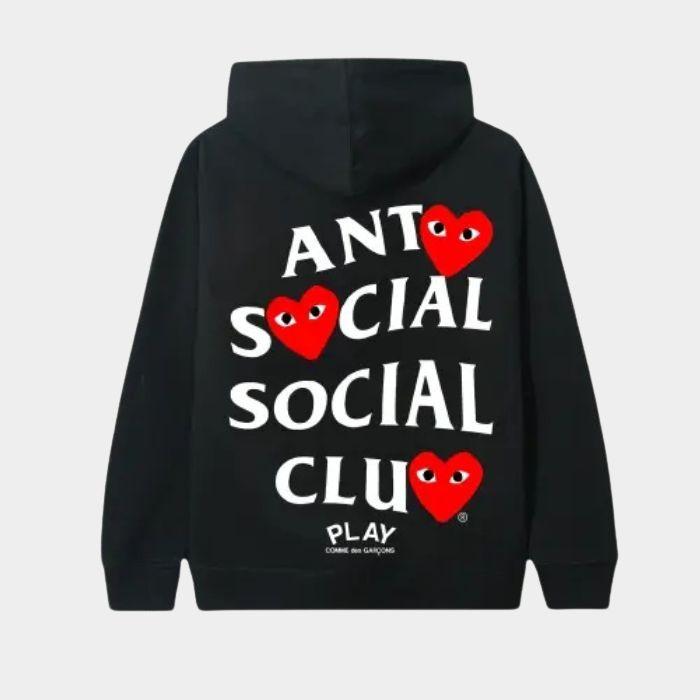
Yes, there are logo tees. Yes, the heart-with-eyes exists. But even those accessible pieces function as gateways, not endpoints. The core remains uncompromised, dense, and unapologetically strange.
Mass appeal was never the destination. Sustainability of ideas was.
Cultural Impact Beyond Fashion
Influence on Streetwear and Youth Culture
You can see the fingerprints everywhere. Oversized silhouettes. Deconstructed layering. The permission to look unfinished. Streetwear absorbed these ideas quietly, then ran with them.
Not the shock, but the freedom. That matters.
Why Artists, Not Trend-Chasers, Wear CDG
Comme des Garçons attracts thinkers. Musicians, sculptors, architects, kids who read between the lines. It’s less about flexing and more about signaling alignment.
Wearing it says something, even if nobody can quite translate it.
Why Discomfort Is the Point
Emotional Reactions as Design Goals
If a collection feels polarizing, it’s working. Love and confusion sit closer together than most people admit. Comme des Garçons thrives in that overlap.
Emotion beats approval. Always.
Clothing That Demands Thought
These clothes don’t disappear into the background. They insist on presence. On interpretation. On dialogue.
Comme des Garçons is designed to disturb because disturbance wakes people up. And in a landscape obsessed with ease, that refusal is its most powerful move.

 English
 Arabic
 French
 Spanish
 Deutsch
 Turkish
 Dutch
Dutch
 Italiano
 Russian
 Romaian
 Portuguese (Brazil)
 Greek
Greek