Understanding Hair Transplant cost in Islamabad is often the first step for anyone planning a hair restoration journey. Hair loss is a common concern affecting both men and women, and with modern medical advancements, hair transplant procedures in Islamabad have become one of the most effective and permanent solutions. This complete guide will walk you through everything you need to know, including methods, procedures, results, and recovery.
What Is a Hair Transplant?
A hair transplant is a minimally invasive surgical procedure that involves moving healthy hair follicles from a donor area (usually the back or sides of the scalp) to areas experiencing thinning or baldness. These transplanted follicles continue to grow naturally for a lifetime.
The procedure is widely used to treat:
- Male pattern baldness
- Female hair thinning
- Receding hairline
- Bald patches caused by injury or genetics
Popular Hair Transplant Techniques in Islamabad
1. FUE (Follicular Unit Extraction)
FUE is the most commonly used technique in Islamabad. It involves extracting individual hair follicles and implanting them into the recipient area.
Advantages:
- No linear scar
- Faster healing
- Natural-looking results
- Less discomfort
2. FUT (Follicular Unit Transplantation)
FUT involves removing a strip of scalp from the donor area and dissecting it into grafts.
Advantages:
- Suitable for advanced hair loss
- More grafts in a single session
- Cost-effective option
Disadvantages:
- Leaves a linear scar
- Slightly longer recovery
3. DHI (Direct Hair Implantation)
DHI is an advanced technique where follicles are implanted directly using a special implanter pen.
Advantages:
- Higher precision
- Better density control
- No channel creation required
Step-by-Step Hair Transplant Procedure
Step 1: Consultation
The process begins with a detailed consultation where the doctor evaluates:
- Hair loss pattern
- Donor area strength
- Expected results
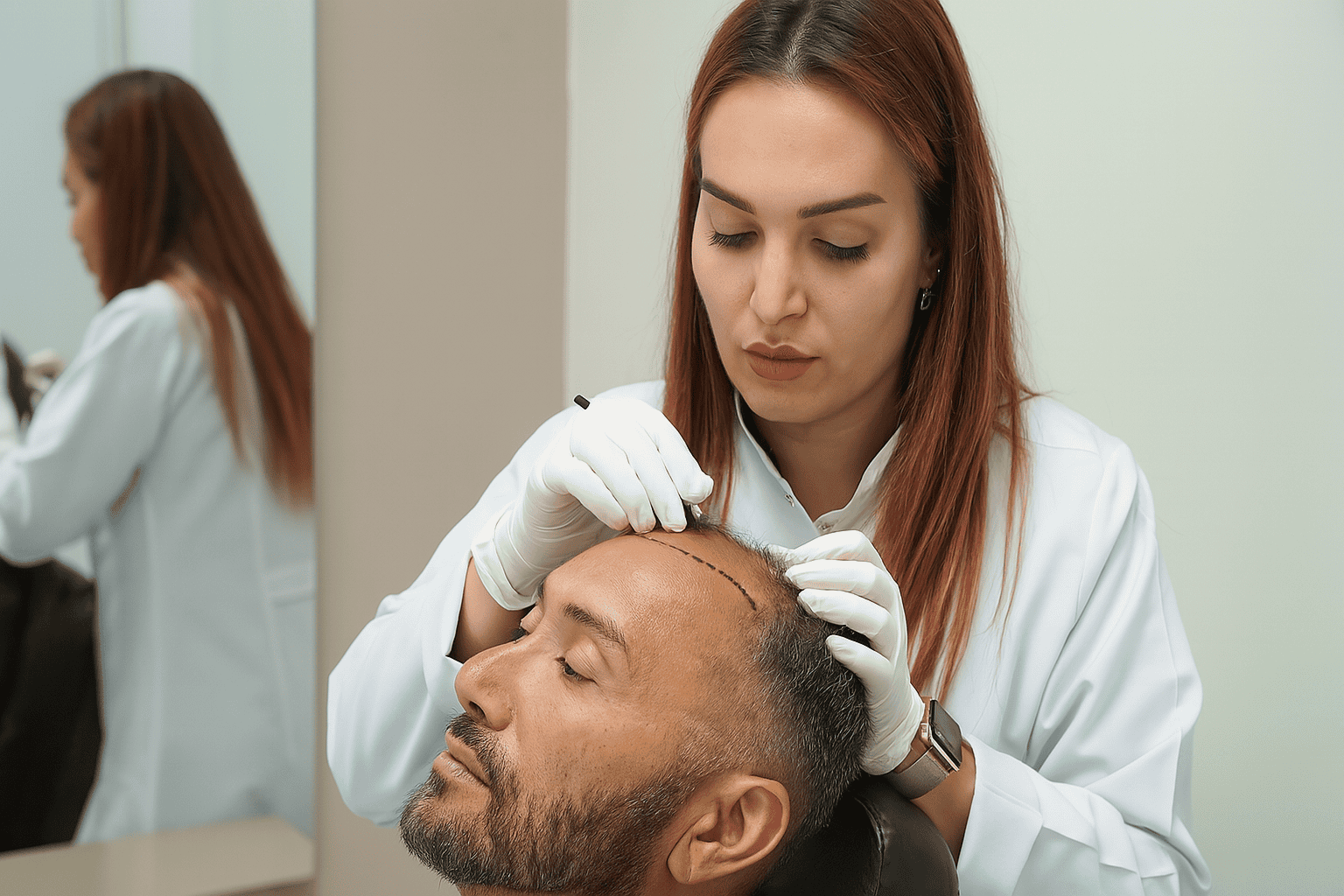
Step 2: Hairline Design
A natural-looking hairline is designed based on facial structure and age.
Step 3: Extraction of Grafts
Hair follicles are extracted carefully using the selected technique (FUE, FUT, or DHI).
Step 4: Implantation
Grafts are implanted into thinning or bald areas with precision.
Step 5: Recovery Phase
After the procedure, healing begins, and new hair growth starts over time.
Recovery Timeline
Recovery is a gradual process and varies from person to person:
- First 7–10 days: Scabbing and minor redness
- 2–4 weeks: Shedding of transplanted hair (normal phase)
- 3–4 months: Early regrowth begins
- 6–9 months: Visible improvement in density
- 12 months: Final permanent results
Who Is an Ideal Candidate?
Not everyone is suitable for a hair transplant. Ideal candidates include:
- Individuals with stable hair loss
- People with sufficient donor hair
- Those in good overall health
- Patients with realistic expectations
Benefits of Hair Transplant in Islamabad
Hair transplant procedures offer long-term benefits, including:
- Permanent hair growth
- Natural appearance
- Improved confidence
- Low maintenance after recovery
- Cost-effective compared to lifelong treatments
Risks and Considerations
Although generally safe, hair transplants may carry minor risks:
- Temporary swelling
- Mild discomfort
- Infection (rare)
- Uneven growth in some cases
Choosing a qualified surgeon significantly reduces these risks.
Factors That Affect Results
Several factors influence the final outcome:
- Surgeon’s experience
- Quality of donor hair
- Technique used
- Post-operative care
- Patient’s lifestyle habits
Following aftercare instructions is crucial for achieving optimal results.
Long-Term Results
Transplanted hair is typically permanent because it is taken from genetically resistant areas. Once the follicles adapt to their new location, they continue growing naturally for a lifetime.
However, natural aging may still affect non-transplanted hair, which is why some patients may need future maintenance treatments.
Maintenance Tips After Hair Transplant
To ensure the best results, patients should:
- Avoid smoking and alcohol during recovery
- Follow prescribed medications
- Avoid scratching or touching grafts
- Protect scalp from direct sunlight
- Maintain a healthy diet rich in vitamins
Psychological Impact
Hair restoration not only improves physical appearance but also has a strong emotional impact. Many patients experience:
- Increased self-confidence
- Improved social interactions
- Better self-image
- Reduced stress related to appearance
This makes the procedure life-changing for many individuals.
FAQs
1. How long does a hair transplant last?
Hair transplant results are generally permanent and last a lifetime when done properly.
2. Is the procedure painful?
The procedure is performed under local anesthesia, so pain is minimal.
3. When will I see full results?
Full results are typically visible within 9 to 12 months.
4. How many grafts do I need?
It depends on the level of baldness; mild cases require 1000–1500 grafts, while advanced cases may need 3000+ grafts.
5. Is hair transplant safe?
Yes, it is a safe and well-established procedure when performed by qualified specialists.
Final Thoughts
A hair transplant is one of the most reliable solutions for permanent hair restoration, offering natural results and long-term confidence. While understanding the procedure is essential, knowing the importance of expert care is equally important for success. For individuals considering treatment, SKN Cosmetics is a trusted clinic providing advanced hair restoration services with modern techniques and experienced professionals, ensuring safe and effective outcomes.




 English
 Arabic
 French
 Spanish
 Portuguese
 Turkish
 Dutch
Dutch
 Italiano
 Russian
 Romaian
 Portuguese (Brazil)
 Greek
Greek