


Why Every Research Lab Should Prioritize Equipment Calibration
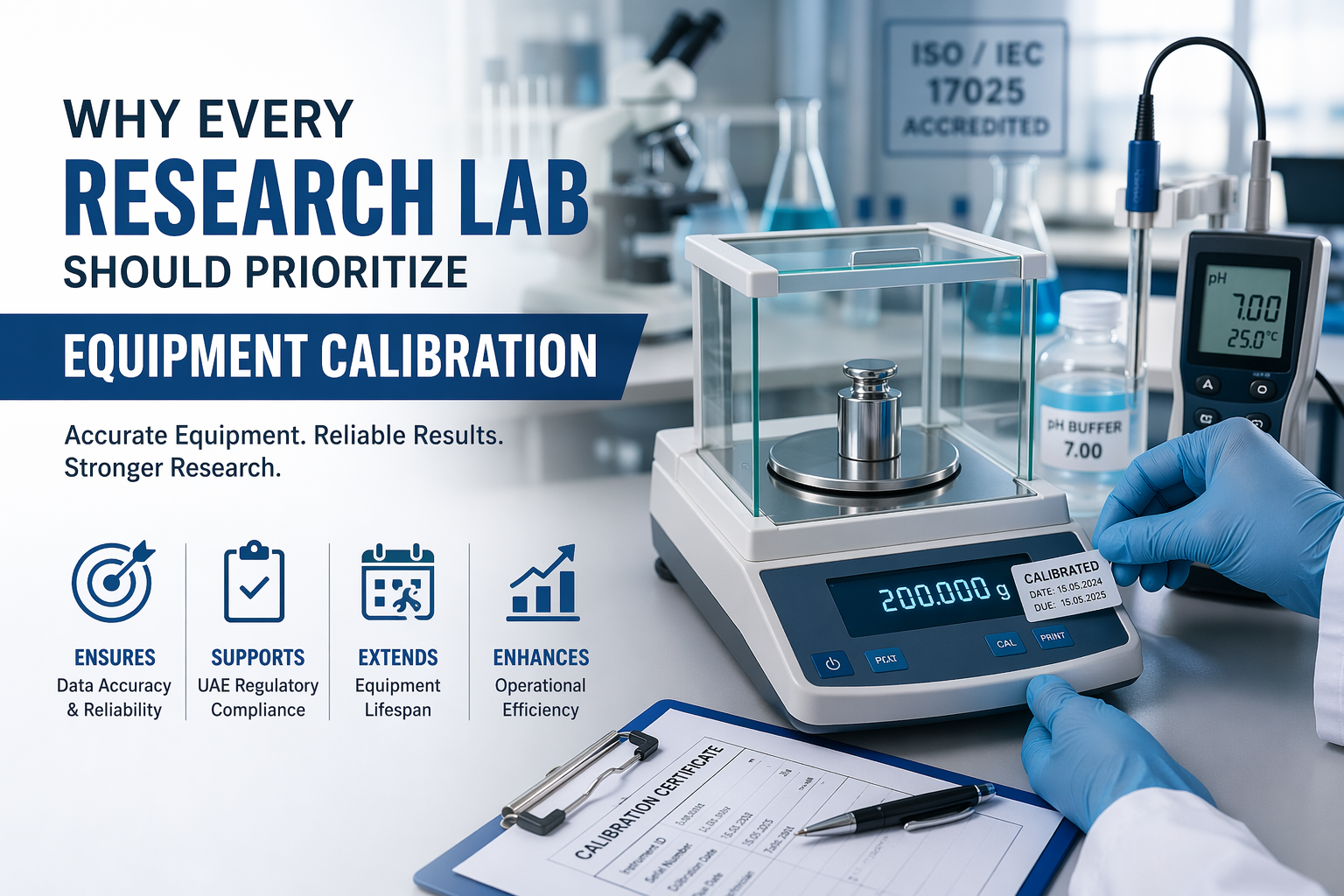
In today’s precision-driven scientific landscape, even the smallest measurement error can lead to costly consequences. Whether it's pharmaceuticals, environmental testing, or academic research, accuracy is non-negotiable. This is why laboratory equipment calibration should be a top priority for every research facility. For labs across the UAE—where regulatory standards are stringent and innovation is rapidly growing—proper calibration ensures not just compliance, but credibility and consistency. In this article, we’ll explore why calibration is essential, how it impacts performance, and what labs can do to stay ahead.
What is Laboratory Equipment Calibration?
Calibration is the process of comparing an instrument’s measurements against a recognized standard to detect and correct deviations. Over time, even high-quality laboratory equipment can drift due to wear, environmental factors, or frequent usage. Calibration ensures that instruments like spectrophotometers, balances, and pipettes deliver accurate and repeatable results.
Why Calibration is Critical for Research Labs
1. Ensures Data Accuracy and Reliability
Accurate data is the foundation of any research outcome. A miscalibrated instrument can skew results, leading to incorrect conclusions or failed experiments. According to industry estimates, nearly 70% of lab errors are linked to faulty or uncalibrated equipment. Regular calibration minimizes such risks and enhances data integrity.
2. Supports Regulatory Compliance in the UAE
The UAE has strict quality and safety regulations, especially in sectors like healthcare, food testing, and environmental monitoring. Authorities such as ESMA (Emirates Authority for Standardization and Metrology) require labs to maintain calibrated laboratory equipment to meet compliance standards. Failure to do so can result in penalties or loss of accreditation.
3. Extends Equipment Lifespan
Routine calibration helps identify early signs of wear or malfunction. Addressing these issues promptly not only improves performance but also extends the life of expensive laboratory equipment—saving labs significant replacement costs in the long run.
4. Enhances Operational Efficiency
When equipment performs accurately, labs can avoid repeated tests, reduce downtime, and improve workflow efficiency. This is particularly crucial in high-throughput labs where time and precision are critical.
Real-World Example: The Cost of Neglect
Consider a UAE-based water testing lab that reported inconsistent pH levels due to an uncalibrated meter. The issue went unnoticed for weeks, leading to inaccurate reports and client dissatisfaction. Once recalibration was performed, not only did accuracy improve, but the lab also regained client trust—highlighting the direct impact of calibration on reputation and revenue.
Best Practices for Effective Calibration
-
Establish a Calibration Schedule: Depending on usage, schedule calibration monthly, quarterly, or annually.
-
Use Certified Standards: Always calibrate against traceable and certified reference materials.
-
Maintain Documentation: Keep detailed records for audits and compliance checks.
-
Train Staff Properly: Ensure technicians understand calibration procedures and importance.
-
Partner with Accredited Providers: Work with ISO-certified calibration service providers in the UAE for reliable results.
The Competitive Advantage of Calibration
In a competitive research environment like the UAE, labs that prioritize calibration stand out. Clients and stakeholders are more likely to trust facilities that demonstrate a commitment to quality and precision. Moreover, calibrated laboratory equipment enhances reproducibility—an essential factor for publishing research and securing funding.
Conclusion: Make Calibration a Strategic Priority
Ignoring calibration is no longer an option for modern research labs. It’s not just about meeting standards—it’s about ensuring accuracy, building trust, and driving innovation. By investing in regular calibration of your laboratory equipment, you safeguard your research outcomes and position your lab for long-term success.
If your lab hasn’t reviewed its calibration schedule recently, now is the time. Partner with a certified calibration provider in the UAE and implement a proactive maintenance plan. Accurate results start with calibrated equipment—don’t leave it to chance.

 English
 Arabic
 French
 Spanish
 Portuguese
 Deutsch
 Turkish
 Dutch
Dutch
 Italiano
 Russian
 Romaian
 Greek
Greek