


Spot Welder for Aluminum: Engineering Principles, Challenges & Industrial Solutions
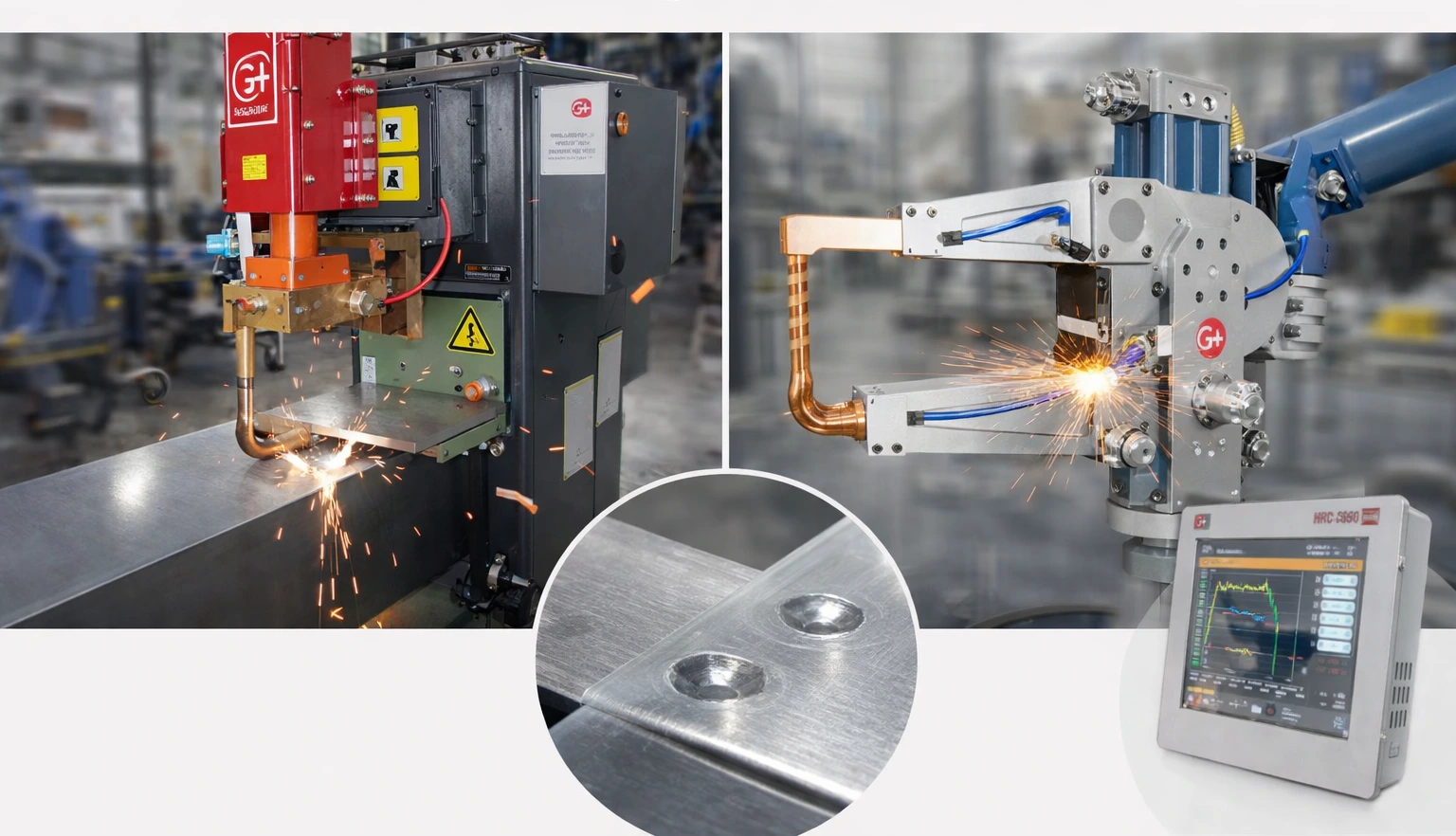
In modern manufacturing, the demand for lightweight, high-strength structures has made aluminum one of the most widely used materials across automotive, aerospace, EV battery systems, and industrial equipment. However, joining aluminum efficiently and reliably is a significant engineering challenge. This is where a spot welder for aluminum becomes a critical production asset.
Unlike steel, aluminum requires precise heat control, extremely high current density, and advanced power regulation systems. For OEMs and production engineers, selecting the right resistance welding system directly impacts weld quality, production speed, and overall cost efficiency.
This article explores the principles, challenges, applications, and best practices of aluminum spot welding, and how advanced systems like those from Heron Welder enable stable, high-quality industrial production.
Why Aluminum Is Difficult to Spot Weld
Aluminum’s physical properties make it inherently difficult to join using traditional resistance spot welding methods:
1. High Electrical and Thermal Conductivity
Aluminum quickly dissipates heat away from the weld zone. This means that achieving a stable weld nugget requires significantly higher energy input compared to steel. In industrial practice, aluminum often demands 2–3 times higher welding current than carbon steel applications.
2. Oxide Layer Barrier
Aluminum naturally forms a hard oxide layer with a melting point far above the base metal. This oxide layer increases contact resistance variability and can lead to inconsistent weld quality if not properly managed.
3. Narrow Process Window
Small deviations in current, force, or time can result in:
- Expulsion (molten metal splash)
- Weak nugget formation
- Porosity and cracking
Because of these factors, aluminum spot welding requires highly controlled, closed-loop systems rather than conventional welding equipment.
How a Spot Welder for Aluminum Works
A spot welder for aluminum operates using resistance heating, where electrical current passes through clamped metal sheets to generate localized heat at the interface.
Key Process Stages:
1. Pre-squeeze Phase
Electrodes apply controlled force to ensure stable contact between aluminum sheets and break partial oxide resistance.
2. Welding Phase
A high current pulse is applied for milliseconds. The resistance at the interface generates heat, forming a molten weld nugget.
3. Forging & Cooling Phase
Current stops while electrode force is maintained. This ensures controlled solidification and improves joint density and strength.
Why MFDC Spot Welders Are Essential for Aluminum
For industrial aluminum joining, MFDC (Medium Frequency Direct Current) spot welding technology is considered the industry standard.
Advantages of MFDC Systems:
- Stable DC Output: Eliminates AC zero-crossing losses, improving energy efficiency
- High Precision Control: Millisecond-level current regulation ensures repeatable weld quality
- Reduced Spatter: Lower instability during fusion improves surface finish
- Better Nugget Consistency: Critical for multi-layer aluminum stacks
Modern MFDC systems can achieve up to 60 kA short-circuit current, making them suitable for demanding aluminum applications.
Industrial Applications of Aluminum Spot Welding
1. Automotive Manufacturing
Aluminum spot welding is widely used in:
- EV battery trays
- Lightweight body structures
- Crash-relevant components
The automotive industry relies on aluminum to reduce vehicle weight and improve energy efficiency.
2. Aerospace Structures
Aircraft components such as fuselage panels and internal supports require:
- High strength-to-weight ratio
- Long-term fatigue resistance
- Highly consistent weld quality
3. Electrical & Energy Systems
Aluminum busbars, enclosures, and conductive assemblies depend on precise resistance welding for reliability and thermal stability.
4. Industrial Equipment
From enclosures to structural frames, aluminum spot welding enables fast, repeatable production at scale.
Key Parameters for Stable Aluminum Spot Welding
To achieve consistent weld quality, engineers must carefully control:
1. Welding Current
Typically 25–80 kA, depending on sheet thickness and alloy grade.
2. Electrode Force
Generally 2–3 times higher than steel welding, ensuring proper contact and reducing surface resistance.
3. Welding Time
Very short pulse durations (0.1–2 seconds) are required to prevent heat loss due to aluminum’s thermal conductivity.
4. Electrode Design
Larger electrode diameters and optimized shapes reduce overheating and improve current distribution.
Common Welding Defects and How to Avoid Them
Expulsion (Metal Splash)
Caused by excessive current or insufficient electrode force.
Weak Weld Nuggets
Often due to insufficient current or poor surface preparation.
Porosity
Caused by contamination, oxide layers, or unstable heat input.
Electrode Wear
Aluminum accelerates electrode degradation proper cooling and electrode dressing are essential.
Why Heron Welders for Aluminum Spot Welding
At Heron Welder, we specialize in advanced resistance welding systems designed for demanding industrial environments.
Our solutions include:
- MFDC spot welding machines
- Capacitor discharge systems
- Projection and seam welding equipment
- Automated welding production lines
- Custom clinching and FSPR riveting systems
With decades of engineering expertise, Heron systems are built for:
- High current stability
- Precision-controlled welding parameters
- Integration with automated production lines
- Consistent weld quality in high-volume manufacturing
For aluminum applications, this level of control is essential to ensure repeatable, defect-free production.
Best Practices for Aluminum Spot Welding
To optimize production results, engineers should:
- Ensure proper surface cleaning before welding
- Use MFDC-based welding systems for stability
- Regularly maintain electrodes to prevent contamination
- Optimize force-current-time balance for each material thickness
- Implement real-time monitoring for quality assurance
FAQs
1. Can aluminum be spot welded like steel?
Yes, but it requires significantly higher current, stronger electrode force, and advanced MFDC control systems.
2. Why is aluminum harder to spot weld?
Due to its high thermal conductivity and oxide layer, which make heat concentration difficult.
3. What type of welder is best for aluminum?
MFDC resistance spot welders are the most reliable and widely used solution in industrial production.
4. What industries use aluminum spot welding?
Automotive, aerospace, EV battery manufacturing, and industrial equipment production.
5. How can weld quality be improved?
By controlling current precisely, maintaining electrode condition, and using automated welding systems.
Conclusion
A spot welder for aluminum is not just a machine it is a precision-controlled production system that determines structural integrity, manufacturing efficiency, and product reliability.
For industries moving toward lightweight design and high-performance materials, investing in advanced welding technology is essential.
Heron Welder delivers industrial-grade MFDC spot welding and automation solutions designed specifically for challenging materials like aluminum.
Contact Heron Welder today to request a technical consultation or customized quotation for your aluminum welding and automation requirements.

 English
 Arabic
 Spanish
 Portuguese
 Deutsch
 Turkish
 Dutch
Dutch
 Italiano
 Russian
 Romaian
 Portuguese (Brazil)
 Greek
Greek