


Who Is Eligible for a Free Boiler Upgrade?
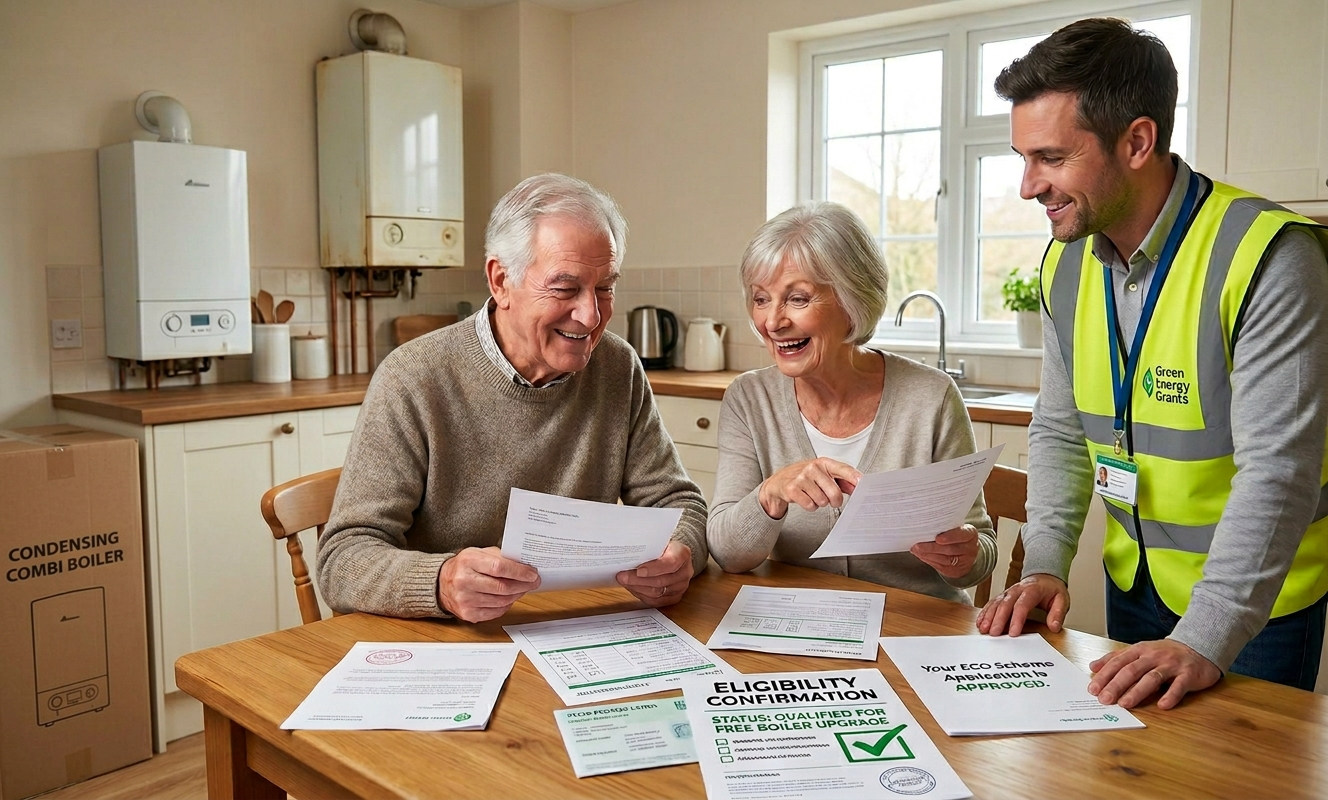
If you’ve come across offers for a “free boiler upgrade,” it’s natural to wonder whether you actually qualify or if there’s a catch. The idea sounds straightforward, but eligibility depends on several factors, mainly your income, property, and current heating system.
In the UK, free or fully funded boiler upgrades don’t come from a single universal scheme. Instead, they’re usually offered through government-backed programmes designed to improve energy efficiency in homes that need it most.
Understanding how these schemes work will help you figure out where you stand.
What does “free boiler upgrade” really mean?
The term can be slightly misleading.
In most cases, a free upgrade means the full cost is covered through a government scheme, often delivered by energy companies or approved installers. You don’t pay upfront, but you must meet specific criteria.
The most common route is through the ECO4 scheme (Energy Company Obligation). In some cases, local authority programmes like LA Flex also provide access.
Other schemes, such as the Boiler Upgrade Scheme, exist too but they usually offer partial grants rather than fully free installations.
Who typically qualifies for a free boiler?
Eligibility tends to focus on households that may struggle with heating costs or live in inefficient homes.
1. Households receiving certain benefits
Many applicants qualify because they receive government support. This often includes:
- Universal Credit
- Pension Credit
- Income Support
- Child Tax Credit
- Housing Benefit
These benefits act as a signal that financial assistance is needed, which is why they’re commonly used as a requirement.
2. Low-income households (even without benefits)
Not everyone on a low income receives benefits. That’s where flexible schemes come in.
Under local authority programmes, some households can qualify based on income alone—typically below a certain threshold (often around £31,000 per year, though this can vary).
This route exists because energy hardship doesn’t always show up in benefit claims.
3. Homes with poor energy efficiency
Your property matters just as much as your income.
Most schemes target homes with low Energy Performance Certificate (EPC) ratings—usually D, E, F, or G. These homes lose heat more easily and cost more to run.
The reasoning is simple: upgrading inefficient homes delivers the biggest improvement in energy savings.
4. Old or inefficient boilers
A free upgrade is usually only offered if your current system needs replacing.
You’re more likely to qualify if your boiler is:
- Old (often 10–15+ years)
- Faulty or unreliable
- Inefficient compared to modern standards
If your existing boiler works well and meets efficiency standards, you may not qualify for a free replacement.
5. Tenants (with landlord permission)
Both homeowners and private tenants can sometimes apply.
However, tenants must get permission from their landlord before any work begins. The landlord also needs to agree to the upgrade, since it affects the property itself.
This can be a sticking point, so it’s worth discussing early if you rent your home.
How does the Boiler Upgrade Scheme fit in?
The Boiler Upgrade Scheme often causes confusion here.
Unlike ECO4, it doesn’t usually provide a completely free boiler replacement. Instead, it offers grants to help cover the cost of switching to low-carbon systems like heat pumps or biomass boilers.
So while it reduces the cost significantly, you’ll usually need to contribute something yourself.
That said, it can still be valuable if you don’t qualify for a fully funded upgrade but want to move to a more efficient system.
Why are eligibility rules so specific
These schemes aren’t random. They’re designed to achieve two main goals:
- Reduce energy bills for households that need support
- Lower carbon emissions by improving inefficient homes
Because of that, funding is targeted rather than universal. It focuses on homes where the upgrade will make the biggest difference.
That’s why income, property condition, and heating system all come into play.
Common reasons people don’t qualify
Even if you meet one condition, you might still miss out for other reasons.
Typical barriers include:
- A relatively new or efficient boiler
- High EPC rating (good energy efficiency already)
- Income above eligibility thresholds
- Missing documentation or incomplete application
It’s not always obvious at first glance, which is why many applications require a full assessment.
What should you do next?
If you’re unsure whether you qualify, start with a simple check.
- Look at your household income or benefits status
- Check your home’s EPC rating if available
- Consider the age and condition of your boiler
- Speak with an approved installer or scheme provider
Many providers offer quick eligibility checks, which can give you a rough idea before you go through the full process.
A quick word of caution
Because “free boiler” offers attract attention, scams do exist.
Be careful if:
- You’re asked for large upfront fees
- The offer seems too good without any checks
- The company isn’t accredited or recognised
Always verify that the installer is approved under the relevant scheme. This protects both your home and your application.
Final thoughts
A free boiler upgrade is possible, but only under the right conditions. Most people who qualify do so because they live in less efficient homes and need financial support to improve their heating.
If you meet the criteria, the benefits can be significantly lower energy bills, better comfort, and a more reliable system.
If you don’t qualify, schemes like the Boiler Upgrade Scheme still offer a way to reduce costs, even if they don’t cover everything, and it’s also worth checking whether the boiler upgrade scheme covers air-to-air heat pumps in your specific situation.
The key is understanding where you stand before making any decisions.

 English
 Arabic
 French
 Spanish
 Portuguese
 Deutsch
 Dutch
Dutch
 Italiano
 Russian
 Romaian
 Portuguese (Brazil)
 Greek
Greek