


How to Enjoy a Watermelon Puzzle: Lessons from Suika Game
Introduction
If you’ve ever watched someone play a casual puzzle game and thought, “Wait… how is that so satisfying?”—you’re probably thinking of watermelon-style merging games. The premise is simple: drop fruit, combine matching pieces, and watch your creations grow. Yet the experience can feel strangely calm and surprisingly challenging, like a friendly puzzle that keeps pulling you back in.
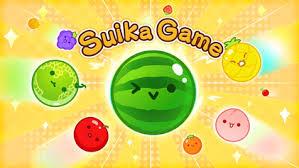
One of the best-known examples is Suika Game. Even if you’re brand-new, the game is easy to start but deep enough to keep you thinking. Let’s walk through what it feels like to play, how the gameplay works, and some practical tips you can use immediately.
Gameplay: What It’s Like to Play a Watermelon Puzzle
At its core, a watermelon puzzle game is about physics-based placement and smart merging. In Suika Game, you typically start with a set of fruits waiting to drop. Your job is to aim and release them into a growing pile.
Here’s the usual flow:
- You receive a “next” fruit
Instead of placing everything at once, you generally have a current fruit and can see what’s coming next. This alone changes how you play—because you’re constantly making small decisions about timing. - Fruits fall and settle using physics
Once a fruit hits the board, it bounces, slides, and rests where it can. This makes the puzzle feel alive. You’re not just solving a grid—you’re negotiating with momentum. - Matching fruits merge
When two identical fruits touch (depending on the game’s rules), they combine into the next level fruit. That merge can create new space—or suddenly block your options—so it’s rarely “free.” - A target size becomes a scoreboard
The fun usually comes from trying to produce larger fruit, often culminating in a watermelon. Whether you aim for a perfect top fruit or just beat your own score, you’re gradually building bigger outcomes from small inputs. - The board fills up
The board has limits. If the pile rises too high or sprawls out, you can lose. This creates that classic puzzle tension: you want merges, but you also need room to maneuver.
What makes it interesting is that every run becomes a personal story. Some games feel like you’re guiding a gentle chain reaction; others feel like a chaotic rescue mission where you’re trying to “save” a messy stack before it collapses into failure.
Tips: Simple Things That Improve Your Runs
You don’t need complicated strategies to have fun—but a few habits can make your play smoother and more consistent.
1. Prioritize stable builds over perfect merges
Early on, your goal isn’t always to merge immediately. If a fruit falls in a position that destabilizes everything, you may spend your next few drops repairing the board. Try building a clearer base so merges happen naturally.
2. Use the next-fruit information
Because you can often see what’s coming, you can plan tiny steps ahead:
- If the next fruit matches what you want, aim for a path that sets up that merge.
- If it doesn’t, consider how you’ll prevent stray pieces from ruining your layout.
3. Aim for “lanes” instead of the center chaos
Many players do best when they keep the pile somewhat organized. Instead of dropping everything near the densest middle, you can sometimes create an edge where fruits slide and settle predictably. Think of it like making controlled room for the next merges.
4. Watch the gaps, not just the fruit
A merge is only possible if the space and movement allow two matching fruits to meet. Before you drop, scan for:
- Where pieces are drifting
- Where gaps might open after a bounce
- Whether you’re about to trap a fruit under something larger
5. Don’t overreact—let physics work for you
It’s tempting to “correct” your aim repeatedly, but sometimes the best play is to commit and let the fruit settle. If you keep trying to micro-fix, you often end up increasing randomness. Aim thoughtfully, then trust the landing.
6. Practice with a goal that’s not “perfect”
Instead of trying to always reach the biggest possible fruit, set smaller challenges:
- “Can I make one major merge before the board gets high?”
- “Can I keep the pile from spreading too far?”
- “Can I recover after one messy drop?”
These goals keep the game from feeling stressful while still training your decision-making.
Conclusion: Enjoy the Puzzle Like a Relaxing Challenge
Watermelon puzzle games are satisfying because they mix simple rules with unpredictable moments. In Suika Game, the friendly loop of dropping, merging, and adapting to the pile makes each run feel different—yet manageable. You’re not just clicking; you’re learning how to read the board.
If you want an engaging way to spend a few minutes, or even a few longer sessions, this is a great genre to try. Start slowly, focus on stable placement, and treat every run as practice. Before you know it, you’ll be creating your own chain reactions—and smiling at the giant watermelon moment when it finally happens.

 English
 Arabic
 French
 Spanish
 Portuguese
 Deutsch
 Turkish
 Dutch
Dutch
 Italiano
 Russian
 Romaian
 Greek
Greek