


Embroidery Services: Common Issues and How Experts Fix Them
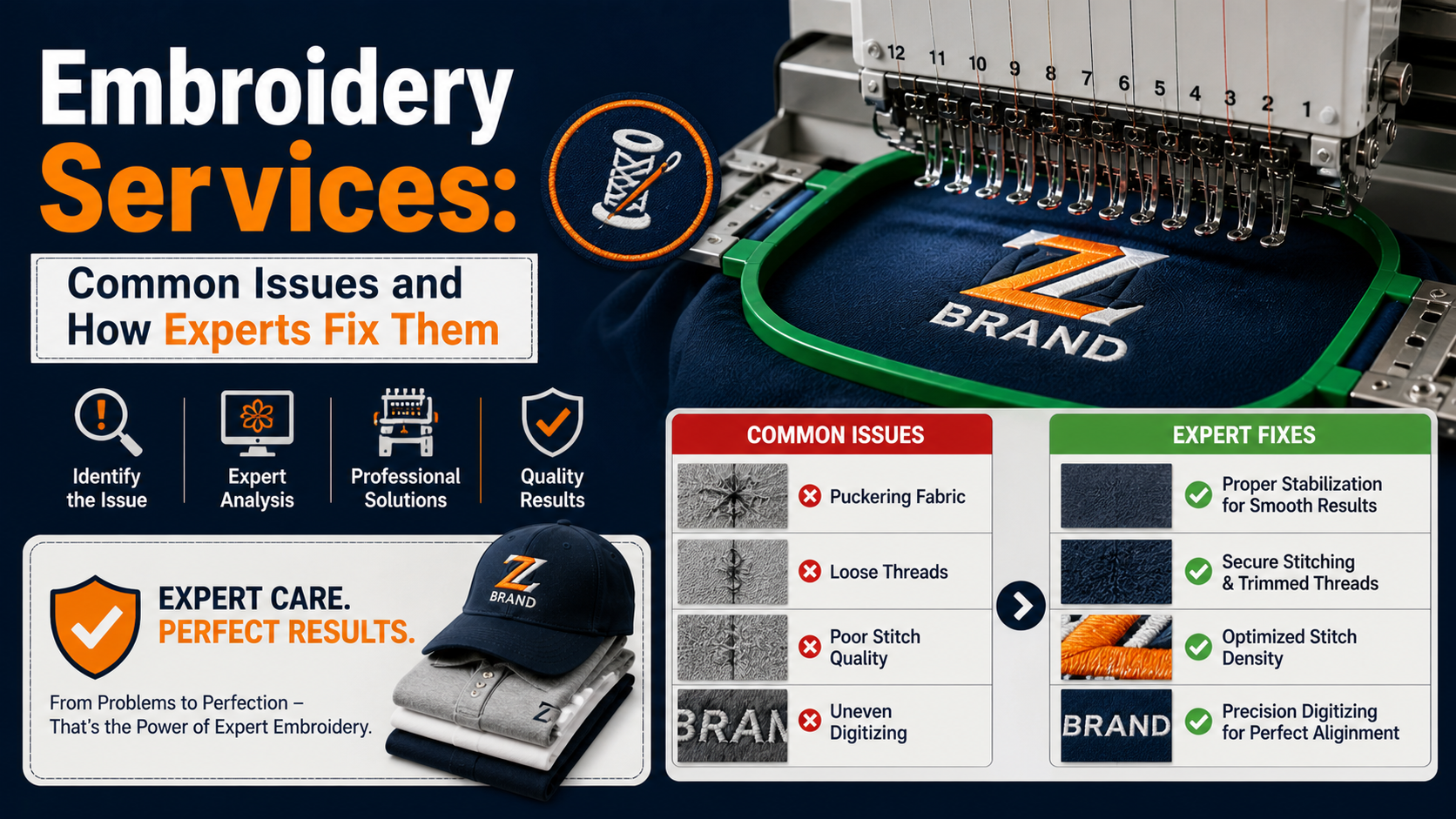
Embroidery looks beautiful when every stitch sits in the right place. But when a logo puckers, thread breaks, or small text turns messy, the whole design can feel disappointing. This is why many brands choose professional custom embroidery services to get clean, sharp, and long lasting results.
You may notice that a design looks perfect on screen but not so good after stitching. That is because fabric, thread, needle, stabilizer, and stitch settings all work together. A skilled team understands this process and knows how to turn artwork into smooth, machine ready embroidery.
What Are Embroidery Services?
Embroidery services help turn names, logos, artwork, and patterns into stitched designs on fabric. These services are used for uniforms, hats, shirts, jackets, bags, patches, towels, and many other items. A good service does more than just stitch a design. It prepares the design correctly before the machine starts.
Most embroidery work begins with digitizing. This means the artwork is changed into a stitch file that an embroidery machine can read. Without proper embroidery digitizing services, even a simple logo can stitch badly and waste fabric, thread, and time.
Why Do Embroidery Problems Happen?
Embroidery problems usually happen because the design, fabric, or machine settings are not matched properly. A thick hoodie needs different settings than a thin polo shirt. A cap also needs a different setup because it has a curved surface.
Small details, poor artwork, wrong thread tension, and weak stabilizer can also cause trouble. Experts check these details before production so the final design looks clean, balanced, and professional.
Common Issues in Embroidery Services and How Experts Fix Them
Many people feel worried when their embroidered design does not look like the original artwork. The good news is that most embroidery issues can be fixed with the right method. Let’s look at the most common problems and how experts solve them.
1. Puckering Around the Design
Puckering happens when the fabric wrinkles around the embroidery. It can make a shirt, cap, or patch look cheap, even when the artwork is good. This problem often comes from high stitch density, weak stabilizer, poor hooping, or wrong fabric settings.
Experts fix puckering by using the right stabilizer, adjusting stitch density, and improving underlay stitches. They also hoop the fabric with even tension so it stays flat while the machine runs.
2. Thread Breaks During Stitching
Thread breaks are one of the most frustrating problems in embroidery. They slow down production and can leave rough areas in the final design. This issue can happen because of poor thread quality, incorrect needle size, bad tension, or too many stitches packed into one area.
Professionals fix this by checking the thread path, changing the needle, lowering stitch density, and improving the stitch flow. A good digitizer also avoids sharp stitch angles that put extra stress on the thread.
3. Poor Stitch Quality
Poor stitch quality can look like uneven lines, jagged edges, loose thread, or rough fills. It often happens when the file is not prepared correctly. Bad stitch direction and weak underlay can make the embroidery look messy.
Experts improve stitch quality by using proper digitizing services for embroidery. They choose the right stitch type for each part of the design, such as satin stitches for borders and fill stitches for large areas.
4. Small Text Looks Blurry
Small text is tricky in embroidery. Letters that look clear on a computer may turn into blobs when stitched. This happens because thread has thickness, and tiny letters do not always have enough space.
Experts fix this by increasing text size, choosing simple fonts, and adjusting stitch direction. For very small text, they may suggest a cleaner version of the design so the final embroidery stays readable.
5. Design Shifts or Misalignment
Misalignment happens when different parts of the design do not meet properly. You may see gaps, outlines that do not match, or colors that shift out of place. This problem is common on stretchy fabric, caps, and designs with many color changes.
A professional custom embroidery service fixes this through better hooping, proper stabilizer, and push and pull compensation. They also test the design before full production to check if the file needs adjustment.
6. Wrong Stitch Density
Stitch density means how close the stitches are to each other. If the density is too high, the design becomes stiff and heavy. If it is too low, the fabric may show through and the design can look weak.
Experts balance density based on fabric type, thread type, and design size. This is one reason why digitizing service for embroidery needs real experience, not guesswork.
7. Missing or Weak Underlay Stitches
Underlay stitches are hidden stitches placed under the main design. They support the fabric and help the top stitches sit smoothly. Without good underlay, the design may sink, shift, or look uneven.
Professionals use different underlay types depending on the design. Edge underlay helps borders stay sharp, while center underlay supports satin stitches. This small step makes a big difference.
8. Fabric Damage
Fabric damage can happen when the needle is wrong, tension is too tight, or the design has too many stitches. Delicate fabric can tear, stretch, or show holes if it is not handled carefully.
Experts choose the correct needle size and backing material before stitching. They also reduce stitch count when needed so the design does not punish the fabric.
9. Wrong File Format
Embroidery machines need special file formats such as DST, PES, EXP, JEF, or VP3. A normal image file like JPG or PNG cannot directly run on an embroidery machine. It must be digitized first.
A professional team uses digitizing services embroidery to convert artwork into the right machine format. They also check the file before sending it to the customer or production team.
10. Jump Stitches and Messy Threads
Jump stitches are long threads that appear between design areas. Too many jump stitches make the design look untidy and increase trimming time. They can also cause thread pulls during stitching.
Experts reduce jump stitches by planning a better stitch path. They sequence the design carefully so the machine moves in a clean and logical order.
11. Color Mismatch
Sometimes the stitched design does not match the brand colors. This can feel painful for businesses because brand colors help people recognize a logo. Color mismatch often happens when thread colors are chosen without checking the artwork carefully.
Professionals match thread colors with the closest available shade. They also guide customers when exact color matching is not possible due to thread limitations.
12. Design Too Complex for Embroidery
Some artwork includes gradients, thin lines, tiny shapes, or too many details. These things may look good in print but can fail in embroidery. Thread cannot copy every digital detail exactly.
Experts simplify the artwork without losing its main look. This is where best embroidery digitizing service support becomes valuable because the digitizer knows what should stay and what should be adjusted.
How Experts Fix Embroidery Issues Step by Step
A good embroidery team does not guess. They follow a careful process from artwork review to final stitch out. This helps avoid costly mistakes and gives customers more confidence.
Step 1: Reviewing the Artwork
Experts first check the artwork quality. Clear artwork gives better results because the digitizer can see the shapes, lines, and text properly. Blurry artwork can lead to rough edges and wrong stitch paths.
If the file is weak, the team may clean it first. This helps create better custom embroidery digitizing services and improves the final stitch quality.
Step 2: Choosing the Right Stitch Type
Different parts of a design need different stitch types. Satin stitches work well for borders, letters, and narrow shapes. Fill stitches work better for large areas. Running stitches are used for fine details.
Professionals choose stitch types based on the design and fabric. This helps the embroidery look smooth instead of thick, loose, or uneven.
Step 3: Adjusting for Fabric Type
Every fabric behaves differently. Cotton, fleece, denim, polyester, towels, and caps all need different settings. Stretchy fabric moves more, while thick fabric needs stronger support.
Experts adjust digitizing embroidery services based on fabric behavior. This helps reduce puckering, shifting, and thread breaks.
Step 4: Setting Proper Underlay
Underlay supports the whole design. It keeps fabric stable and helps top stitches look neat. Without proper underlay, even a good design can fail.
A trained digitizer uses underlay based on the design shape, fabric thickness, and stitch type. This makes the final embroidery stronger and cleaner.
Step 5: Testing the Design
A test stitch out shows how the design performs in real life. It helps find problems before bulk production. This step can save money, fabric, and stress.
Experts check the test for alignment, density, thread breaks, color order, and design clarity. If needed, they edit the file before final stitching.
Why Digitizing Matters in Embroidery Services
Digitizing is the heart of machine embroidery. It tells the machine where to stitch, what direction to follow, when to trim, and how dense each area should be. Poor digitizing can ruin a great design.
This is why businesses often look for an online embroidery service that also understands digitizing. When digitizing and embroidery work together, the final result looks more polished and reliable.
What Makes a Good Embroidery Digitizing File?
A good digitizing file runs smoothly on the machine and looks clean on fabric. It has the right stitch count, good underlay, smart stitch direction, and proper color order. It should not create extra thread breaks or messy trims.
A strong digitizing embroidery service also considers the item type. A left chest logo, cap logo, sleeve design, patch, and jacket back all need different planning.
Common Products That Need Expert Embroidery Services
Embroidery is used on many products. Each product has its own challenge. A flat shirt is easier than a structured cap. A towel needs different settings than a jacket.
Common products include polo shirts, work uniforms, hats, hoodies, aprons, bags, patches, towels, blankets, and sportswear. With the right embroidery machine service knowledge, each item can be handled correctly.
Why Businesses Need Professional Help
A business logo must look the same on every item. If one shirt looks sharp and the next looks messy, customers may lose trust. Consistency matters because it shows care, quality, and professionalism.
Professional best embroidery digitizing services help businesses avoid weak results. They create files that are ready for production and easier for embroidery machines to run.
Zdigitizing’s Role in Better Embroidery Results
Zdigitizing encourages better embroidery by focusing on clean digitizing, proper stitch planning, and customer friendly support. The goal is to help businesses, creators, and embroidery shops avoid common stitching problems before they happen.
With experience in custom embroidery digitizing services in usa, the process becomes smoother for logos, patches, caps, jackets, and other fabric items. This gives customers a more confident and less stressful embroidery experience.
How to Choose the Right Embroidery Service
Choosing the right service can save you from poor results and repeated fixes. Do not only look at price. Look at skill, file quality, revision support, turnaround time, and real embroidery knowledge.
A good provider should understand fabric behavior, stitch density, machine formats, and testing. This is especially important when you need digitize embroidery service support for business logos or bulk orders.
Signs You Need Expert Help
You may need expert help if your design keeps shifting, puckering, or breaking thread. You may also need support if your small text is unreadable or your file does not work on your embroidery machine.
A reliable custom embroidery digitizing service can review your artwork and prepare a better stitch file. This helps you avoid wasted garments and unhappy customers.
Final Thoughts
Embroidery can feel simple from the outside, but every clean design depends on careful planning. If you want fewer mistakes, smoother stitching, and better results, Zdigitizing can help with professional digitizing and embroidery support that keeps your design looking sharp.
The best embroidery services do not just stitch a design. They understand fabric, thread, needles, stabilizer, stitch direction, and machine behavior. When experts handle these details, your final product looks cleaner, stronger, and more professional.
FAQs About Embroidery Services
What are embroidery services?
Embroidery services create stitched designs on items like shirts, hats, jackets, bags, and patches. They often include digitizing, machine setup, stitching, and quality checking.
Why does my embroidery design pucker?
Puckering usually happens because of poor stabilizer, tight tension, high stitch density, or weak hooping. Experts fix it by adjusting the file and supporting the fabric properly.
What is embroidery digitizing?
Embroidery digitizing changes artwork into a stitch file that an embroidery machine can read. It controls stitch type, direction, density, trims, and color order.
Can any image be used for embroidery?
Most images can be used, but they may need cleanup first. Clear artwork gives better results because the digitizer can create smoother lines and cleaner stitch paths.
Why should I choose professional embroidery digitizing?
Professional digitizing helps prevent thread breaks, puckering, messy text, and poor alignment. It gives your design a better chance of looking clean on real fabric.

 English
 Arabic
 French
 Spanish
 Portuguese
 Deutsch
 Turkish
 Dutch
Dutch
 Italiano
 Russian
 Portuguese (Brazil)
 Greek
Greek