


How to Reduce Packaging Costs Without Quality Loss
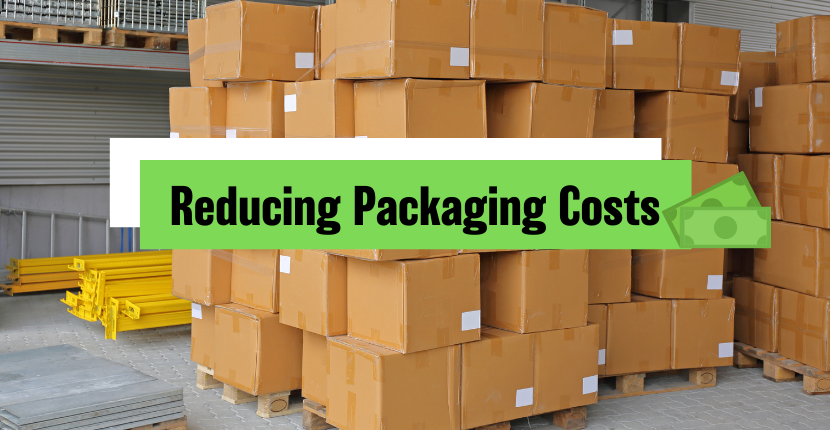
Packaging cost reduction is a perennial priority for procurement managers and brand owners, and a subject where poor strategy frequently produces poor outcomes, especially in categories like Custom Printed Rigid Boxes, where both protection and premium presentation matter.
Reducing packaging costs by specifying under-performing materials, cutting corner radii to save a few cents, or switching to an unvetted low-cost supplier can generate downstream costs in damaged goods, returns, customer complaints, and brand damage that dwarf the initial savings.
This guide covers packaging cost reduction strategies that work without compromising the functional performance and brand presentation quality your packaging needs to deliver.
1. Right-Size Before You Reprice
The highest-ROI packaging cost reduction available to most brands requires no change in material specification or supplier relationship. It simply requires accurately sizing the package to the product it contains.
Oversized packaging imposes costs at multiple points: the packaging itself costs more in material; dimensional weight pricing from carriers charges you for the air inside the box; void fill to fill the empty space adds material cost and labor; and customers receive a negative unboxing experience from excessive packaging waste.
Audit your top 10 SKUs by shipping volume. Measure the actual dimensions of the packed product (including necessary protection).
If the box or bag is more than 20% larger than necessary in any dimension, you have an immediate cost reduction opportunity, potentially significant in both material and carrier costs, through right-sizing.
Here's what most buyers overlook: a 2-inch reduction in box length, width, and height at 10,000 units/month doesn't just save material cost, it can reduce dimensional weight per shipment by $0.30–$0.80, generating $3,000–$8,000/month in carrier savings from a single SKU.
2. Optimize Print Coverage
Print cost in packaging is driven significantly by ink coverage, the percentage of the package surface covered with ink.
Full-coverage backgrounds (100% CMYK coverage on all panels) are the most expensive print option and the most likely to produce quality issues (cracking on fold lines, scuffing in transit).
Designs that use the natural substrate color (kraft brown, white board) as a design element rather than covering it with ink can reduce print cost 15–30% while often improving the aesthetic, particularly for natural, sustainable, and minimalist brand aesthetics.
Review current packaging designs with your designer and your packaging supplier to identify print reduction opportunities.
3. Consolidate Specifications Across SKUs
Many brands carry packaging specifications that have accumulated organically over time, slightly different box sizes for similar products, different finish treatments on packaging that ships together, and different structural formats for SKUs that could share a common box. This specification fragmentation drives up costs through:
-
More die/tooling setups across the product line
-
Lower effective volume per specification (losing volume discounts)
-
More inventory SKUs to manage and reorder
A packaging rationalization exercise, auditing all active specifications and consolidating where product requirements permit, typically reduces specification count by 20–40% and drives meaningful unit cost reductions through the volume leverage of consolidated ordering.
4. Increase Order Quantities Strategically
Packaging unit costs decrease meaningfully with volume. For most format/material combinations, the per-unit cost curve drops steeply between the minimum order quantity and roughly 5x the MOQ, then flattens.
Identifying the inflection point on that curve, where the per-unit savings of the larger order exceed the carrying cost of additional inventory, is a straightforward calculation with significant savings potential.
For brands with predictable, consistent demand, ordering 3–6 months of packaging inventory in a single order often reduces per-unit cost by 20–35% compared to monthly ordering at MOQ. The inventory carrying cost (typically 20–30% annualized) is well below the procurement savings in most cases.
5. Simplify Finish Treatments
Premium finish treatments, soft-touch laminate, foil stamping, embossing, spot UV, add meaningfully to packaging cost. In categories where these treatments drive genuine commercial value (luxury retail, premium gift, prestige beauty), they are justified.
In categories where buyers make functional rather than emotional purchase decisions, they may not be.
Consider a structured finish simplification: identify which finish elements are driving conversion and brand perception (keep those) versus which are present because of historical inertia or internal preference (those can be simplified).
Often, reducing from three finish treatments to two, say, retaining soft-touch laminate but removing spot UV, saves 8–15% on packaging cost with no measurable impact on consumer purchase behavior.
6. Evaluate Material Substitutions
Material substitutions should be evaluated on a total cost of ownership basis, not just unit cost:
-
Switching from rigid box to premium folding carton: saves 30–50% on packaging cost, may require repositioning the brand's retail price point
-
Switching from foil laminate Mylar to standard polypropylene: saves 15–25%, but only appropriate if barrier performance requirements genuinely allow it
-
Switching from virgin to recycled content board: saves 5–15%, with sustainability benefit, appropriate in most applications
Alpha Global Packaging works with brands across the cost spectrum, from startup brands optimizing early packaging spend to enterprise buyers seeking supply chain cost improvements. Our team can review current specifications and suggest cost-effective alternatives across Rigid, Kraft, Cardboard, and Mylar formats.
7. Improve Artwork Preparation to Reduce Reprints
A non-obvious source of packaging cost is wasted production runs due to artwork errors. Common issues include RGB (not CMYK) color files, insufficient bleed, incorrect dieline interpretation, and fonts not outlined.
Implementing a standardized artwork preparation checklist, confirmed against the supplier's exact requirements before file submission, eliminates the reprints, press-stop charges, and schedule delays caused by artwork errors. The one-time investment in a supplier-specific artwork template and checklist is typically recovered in the first order cycle.

 English
 Arabic
 French
 Spanish
 Portuguese
 Deutsch
 Turkish
 Dutch
Dutch
 Russian
 Romaian
 Portuguese (Brazil)
 Greek
Greek