


What Holds Strand Woven Bamboo Together
When researching sustainable surface options for a major renovation or a commercial build, strand woven bamboo flooring regularly climbs to the top of the specification list. It is celebrated for its incredible structural density, its striking organic aesthetic, and an environmental footprint that traditional hardwoods simply cannot match. Because bamboo is a grass that matures in less than five years, it avoids the deforestation concerns associated with slow-growing timber like oak, maple, or walnut.
However, as consumers and architects look deeper into the physical makeup of modern building products, an critical question emerges. What exactly holds these natural grass fibers together?
Strand woven material is not a solid piece of timber cut directly from a log. It is an engineered product created by taking raw stalks, splitting them apart, and fusing them back together under intense industrial pressure. To achieve this, an adhesive must be introduced into the manufacturing line. The type of adhesive a factory selects dictates whether the finished floor will be a safe, clean addition to your interior atmosphere or a hidden source of toxic chemical off-gassing. Understanding the fine chemistry behind these binders is essential for anyone trying to build a healthy, non-toxic living space.
Anatomy of the Strand Woven Process
To understand why the choice of adhesive is so influential, it helps to walk through the factory floor to see how raw bamboo is transformed into an armored plank.
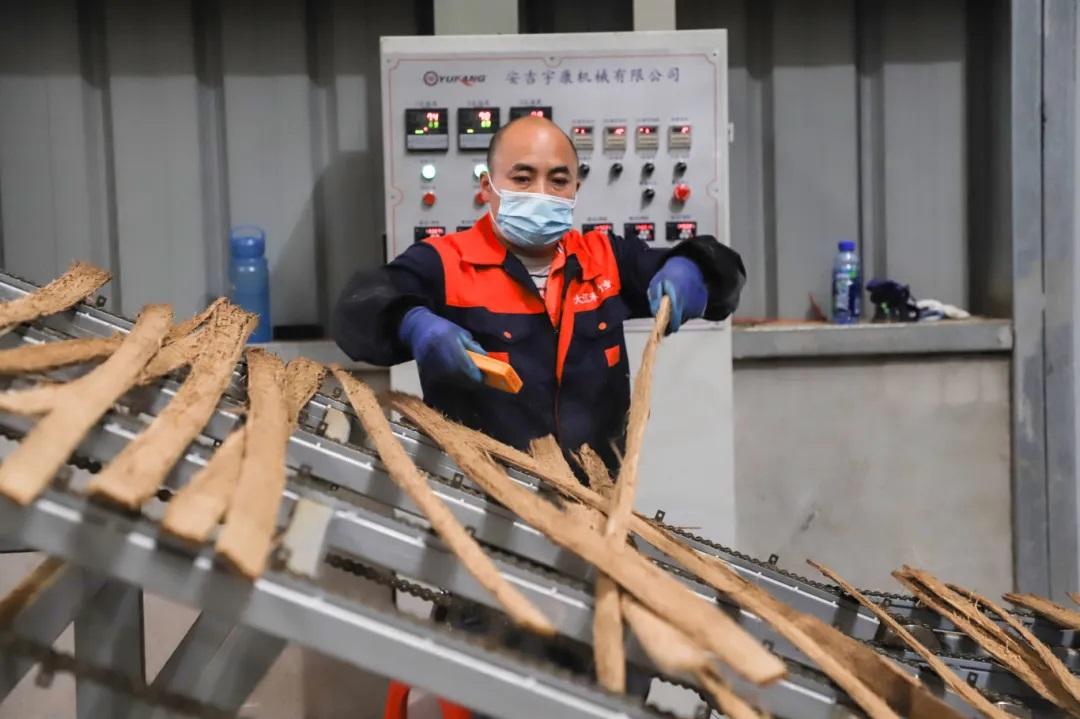
The process begins with mature Moso bamboo stalks, typically harvested between their fourth and sixth years of growth when the fiber density is at its peak. The round stalks are split into long, linear strips. The outer green skin and internal nodes are mechanically removed. These strips are then boiled in a water bath to extract natural starches and sugars. This extraction step is vital for the longevity of the material, as it eliminates the source of food that wood-boring insects and fungal spores rely on, preventing future rot and infestation without requiring heavy pesticide treatments.
Once dried, the strips are crushed into fine, long strands of fiber. These loose strands are thoroughly coated with a liquid adhesive resin. The coated strands are then packed into massive steel molds and subjected to millions of pounds of hydraulic pressure while being heated in large industrial kilns.
This combination of extreme pressure and thermal energy forces the loose fibers to fuse into a completely solid, hyper-dense block of material. These dense blocks are later sliced, milled with precise interlocking tongue-and-groove or click-lock profiles, and finished with protective topcoats. Because the adhesive permeates the entire matrix of the block, the chemical composition of that glue affects every square millimeter of the finished plank.
The Threat of Conventional Urea-Formaldehyde Glues
In the wider building supply industry, the default choice for bonding composite wood products has historically been urea-formaldehyde resin. This adhesive became the manufacturing standard because it is incredibly cheap to produce, cures quickly under heat, and creates a highly rigid, permanent bond. You will find it hidden inside standard particleboard, medium-density fiberboard, cheap plywood, and low-end laminate finishes.
Unfortunately, urea-formaldehyde carries a major environmental and health cost. The chemical bonds in this specific resin are inherently unstable when exposed to moisture and heat. Over time, the adhesive undergoes a slow hydrolytic breakdown, releasing free formaldehyde gas into the surrounding environment. This process is known as off-gassing.
Because modern residential architecture focuses heavily on insulation and airtight sealing to save on heating and cooling costs, any chemicals released by interior materials become trapped inside the living space. Formaldehyde is a known volatile organic compound and a human carcinogen.
When a home is filled with materials that off-gas this chemical, the indoor air quality rapidly degrades. Occupants can experience persistent headaches, watery eyes, throat irritation, dizziness, and skin rashes. For young children, elderly family members, and individuals with pre-existing respiratory conditions like asthma or allergies, prolonged exposure to these fumes can cause severe health complications. Furthermore, domestic pets spend their entire lives inches away from the floor plane, making them highly susceptible to localized chemical emissions.
The Clean Alternative: Phenol-Formaldehyde and MDI Resins
To address these valid health concerns, premium eco-conscious manufacturing facilities have completely abandoned cheap urea-based glues. Instead, they utilize advanced, stable polymers that prevent harmful off-gassing while actually improving the structural integrity of the finished boards.
The most common high-performance alternative used by reputable factories is phenol-formaldehyde resin. While it still contains the word formaldehyde, the chemical structure behaves entirely differently from its urea-based counterpart. During the curing process inside the hot hydraulic press, the phenol and formaldehyde molecules undergo a complete chemical reaction, cross-linking to create a highly stable, inert plastic matrix.
Once fully cured, the formaldehyde is locked permanently within the structure. Phenol-formaldehyde bonds are highly resistant to moisture, humidity shifts, and heat, meaning the resin will not break down or release free gas into your home. This is the same grade of heavy-duty, exterior binder used in structural marine plywood, chosen specifically because it handles the harshest environments without degrading.
An even cleaner option appearing in elite production lines is polymeric methylene diphenyl diisocyanate, commonly referred to as MDI resin. MDI is a completely formaldehyde-free polyurethane adhesive. It forms an incredibly strong, flexible bond with natural cellulose fibers, allowing factories to produce ultra-dense blocks using a smaller total volume of chemical binder.
Because MDI contains zero formaldehyde from the start, floors manufactured with this technology offer the absolute highest tier of indoor air safety, making them ideal for ultra-sensitive environments like medical clinics, schools, nurseries, and custom eco-homes.
Sifting Through Safety Standards and Certifications
When sourcing materials for a green project, you cannot rely solely on a product brochure that claims a material is non-toxic or eco-friendly. True environmental transparency requires checking third-party laboratory test data and international compliance ratings.
The global benchmark for composite wood and grass emissions is dictated by strict regional regulations. In North America, the primary standards are set by the California Air Resources Board and the federal EPA TSCA Title VI framework. These regulations restrict formaldehyde emissions to exceptionally low limits, typically requiring composite materials to emit less than 0.05 parts per million during airtight chamber testing.
In European and international markets, emissions are classified using alphanumeric ratings:
E1 Certification: The standard baseline requirement for interior construction materials, limiting formaldehyde emissions to a maximum of 0.08 parts per million.
E0 Certification: A stricter, premium classification requiring emissions to fall below 0.025 parts per million, which is virtually indistinguishable from the natural background emissions of raw timber.
Top-tier manufacturing facilities consistently achieve E0 compliance by combining clean chemistry with precise machine calibration. Because massive industrial presses generate immense physical force, the mechanical interlocking of the compressed strands reduces the reliance on excessive chemical glues. The factory uses just enough safe resin to seal the fibers, resulting in a finished product that keeps indoor air fresh, light, and naturally breathable.
The Role of Factory-Applied Surface Finishes
The conversation about indoor air quality does not end with the core adhesive resin. A safe, non-toxic core can still be compromised if the factory applies a cheap, solvent-based clear coat over the finished planks. Low-grade varnishes can release a wave of volatile compounds during the initial weeks following installation, leaving a sharp, chemical odor in the home.
To prevent this, advanced production plants utilize completely automated, multi-stage ultraviolet curing finish lines. Instead of using solvent-heavy stains and lacquers, the planks are coated with multiple micro-layers of water-based polyurethane resins infused with microscopic ceramic minerals or aluminum oxide for scratch resistance.
Each layer is exposed to precise frequencies of ultraviolet light, which instantly cures and hardens the resin before the boards are packed into their boxes. Because this chemical curing happens entirely inside a controlled factory environment rather than on your living room floor, zero wet fumes are brought into your home, allowing your family or tenants to occupy the space immediately after installation with absolute peace of mind.
Long-Term Structural Benefits of Safe Resins
Opting for a product built with high-quality, stable resins is not merely a health decision; it is a direct investment in the structural longevity of the building. Cheap urea glues are brittle and sensitive to moisture fluctuations. In a kitchen, an entryway, or a geographic region with high seasonal humidity, a low-quality floor will eventually absorb moisture, causing the adhesive bonds to fail. This leads to internal delamination, warping, cupping, and loose joints that squeak when walked on.
Phenol and MDI resins are inherently hydrophobic, meaning they naturally repel water. When these binders wrap around the individual bamboo strands under high pressure, they create a highly stable barrier that blocks moisture infiltration.
An engineered board built with these premium binders exhibits exceptional dimensional stability, expanding and contracting uniformly with indoor climate shifts. The planks stay perfectly flat, square, and tight for decades. By looking past retail marketing displays and aligning your purchasing strategy directly with a manufacturer that prioritizes clean, advanced industrial chemistry, you protect your budget, safeguard your household health, and secure a premium architectural feature built to endure.

 English
 Arabic
 French
 Spanish
 Portuguese
 Turkish
 Dutch
Dutch
 Italiano
 Russian
 Romaian
 Portuguese (Brazil)
 Greek
Greek