Crowd management is one of the most important aspects of planning any large gathering. Whether it is a music festival, sporting event, corporate conference, charity fundraiser, exhibition, cultural celebration, or public festival, ensuring the safety and comfort of attendees should always be a priority. Effective crowd management helps organisers prevent accidents, reduce security risks, improve visitor experiences, and respond quickly to emergencies. By following proven best practices, event organisers can create a safe environment where guests can enjoy the occasion with confidence.
Start with Thorough Planning
Successful crowd management begins long before the event starts. Every event should begin with a detailed risk assessment that identifies potential hazards and evaluates how people are expected to move throughout the venue. Organisers should consider factors such as expected attendance, venue capacity, entry and exit points, parking arrangements, emergency evacuation routes, weather conditions, and nearby public transport. Proper planning allows security teams to prepare for possible challenges before they become problems.
Understand Your Audience
Understanding the expected audience is another essential part of crowd management. Different events attract different types of visitors, and each audience has unique behaviours and requirements. A family festival requires different security measures than a football match or a live music concert. By understanding attendee demographics, organisers can allocate security personnel, medical support, barriers, and facilities more effectively to maintain crowd safety.
Implement Effective Access Control
Controlling access to the venue is one of the most effective ways to manage large gatherings. Security officers should monitor all entrances to verify tickets, invitations, identification, or registration details where required. Bag inspections and access screening help prevent prohibited items from entering the venue while reducing security threats. Controlled access also prevents overcrowding and ensures the venue remains within its legal capacity.
Improve Communication and Signage
Clear signage and effective communication play a major role in crowd management. Visitors should easily find entrances, exits, emergency assembly points, restrooms, food vendors, parking areas, and medical stations. Well-placed signs reduce confusion and improve the flow of people throughout the venue. Public announcements, digital displays, and event staff also help attendees stay informed about schedules, safety procedures, and important updates.
Deploy Professional Security Teams
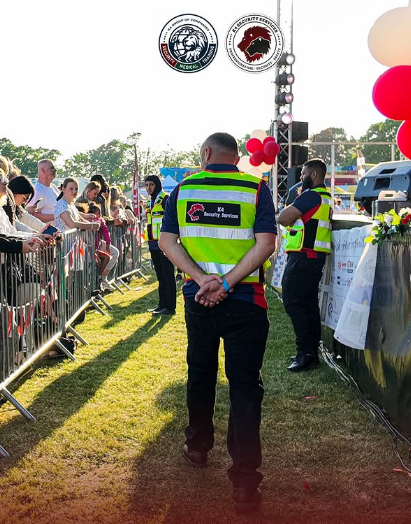
Professional security personnel are at the heart of successful crowd management. Trained officers monitor crowd behaviour, patrol key areas, assist guests, and respond quickly to incidents. Their visible presence encourages responsible behaviour while reassuring attendees that their safety is being protected. Experienced security professionals can recognise early signs of overcrowding, aggressive behaviour, or suspicious activity and take immediate action before situations escalate.
Manage Crowd Movement Efficiently
Maintaining steady crowd movement is another important best practice. Congestion at entrances, exits, walkways, or popular attractions can increase the risk of accidents. Event organisers should create clearly marked pedestrian routes and use barriers where necessary to guide attendees safely through the venue. Security staff should monitor crowd density continuously and redirect visitors when particular areas become too crowded.
Prepare for Emergencies
Emergency preparedness should never be overlooked during large gatherings. Every event should have a clear emergency response plan that includes evacuation procedures, communication protocols, medical assistance, and coordination with emergency services. Security officers and event staff should receive appropriate training so they understand their responsibilities during emergencies. Regular briefings before the event help ensure everyone is prepared to respond effectively if unexpected situations occur.
Use Modern Security Technology
Technology has become an increasingly valuable tool in modern crowd management. CCTV systems allow security teams to monitor large venues from multiple locations, while communication radios enable instant coordination between officers. Access control technology, digital ticket scanning, and incident reporting systems improve operational efficiency and help organisers respond quickly to developing situations. These technologies support better decision-making while enhancing overall crowd safety.
Organise Parking and Traffic Flow
Parking and traffic management also contribute significantly to successful crowd management. Large gatherings often attract hundreds or thousands of vehicles, creating congestion around venues. Professional security teams help direct traffic, manage parking areas, guide pedestrians, and maintain safe vehicle movement. Efficient parking management reduces delays, minimises frustration, and helps guests arrive and depart safely.
Focus on Customer Service
Customer service should remain an important part of every crowd management strategy. Friendly and approachable security officers improve the overall visitor experience by answering questions, providing directions, assisting vulnerable individuals, and helping reunite lost children or family members. Positive interactions between security personnel and attendees encourage cooperation and create a welcoming atmosphere throughout the event.
Crowd Management Across the UK
Many venues across Hertfordshire, London, Oxfordshire, Surrey, Kent, Essex, Buckinghamshire, Berkshire, and throughout South East England regularly host events that require professional crowd management services. Whether organising a private function, corporate event, outdoor festival, sporting competition, or public celebration, experienced crowd management teams help maintain safety while ensuring smooth event operations.
In busy locations such as Barking and Dagenham, Barnet, Bromley, Camden, Croydon, and Ealing, effective crowd management is particularly important due to the high number of visitors attending local events throughout the year. Professional security teams understand the unique challenges of these busy areas and develop tailored strategies that match the venue, audience size, and event requirements.
Review and Improve After Every Event
Communication between organisers, venue management, emergency services, and security personnel is another essential element of successful crowd management. Regular briefings before and during the event ensure everyone remains informed about crowd conditions, weather updates, operational changes, and potential risks. Strong communication enables faster decision-making and more effective incident management.
After every event, organisers should conduct a thorough review of crowd management performance. Evaluating what worked well and identifying areas for improvement helps strengthen future event planning. Feedback from security teams, staff, attendees, and venue managers provides valuable insights that contribute to safer and more efficient events in the future.
Conclusion
As public and private gatherings continue to increase in size and complexity, effective crowd management has become more important than ever. Careful planning, experienced security personnel, modern technology, strong communication, and ongoing risk assessment all contribute to creating safe environments for attendees. By following these best practices, event organisers can minimise risks, improve visitor experiences, protect property, and ensure every event runs smoothly from beginning to end. Investing in professional crowd management is not only a responsible decision but also a key factor in delivering successful, secure, and memorable large gatherings.




 English
 Arabic
 French
 Spanish
 Portuguese
 Deutsch
 Turkish
 Dutch
Dutch
 Russian
 Romaian
 Portuguese (Brazil)
 Greek
Greek