


Stop Manual QA: How to Modernize Your Quality Management Strategy
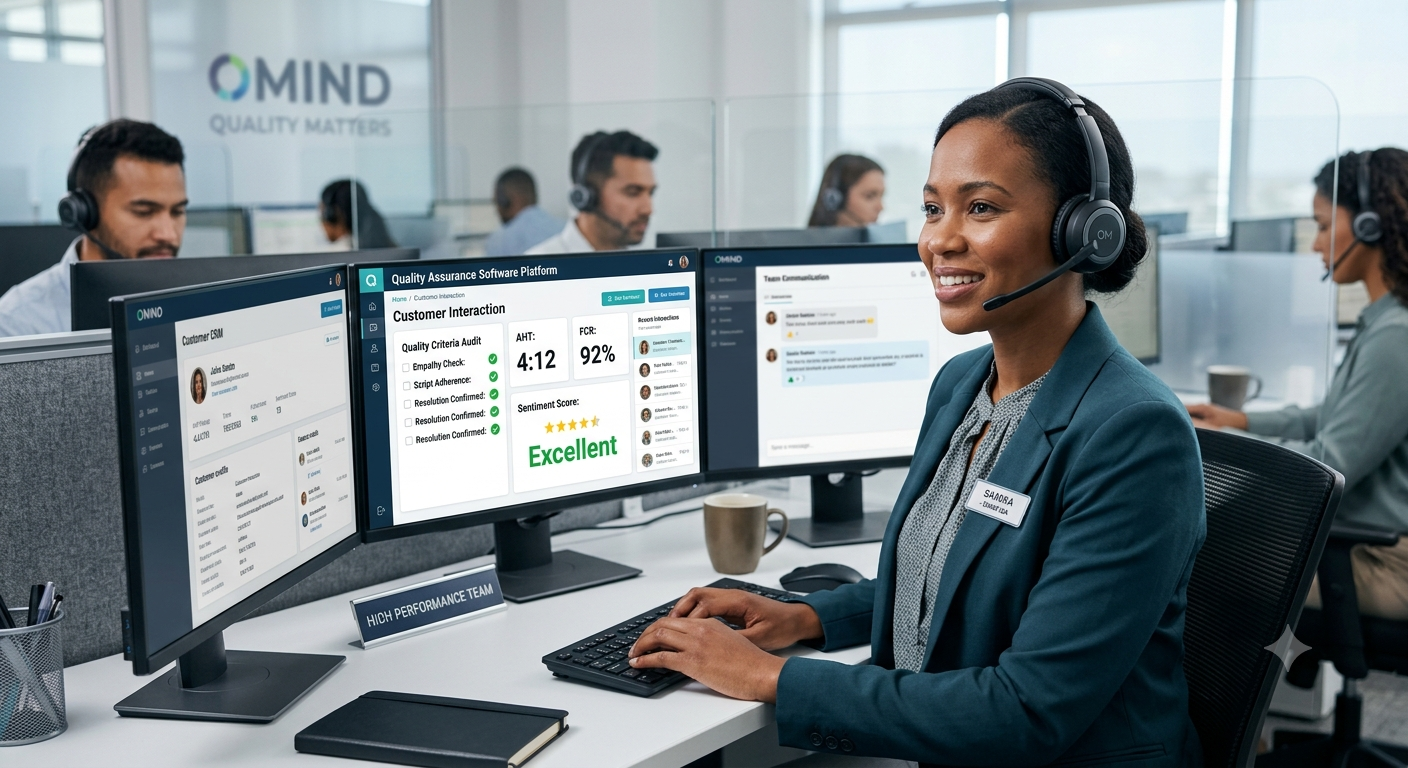
For decades, the standard for call center quality assurance (QA) has been the “random sampling” method. A dedicated team of QA analysts listens to a handful of calls, fills out a rigid scorecard in a spreadsheet, and provides feedback to agents weeks after the interaction took place.
If this sounds familiar, you are likely feeling the friction. Manual QA is labor-intensive, statistically insignificant, and—most importantly—lagging. In an era where customer expectations are higher than ever, relying on manual processes is no longer a viable strategy. It’s time to move toward a more sophisticated approach.
Here is why it’s time to stop manual QA and embrace a modern quality management tool for call centers.
The Hidden Costs of Manual QA
The most significant issue with manual QA is the sheer volume of data. In a typical call center, a human analyst might review 1% to 3% of total interactions. By ignoring the other 97%, you are essentially flying blind. You miss critical trends, emerging customer pain points, and instances of non-compliance that could lead to massive operational risks.
Beyond the lack of coverage, manual QA is fraught with:
-
Subjectivity: Different analysts interpret "empathy" or "resolution" differently, leading to inconsistent scores.
-
The Feedback Gap: By the time an agent receives feedback on a call from three weeks ago, the context is lost. They cannot “re-live” the moment, making coaching ineffective.
-
Operational Drag: Your best supervisors are spending hours on administrative data entry rather than actual coaching and team development.
How Automated QA Changes the Game
A modern QA customer support solution doesn't just digitize your scorecard; it transforms your data into actionable intelligence. By leveraging AI and speech analytics, these tools allow you to move from “sampling” to “monitoring.”
1. 100% Coverage
The most powerful feature of an automated quality management tool is the ability to analyze every single interaction. Whether it’s voice calls, emails, or chat messages, the software can transcribe and categorize every contact. You no longer have to guess what’s happening on the floor; you have a data-backed bird’s-eye view of your entire operation.
2. Pattern Detection and Trend Analysis
Manual QA can tell you if an agent was polite. Modern call center QA tools can tell you why your customers are calling in higher volumes this week. By identifying keywords and sentiment spikes, these tools alert you to product bugs, broken website links, or confusing billing policies long before a human analyst would spot the pattern.
3. Targeted Coaching
When you stop wasting time on “good” calls that don’t need review, you can focus your energy where it matters. Modern tools automatically flag interactions that contain negative sentiment, compliance risks, or high-effort language. Instead of a random review, your supervisors get a prioritized list of calls that actually require intervention. This turns your QA process into a coaching engine.
Building a Culture of Continuous Improvement
Moving away from manual QA isn't just about software; it’s about shifting the culture of your support organization. When QA is automated, the conversation between a supervisor and an agent changes.
Instead of “You missed this checkbox on the scorecard,” the conversation becomes: “I noticed that when customers asked about our return policy, you struggled to explain the timeline. Here’s a resource to help, and let’s roleplay that script once.”
This shift removes the “policing” aspect of QA and replaces it with a growth-oriented partnership. When agents see that their actual performance (rather than a cherry-picked sample) is the basis for their development, buy-in increases dramatically.
Choosing the Right Tool
If you are ready to stop manual QA, look for a platform that offers the following:
-
Omnichannel Transcription: The tool must handle both voice and text-based channels seamlessly.
-
Sentiment Analysis: It should be able to identify frustration, anger, or satisfaction through linguistic patterns.
-
Integrations: Your QA tool should play nicely with your CRM (like Salesforce or Zendesk) to provide contextual data regarding the customer’s journey.
-
Customizable Scorecards: Ensure the tool allows you to build scorecards that reflect your specific brand voice and compliance requirements.
The Bottom Line
In the hyper-competitive world of customer support, every interaction is an opportunity. When you rely on manual processes, you are letting thousands of those opportunities go to waste every single day.
By implementing an automated quality management tool for your call center, you reduce the burden on your team, gain unprecedented visibility into the customer experience, and provide agents with the coaching they actually need to succeed. Don’t let your QA strategy remain stuck in the past—the data you need to scale your business is waiting inside your interactions. It’s time to listen better.

 English
 Arabic
 French
 Spanish
 Portuguese
 Deutsch
 Turkish
 Italiano
 Russian
 Romaian
 Portuguese (Brazil)
 Greek
Greek