


Get 7 Benefits with Jacket Back PES File Creation
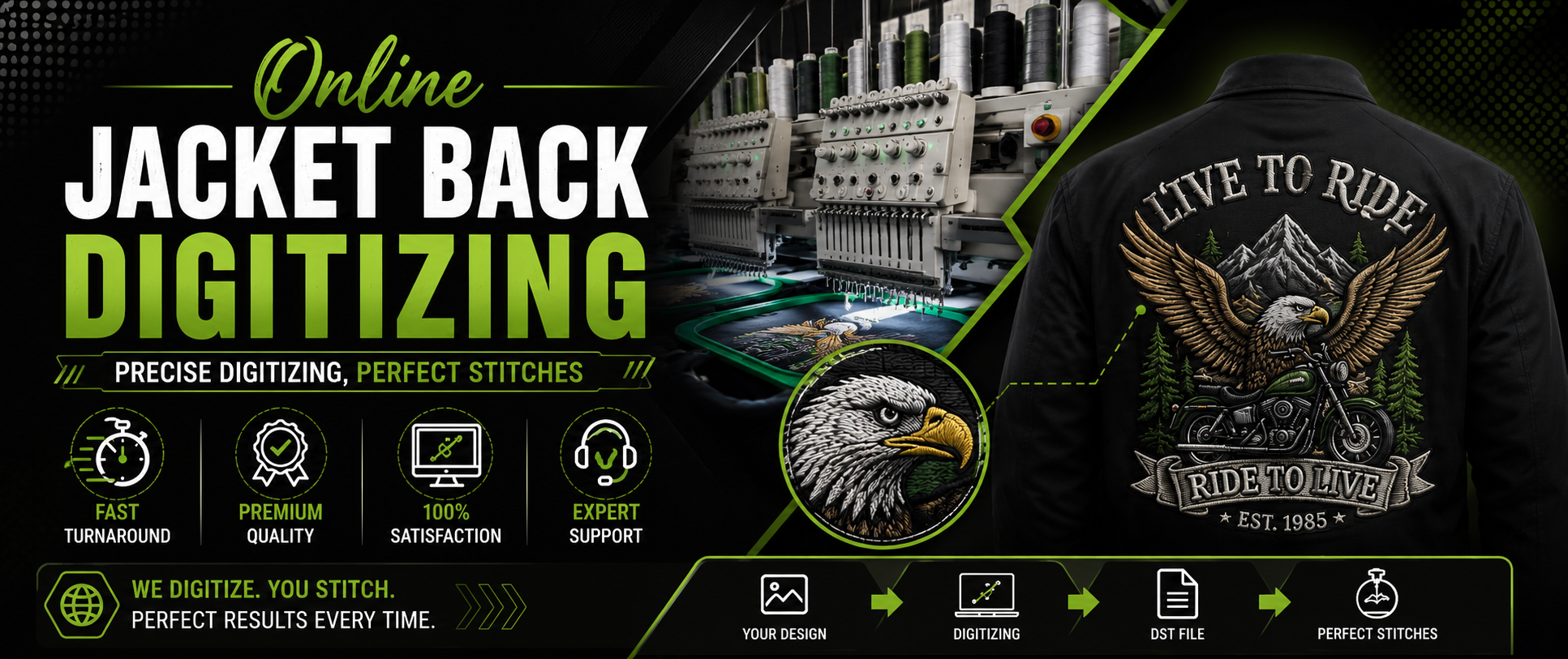
Why Jacket Back PES File Creation Delivers Better Embroidery
Large embroidery designs need perfect preparation before stitching starts. Jacket Back PES File Creation helps embroidery machines produce clean, smooth, and professional results on jackets. A properly created PES file keeps every stitch in the correct position while reducing thread breaks and unnecessary machine stops. Businesses, apparel brands, sports teams, and embroidery shops all depend on quality file creation to achieve consistent embroidery.
Every jacket back design contains many stitches. Without proper planning, embroidery can become uneven or distorted. Professional file creation solves these problems by arranging stitches correctly and making the design suitable for embroidery machines. This process improves quality while saving production time.
Whether the artwork is simple or detailed, a carefully prepared embroidery file helps deliver outstanding finished products.
Understanding the PES File Format
PES is one of the most popular embroidery machine formats. It contains stitch information instead of regular image data. Machines read these instructions to know exactly where every stitch should be placed.
Unlike image files, a PES file includes:
Design dimensions
Stitch directions
Thread color sequence
Density settings
Machine commands
Because embroidery machines follow these instructions precisely, accuracy during file creation is extremely important.
Why Large Jacket Designs Need Special Attention
Jacket backs offer a wide embroidery area. While this creates more space for creative artwork, it also increases the complexity of the design.
Large embroidery requires proper stitch sequencing to avoid fabric pulling. Stitch density must also remain balanced so the fabric does not become too stiff.
Professional digitizers carefully organize every section before production begins. This preparation helps maintain design accuracy from the first stitch to the last.
The Process Behind Professional File Creation
Every successful embroidery project begins with quality artwork. Designers first study the logo, illustration, or text before converting it into embroidery stitches.
The artwork is cleaned to remove unnecessary details that may not stitch well. After that, suitable stitch types are assigned to every area.
Fill stitches cover larger spaces while satin stitches highlight borders and lettering. Running stitches add small details and decorative lines.
After assigning stitch types, professionals adjust stitch angles, density, underlay, and pull compensation. These settings improve stability during embroidery.
Finally, the design is tested before delivery to ensure smooth machine performance.
Importance of Clean Stitch Paths
One important part of embroidery digitizing is creating efficient stitch paths.
Poor stitch paths create unnecessary jumps, trims, and thread breaks. They also increase production time and reduce embroidery quality.
Professional digitizers carefully plan the sewing sequence to reduce machine movement while keeping every section aligned.
This careful planning produces cleaner embroidery and helps operators complete jobs more efficiently.
Choosing the Right Stitch Density
Stitch density affects both appearance and durability.
Very dense stitching may create puckering and thread breaks. Low density may leave unwanted gaps inside the design.
Finding the correct balance depends on the fabric, thread type, backing material, and artwork complexity.
Experienced Jacket Back Digitizing Experts carefully adjust these settings according to each project instead of using the same values for every design.
Fabric Matters During Digitizing
Different jacket materials behave differently under embroidery.
Cotton jackets are generally stable and easier to embroider.
Denim requires stronger underlay because of its thicker surface.
Leather needs fewer needle penetrations to avoid visible holes.
Softshell jackets may stretch during embroidery and require extra stabilization.
Professional file creation considers these material differences before the final file is produced.
Why Underlay Stitches Are Important
Underlay stitches provide the foundation for the entire embroidery design.
Without proper underlay, top stitches may sink into the fabric or shift during stitching.
The right underlay supports the design, improves coverage, and increases stitch stability.
This hidden layer often determines whether the finished embroidery looks professional or uneven.
Testing Before Production
Even an excellent-looking design should always be tested.
A sample stitch-out allows digitizers to identify any issues before full production begins.
Testing may reveal problems like excessive density, incorrect stitch direction, or small lettering that needs adjustment.
Making these improvements early saves time, materials, and production costs.
Common Mistakes to Avoid
Many embroidery problems happen because of poor preparation.
Using low-quality artwork often creates rough edges.
Incorrect stitch density may lead to puckering.
Poor sequencing increases machine stops.
Ignoring fabric characteristics can reduce embroidery quality.
Skipping test runs may result in expensive production errors.
Avoiding these common mistakes leads to smoother production and better customer satisfaction.
Benefits for Embroidery Businesses
Professional embroidery businesses depend on accurate machine files every day.
High-quality files improve production speed while reducing machine downtime.
Customers receive cleaner embroidery with better durability.
Operators spend less time correcting errors or restarting machines.
Consistent file quality also helps businesses maintain their professional reputation and complete more orders efficiently.
How Technology Improves Modern Digitizing
Today's embroidery software includes powerful features for creating accurate machine files.
Designers can preview stitch paths, simulate embroidery, and identify possible issues before production begins.
These tools improve precision while reducing manual corrections later.
Modern software also supports better stitch optimization for large jacket designs.
Although software provides useful automation, skilled human editing remains essential for achieving premium embroidery quality.
Tips for Better Jacket Embroidery
Always begin with clear artwork because image quality directly affects digitizing accuracy.
Select appropriate stitch types for every design element instead of using one stitch style everywhere.
Adjust density according to the jacket fabric.
Test every large design before full production.
Keep lettering readable by maintaining suitable stitch widths.
Review the completed file carefully before sending it to the embroidery machine.
These simple practices help create professional-looking embroidery that lasts.
Get a Free Quote
Final Thoughts
Professional Jacket Back PES File Creation gives embroidery businesses the confidence to produce clean, durable, and attractive jacket designs. Every stitch, angle, and sequence plays an important role in the finished result. Careful planning, proper testing, and attention to fabric characteristics help prevent common production problems while improving overall embroidery quality. Investing time in accurate Jacket Back PES File Creation ensures reliable machine performance, consistent results, and satisfied customers. For businesses that value quality, Jacket Back PES File Creation remains an essential part of successful embroidery production.
Ready to get started? Get a Free Quote Now or Contact Us today to turn your ideas into stunning embroidered art.
Beyond embroidery, we also offer AI Digital Marketing Services in USA.
Author: Digit-it
Experts in Custom Embroidery Digitizing – Trusted by Clients Nationwide
Website: www.digit-it.com | Email: digitize@digit-it.com |
Contact: +1(231)-821-5515
WhatsApp: +44 7598 989500
Secure, Professional, and Committed to Quality – View our About Page and Contact Information for Trust & Support.

 English
 Arabic
 French
 Portuguese
 Deutsch
 Turkish
 Dutch
Dutch
 Italiano
 Russian
 Romaian
 Portuguese (Brazil)
 Greek
Greek