


E-commerce Delivery Management: The Complete Guide for Transporters
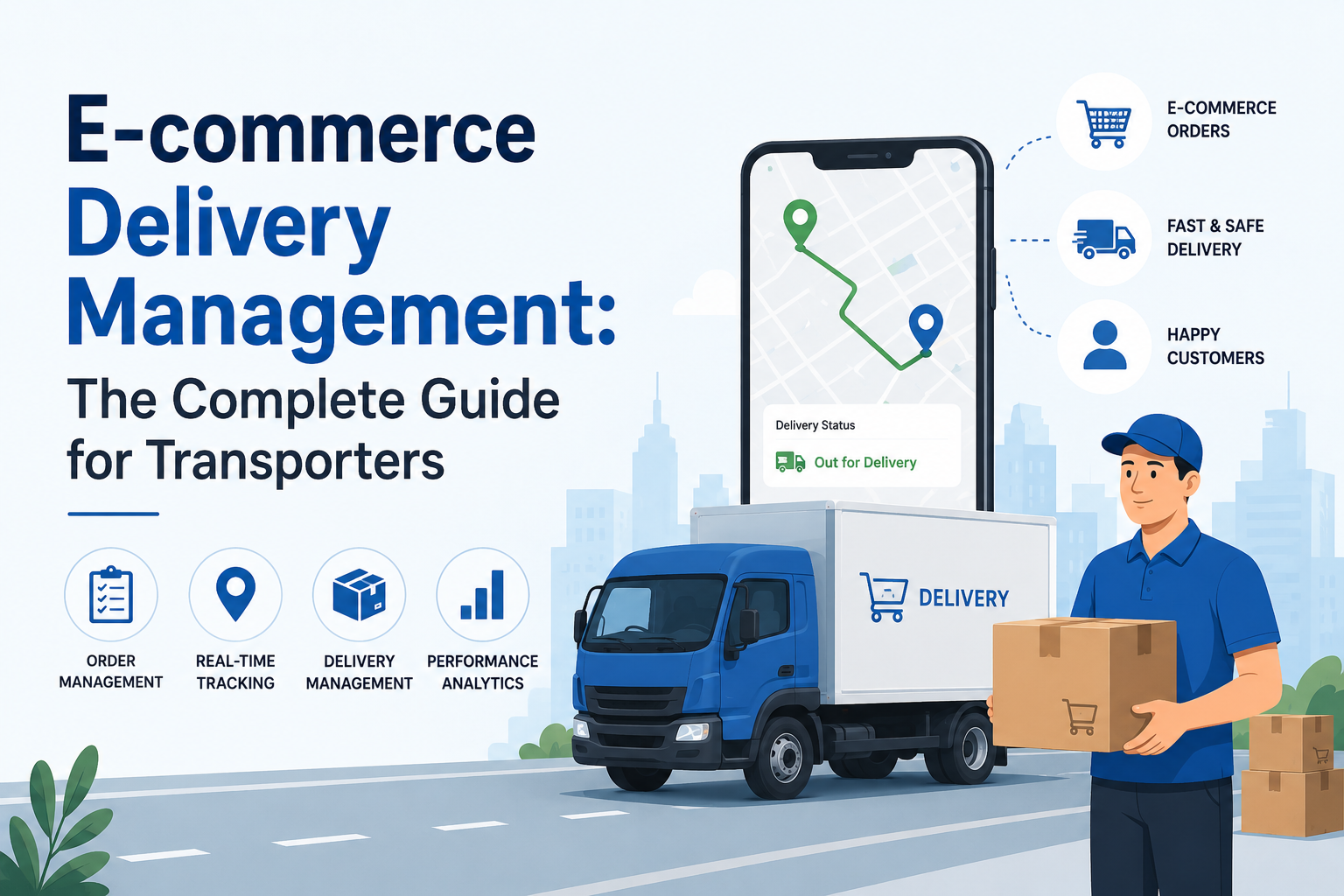
E-commerce has changed the way customers buy products and how businesses manage deliveries. With customers expecting faster delivery, real-time tracking, flexible delivery options, and accurate order updates, transporters need efficient systems to manage increasing delivery volumes.
For transporters, e-commerce delivery involves much more than simply moving packages from a warehouse to the customer's doorstep. It requires order coordination, vehicle and driver assignment, route planning, shipment tracking, delivery confirmation, returns management, and communication between multiple teams.
E-commerce Delivery Management helps transporters organize these activities through a structured and technology-driven process. By using E-commerce Delivery Management Software, transport businesses can improve delivery visibility, automate repetitive tasks, optimize routes, and manage last-mile operations more efficiently.
In this complete guide, we will explain what e-commerce delivery management is, how it works, its key features, benefits, challenges, and how transporters can choose the right software for their operations.
What Is E-commerce Delivery Management?
E-commerce Delivery Management is the process of planning, coordinating, tracking, and managing the delivery of online orders from a warehouse, fulfillment center, or seller location to the final customer.
For transporters, this process includes several activities such as shipment allocation, vehicle and driver assignment, route planning, dispatch, real-time tracking, delivery confirmation, and return management.
As e-commerce businesses handle large numbers of orders across different locations, manual delivery management can become difficult. A centralized delivery management system helps transporters organize these activities and maintain better visibility throughout the delivery lifecycle.
Why Is E-commerce Delivery Management Important for Transporters?
E-commerce customers increasingly expect deliveries to be fast, accurate, and trackable. Delayed deliveries, missed delivery attempts, incorrect addresses, and poor communication can affect both the customer experience and the e-commerce business's reputation.
Transporters need to manage multiple deliveries efficiently while keeping transportation costs under control.
Effective e-commerce delivery management helps transporters:
-
Coordinate large delivery volumes
-
Plan efficient delivery routes
-
Assign drivers and vehicles
-
Track shipments in real time
-
Reduce delivery delays
-
Improve vehicle utilization
-
Manage failed deliveries
-
Handle returns
-
Capture digital Proof of Delivery
-
Provide better customer visibility
For transport businesses, improving delivery management can directly contribute to operational efficiency and customer satisfaction.
How Does E-commerce Delivery Management Work?
E-commerce delivery management follows a connected workflow that begins when an order is ready for transportation and continues until the product is successfully delivered or returned.
1. Order and Shipment Collection
The process starts when shipment information is received from the e-commerce business, warehouse, seller, or fulfillment center.
Important information such as order number, customer address, package details, delivery instructions, and expected delivery date can be recorded in the system.
2. Delivery Planning
Once orders are available, the transporter plans deliveries based on destination, delivery priority, vehicle availability, package requirements, and expected delivery schedules.
This helps organize multiple deliveries before vehicles are dispatched.
3. Vehicle and Driver Assignment
Vehicles and drivers are assigned to delivery routes based on availability, capacity, location, and delivery requirements.
Automated assignment can help reduce manual coordination and ensure that available resources are used effectively.
4. Route Planning and Optimization
The system can organize delivery routes based on multiple customer locations and transportation requirements.
Route optimization can help reduce unnecessary travel distance, fuel consumption, and delivery time.
5. Dispatch
After routes and resources are finalized, vehicles are dispatched for delivery.
Drivers can access their assigned delivery information and follow planned routes through mobile applications or connected systems.
6. Real-Time Delivery Tracking
GPS tracking allows transporters and e-commerce businesses to monitor vehicle and delivery progress.
Customers may also receive shipment status updates, depending on the tracking capabilities the system provides.
7. Delivery Confirmation
Once the package reaches the customer, the driver can capture delivery confirmation through digital signatures, photographs, OTP verification, or other available methods.
This creates a digital Proof of Delivery record.
8. Failed Delivery Management
If a delivery cannot be completed because the customer is unavailable, the address is incorrect, or another issue occurs, the system can record the failed delivery and support reattempt planning.
9. Returns Management
E-commerce deliveries can also involve product returns. Transporters need to coordinate reverse pickups and return shipments efficiently.
A connected ODC cargo movement can help track returned packages and maintain visibility throughout the reverse logistics process.
Key Features of E-commerce Delivery Management Software
Order and Shipment Management
Transporters can manage order and shipment information from a centralized platform. This makes it easier to organize delivery requirements, customer details, package information, and delivery schedules.
Real-Time GPS Tracking
Real-time GPS tracking provides visibility into vehicle locations and delivery progress. Managers can monitor active routes and identify delays, unexpected stops, or route deviations.
Route Optimization
Route optimization helps create efficient delivery routes based on multiple delivery locations, vehicle availability, and operational requirements. Better routes can help reduce travel time, fuel consumption, and unnecessary mileage.
Driver Management
Transporters can manage driver profiles, assignments, schedules, and delivery activities from one platform. Centralized driver management makes it easier to coordinate drivers with daily delivery routes.
Automated Dispatch Management
Automated dispatch helps assign orders, vehicles, and drivers based on predefined requirements. This can reduce manual work and improve delivery planning.
Digital Proof of Delivery
Drivers can capture digital signatures, photographs, OTP verification, or other delivery confirmation details. This reduces paperwork and provides a reliable digital record of completed deliveries.
Delivery Status Management
The system can provide different delivery statuses such as assigned, dispatched, in transit, out for delivery, delivered, failed, or returned.
This gives transporters and customers better visibility into shipment progress.
Customer Notifications
Automated notifications can provide customers with important updates about shipment status, estimated delivery, delivery attempts, and successful delivery.
Failed Delivery Management
The system can record unsuccessful delivery attempts and help teams plan reattempts or other actions based on the reason for failure.
Return and Reverse Logistics Management
Transporters can manage return pickups and reverse shipments as part of the same delivery workflow. This helps improve visibility across both forward and reverse logistics.
Reports and Analytics
Delivery reports can provide insights into delivery performance, driver productivity, route efficiency, failed deliveries, customer service levels, and transportation costs.
Benefits of E-commerce Delivery Management Software for Transporters
Improves Delivery Efficiency
A centralized system helps transporters manage orders, routes, drivers, vehicles, and delivery activities more efficiently.
Reduces Delivery Delays
Better route planning, real-time tracking, and automated alerts can help identify potential delays and allow teams to respond more quickly.
Reduces Transportation Costs
Optimized routes and better vehicle utilization can help reduce unnecessary mileage, fuel consumption, and operational expenses.
Improves Last-Mile Visibility
Real-time tracking and delivery status updates provide better visibility into the last mile, which is one of the most complex stages of e-commerce logistics.
Reduces Manual Work
Automating order allocation, dispatch, notifications, tracking, and delivery documentation can reduce repetitive administrative tasks.
Improves Customer Experience
Accurate tracking information, timely notifications, and reliable delivery confirmation can help create a better customer experience.
Improves Driver Productivity
Digital delivery assignments and optimized routes help drivers understand their daily schedules and complete deliveries more efficiently.
Simplifies Proof of Delivery
Digital POD eliminates much of the paperwork associated with traditional delivery confirmation and makes records easier to access.
Supports Faster Decision-Making
Delivery dashboards and analytics provide managers with real-time operational information that can help them make faster and more informed decisions.
Common Challenges in E-commerce Delivery Management
High Delivery Volumes
E-commerce businesses can generate large numbers of orders, especially during seasonal sales and promotional periods. Managing these volumes manually can put additional pressure on transport teams.
Last-Mile Delivery Complexity
Delivering individual packages to multiple customer locations can be time-consuming and expensive. Traffic, address issues, customer availability, and route changes can make last-mile operations more challenging.
Failed Delivery Attempts
Customers may not be available at the time of delivery, or delivery addresses may be incorrect. Repeated delivery attempts can increase transportation costs.
Limited Real-Time Visibility
Without GPS tracking and digital delivery systems, transporters may struggle to provide accurate shipment status updates.
Managing Returns
Reverse logistics can become complicated when large numbers of customers request returns. Transporters need a structured process to coordinate reverse pickups and track returned shipments.
Driver Coordination
Managing multiple drivers and delivery routes manually can lead to inefficient assignments, communication gaps, and scheduling problems.
How to Improve E-commerce Delivery Operations
Optimize Delivery Routes
Use route planning and optimization to organize multiple deliveries efficiently and reduce unnecessary travel.
Use Real-Time Tracking
GPS tracking provides better visibility into vehicles and helps managers identify delivery delays or route deviations.
Automate Driver Assignments
Automated driver and vehicle allocation can help match delivery requirements with available transportation resources.
Digitize Proof of Delivery
Use digital signatures, photographs, OTPs, or other electronic confirmation methods to reduce paperwork and improve delivery records.
Track Delivery Performance
Monitor key metrics such as on-time delivery rate, failed deliveries, delivery time, vehicle utilization, and driver productivity.
Manage Returns Digitally
Create a structured reverse logistics workflow to manage return requests, pickup schedules, and returned shipments.
How to Choose the Right E-commerce Delivery Management Software
Choosing the right software depends on your delivery volume, fleet size, geographic coverage, customer requirements, and operational goals.
Evaluate Delivery Management Features
Make sure the software supports order management, delivery planning, dispatch, tracking, Proof of Delivery, failed delivery management, and returns.
Look for Route Optimization
Choose a solution that can optimize routes for multiple delivery locations and help reduce travel time and transportation costs.
Check Real-Time Tracking
Reliable GPS tracking is important for maintaining visibility across active deliveries.
Consider Mobile Access
Drivers should be able to access delivery assignments, routes, customer information, and POD functionality through mobile devices.
Check Integration Capabilities
The software should integrate with e-commerce platforms, ERP systems, order management systems, GPS devices, accounting platforms, and other logistics tools where required.
Evaluate Scalability
Choose software that can handle increasing orders, drivers, vehicles, customers, and delivery locations as your business grows.
Review Reporting Capabilities
Look for dashboards and reports covering delivery performance, driver productivity, route efficiency, failed deliveries, and transportation costs.
E-commerce Delivery Management and Last-Mile Delivery
Last-mile delivery is the final stage of transportation where a shipment moves from a distribution center, warehouse, or local hub to the customer's location.
It is often one of the most challenging and expensive parts of e-commerce logistics because deliveries may involve many individual customer locations.
E-commerce Delivery Management Software can help transporters manage last-mile operations by connecting:
-
Order management
-
Route optimization
-
Driver assignment
-
Vehicle tracking
-
Delivery scheduling
-
Customer notifications
-
Digital Proof of Delivery
-
Failed delivery management
-
Return pickups
This connected approach helps transporters improve visibility and coordinate last-mile activities more effectively.
How LogiBrisk Helps With E-commerce Delivery Management
LogiBrisk provides transportation management solutions that help businesses manage delivery and transportation activities through a centralized platform.
Its capabilities include:
-
E-commerce Delivery Management
-
Last-Mile Delivery Management
-
Fleet Management
-
GPS Vehicle Tracking
-
Driver Management
-
Route Optimization
-
Trip & Dispatch Management
-
Digital Proof of Delivery
-
Billing & Accounting
-
GST & E-Way Bill Management
-
Reports & Analytics
By connecting vehicles, drivers, routes, shipments, deliveries, and operational information, LogiBrisk helps transport businesses improve visibility and manage e-commerce delivery operations more efficiently.
Key KPIs for E-commerce Delivery Management
Measuring delivery performance is important for understanding operational efficiency and identifying areas for improvement.
-
On-Time Delivery Rate: Measures the percentage of orders delivered within the promised delivery timeframe. It helps businesses evaluate delivery reliability and identify delays.
-
First-Attempt Delivery Rate: Shows how many deliveries are completed on the first attempt. A higher rate indicates better delivery planning and customer coordination.
-
Average Delivery Time: Measures the average time required to complete deliveries from dispatch to customer receipt. It helps businesses evaluate delivery speed and operational efficiency.
-
Failed Delivery Rate: Tracks the percentage of delivery attempts that are unsuccessful. Monitoring this metric helps identify issues such as incorrect addresses, customer unavailability, or delivery delays.
-
Cost Per Delivery: Measures the average transportation cost associated with each completed delivery. It helps businesses monitor delivery expenses and identify opportunities to reduce costs.
-
Vehicle Utilization: Measures how effectively available vehicles are being used across delivery operations. Better utilization can help reduce idle time and improve fleet efficiency.
-
Driver Productivity: Measures the number of deliveries completed and overall driver performance. It helps managers identify productivity trends and improve delivery resource planning.
Future of E-commerce Delivery Management
E-commerce delivery operations are becoming increasingly technology-driven. Transporters are moving toward systems that provide real-time visibility, automation, route optimization, digital documentation, and data-driven decision-making.
Technologies such as GPS tracking, mobile delivery applications, automated dispatch, route optimization, digital Proof of Delivery, and analytics can help businesses build more responsive delivery operations.
As customer expectations continue to evolve, transporters that invest in connected delivery management systems can be better positioned to manage increasing delivery volumes and provide reliable last-mile services.
Conclusion
E-commerce Delivery Management plays an important role in helping transporters manage the growing complexity of online order fulfillment and last-mile delivery. From order allocation and route planning to GPS tracking, delivery confirmation, and returns, every stage needs to be coordinated efficiently.
Using Last Mile Delivery Management Software can help transport businesses reduce manual work, improve vehicle and driver utilization, control delivery costs, increase shipment visibility, and provide a better customer experience.
For transporters handling growing e-commerce delivery volumes, moving from manual processes to a centralized digital delivery management system can be an important step toward more efficient, scalable, and transparent transportation operations.
Frequently Asked Questions
What is E-commerce Delivery Management?
E-commerce Delivery Management is the process of planning, coordinating, tracking, and completing deliveries of online orders from sellers, warehouses, or fulfillment centers to customers.
What is E-commerce Delivery Management Software?
E-commerce Delivery Management Software is a digital solution that helps transporters manage orders, routes, drivers, vehicles, dispatch, tracking, delivery confirmation, returns, and other delivery activities.
How does delivery management software help transporters?
It helps transporters automate delivery planning, optimize routes, assign drivers, track vehicles, manage Proof of Delivery, monitor delivery performance, and handle failed deliveries and returns.
Why is route optimization important for e-commerce deliveries?
Route optimization helps organize multiple deliveries into efficient routes, reducing unnecessary travel distance, fuel consumption, and delivery time.
Can e-commerce delivery software track vehicles in real time?
Yes. When GPS tracking is integrated, transporters can monitor vehicle locations and delivery progress in real time.
Can E-commerce Delivery Management Software manage returns?
Yes. Many delivery management systems support reverse logistics by helping businesses manage return pickup requests, schedules, and shipment status.
What is Digital Proof of Delivery?
Digital Proof of Delivery is an electronic confirmation that a shipment has been delivered. It may include a digital signature, photograph, OTP, or other delivery confirmation details.
How does e-commerce delivery management improve customer experience?
It can provide accurate delivery updates, real-time tracking, timely notifications, reliable delivery confirmation, and better handling of failed deliveries and returns.

 Arabic
 French
 Spanish
 Portuguese
 Deutsch
 Turkish
 Dutch
Dutch
 Italiano
 Russian
 Romaian
 Portuguese (Brazil)
 Greek
Greek