


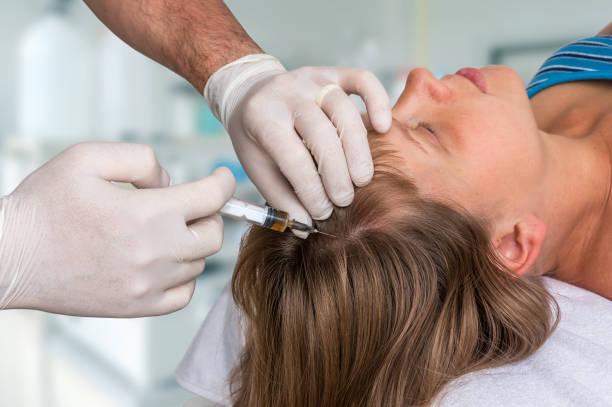
When it comes to treating hair loss, particularly conditions like alopecia areata, two injection-based therapies are often discussed: Platelet-Rich Plasma (PRP) and intralesional steroids. PRPHairTreatment in Riyadh Both are administered directly into the scalp, but they work through entirely different mechanisms. For those exploring PRPHairTreatment in Riyadh, understanding the differences is essential for choosing the right treatment path.
The Distinct Mechanisms of Action
PRP: Regenerative and Biostimulating
PRP uses concentrated growth factors from your own blood to stimulate hair follicles. These growth factors promote cell proliferation, activate dormant follicles, and induce the hair cycle's growth phase . PRP works by promoting vascularization and angiogenesis, encouraging follicles to enter and extend the growth phase through growth factor-mediated signaling pathways . Because it uses the patient's own blood, the risk of allergic reactions and systemic side effects is minimal .
Steroid Injections: Immunosuppressive
Intralesional corticosteroids (ILCs) like triamcinolone acetonide work through immunosuppression . They suppress the T-cell-mediated immune attack on the hair follicle that causes conditions like alopecia areata . Steroids with low solubility are preferred for slow absorption, promoting maximum local action with minimal systemic effect .
Efficacy: A Nuanced Picture
Research comparing these treatments shows context-dependent results. A 2025 prospective study on mild patch-type alopecia areata found that PRP showed similar efficacy to intralesional triamcinolone, with 76.67% of PRP patients achieving a "very good response" compared to 66.67% in the steroid group . Both groups saw significant SALT score reductions with no statistically significant difference between them .
However, another 2026 study on alopecia areata found that triamcinolone treatment led to a more substantial reduction in SALT scores over 24 weeks, with the difference becoming highly significant by week 12 . Earlier research from 2022 similarly found steroid injections significantly more effective than PRP .
For recalcitrant alopecia areata, a 2023 study found PRP efficacy in 64% of patients versus 36% for triamcinolone . A 2021 study reported that PRP yielded a very good response in 83.4% of patients versus 52.6% for steroids .
Safety and Side Effect Profiles
PRP: Lower Risk of Steroid-Related Side Effects
The autologous nature of PRP makes it an appealing option for patients requiring prolonged treatment, as it avoids steroid-related complications . Side effects are typically minor—itching, pain, burning, ecchymosis, and folliculitis—though one study reported side effects in 44.4% of PRP patients compared to 20.5% for steroids .
Steroid Injections: Potential for Atrophy and Telangiectasia
Steroids carry risks of skin atrophy and telangiectasia with long-term use . However, triamcinolone acetonide is preferred as it is less atrophogenic than other preparations . Steroids remain the first-line treatment in many settings, though their safety profile makes PRP an attractive alternative for patients needing ongoing therapy .
Which Treatment Is Right for You?
The choice depends on the condition being treated, severity, and individual factors. For those considering prp treatment in riyadh price, PRP offers a regenerative approach with fewer systemic side effects, though it may be less effective for some conditions than steroids. A consultation with a qualified healthcare provider is essential to determine the most appropriate treatment for your specific pattern and cause of hair loss.
For those seeking expert guidance and customized aesthetic care, you can book an appointment consultation at the Enfield Royal Clinic.
Frequently Asked Questions
Which treatment is more effective for alopecia areata?
PRP and steroids are both effective, with studies showing variable results. Some research suggests comparable efficacy, while others find steroids more effective. The best choice depends on your specific condition and response.
Does PRP have fewer side effects than steroids?
Yes, PRP generally avoids the steroid-related side effects like skin atrophy and telangiectasia, making it a safer option for long-term treatment.
Can both treatments be used together?
Some clinicians combine PRP and steroids, though the evidence supporting combination therapy is limited. A consultation with a specialist can determine if this approach suits your needs.
How many sessions are typically required?
Both treatments typically require multiple sessions at monthly intervals over 3 to 4 months, followed by maintenance sessions as needed.
How long does it take to see results?
Visible results vary, but many patients see improvement within 3 to 6 months, with some studies showing peak response at 6 months.

 English
 Arabic
 French
 Spanish
 Portuguese
 Deutsch
 Turkish
 Dutch
Dutch
 Italiano
 Romaian
 Portuguese (Brazil)
 Greek
Greek