


How Businesses Can Build a Practical Cloud Migration Strategy
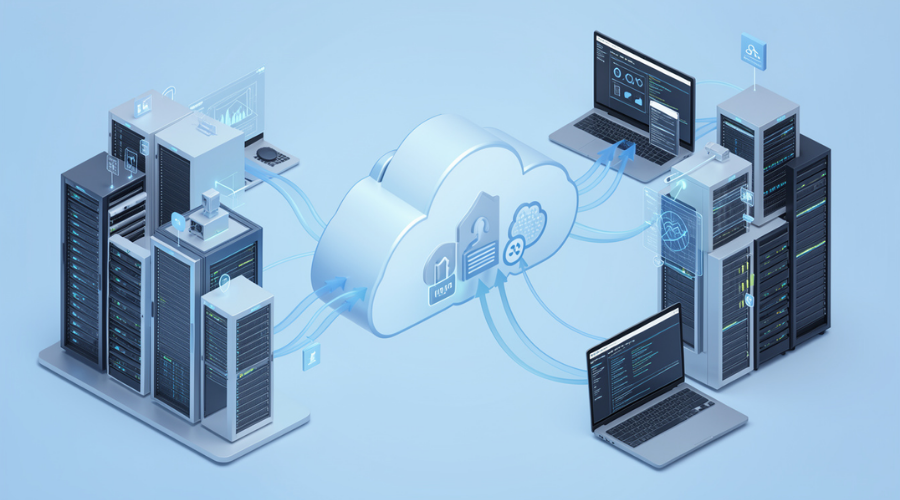
Cloud migration has moved from being a purely technical project to a broader business decision. Organisations are increasingly moving applications, databases, infrastructure and workloads away from traditional on-premises environments to cloud platforms for reasons that can include scalability, operational flexibility, resilience and access to modern computing capabilities. Yet moving workloads without a clear plan can create unnecessary costs, security risks and disruption.
The Market for Cloud Migration Services continues to develop as organisations reassess their technology infrastructure and adopt hybrid, multi-cloud and cloud-native approaches. NIST describes cloud computing as an evolving model that enables convenient, on-demand access to shared computing resources, while emphasising the importance of security, interoperability, portability and effective management.
A successful migration is therefore not simply a matter of transferring servers to another location. It requires organisations to understand what they currently operate, why they want to move, which workloads are suitable, how data will be protected and how the new environment will be managed after migration.
A practical strategy brings these questions together before large-scale changes begin.
Start With the Business Reason for Moving
The first step in a cloud migration strategy should not involve choosing a cloud provider.
It should involve understanding why the organisation wants to migrate.
Different businesses may have very different motivations. One organisation might want to reduce the amount of physical infrastructure it maintains. Another may need greater computing capacity during periods of high demand. A third may want to modernise legacy applications or improve disaster recovery.
These objectives influence almost every subsequent decision.
For example, a business primarily concerned with resilience may prioritise geographic redundancy and backup architecture. An organisation seeking application modernisation may focus more heavily on containers, managed databases and cloud-native services.
Without clearly defined objectives, migration can become an exercise in moving technology rather than improving the underlying business environment.
A useful strategy should therefore connect technical goals to measurable business outcomes.
Build a Complete Picture of the Existing Environment
Before deciding what to migrate, organisations need to understand what they already have.
This can be more difficult than it sounds.
Large businesses may operate hundreds or thousands of applications, databases, virtual machines, storage systems and integrations. Some systems may have been developed many years ago, and documentation may be incomplete.
An effective assessment should identify the major components of the current environment and how they depend on one another.
Teams should understand which applications communicate with particular databases, which systems depend on legacy infrastructure and which workloads contain sensitive information.
This dependency mapping is important because migrating one system without understanding its connections can cause unexpected failures.
The assessment should also consider application ownership, business criticality, performance requirements, data sensitivity and current operating costs.
Classify Workloads Before Choosing a Migration Method
Not every workload should be migrated in the same way.
Some applications may be relatively simple to move with minimal changes. Others may require significant redesign. Some may provide little value if moved at all.
A useful strategy is to classify workloads according to their technical condition, business importance and suitability for different migration approaches.
A legacy application with few dependencies might be suitable for a straightforward infrastructure move. Another application may benefit from being rebuilt using cloud-native services.
There may also be systems that should remain on premises because of regulatory requirements, latency considerations, hardware dependencies or other constraints.
This assessment helps prevent the common mistake of treating cloud migration as a single technical process.
Understand the Main Migration Approaches
Cloud migration is often described using several approaches, although terminology can vary between organisations and technology providers.
A "rehost" approach moves an application with relatively few changes. This can be useful when speed is important or when an organisation wants to move away from physical infrastructure without immediately redesigning an application.
"Replatforming" involves making selected changes to take advantage of cloud capabilities without completely rebuilding the application.
"Refactoring" or "rearchitecting" involves more substantial redesign so that an application can take advantage of cloud-native architecture.
Other workloads may be retired because they are no longer needed, replaced with a different service or retained in their existing environment.
The appropriate choice depends on the workload.
Trying to refactor every application during an initial migration can dramatically increase complexity. Conversely, moving every workload without modification can leave an organisation with old architectural limitations in a new environment.
Calculate the Full Cost of Migration
Cloud pricing can look straightforward at first, but estimating the actual cost of migration requires a broader view.
Organisations need to consider more than the monthly price of computing resources.
Migration costs can include data transfer, application changes, testing, temporary infrastructure, security controls, specialist skills and staff time.
After migration, ongoing expenses may include compute resources, storage, network traffic, managed services, monitoring, backup and support.
Some cloud services charge according to usage, which means costs can change as demand changes.
The FinOps Foundation describes FinOps as an operational and cultural practice that brings financial accountability into variable cloud spending and encourages collaboration between engineering, finance and business teams.
This approach is useful because financial management should continue after migration rather than ending when the project is completed.
Treat Security as Part of the Architecture
Security should not be added after workloads have already moved.
Cloud environments introduce different responsibilities and configurations, and organisations need to understand which security responsibilities belong to the cloud provider and which remain with the customer.
NIST's cloud security guidance highlights the importance of understanding security and privacy considerations when moving systems and data into cloud environments.
Organisations should consider identity management, access controls, encryption, network segmentation, logging, vulnerability management and incident response as part of the migration design.
Identity deserves particular attention.
Traditional environments often relied heavily on network boundaries. Cloud environments typically require stronger identity-based controls because users, applications and services may interact across distributed infrastructure.
Protect Data During the Transition
Data migration can be one of the most sensitive stages of a cloud project.
Moving large databases or file repositories can take time, and organisations need to ensure that data remains accurate and protected throughout the process.
Before transferring information, teams should determine what data exists, where it is stored, how sensitive it is and whether it still needs to be retained.
Data that is obsolete does not necessarily need to be migrated.
Reducing unnecessary data can simplify the migration while potentially lowering storage and management costs.
For information that does need to move, organisations should establish appropriate encryption, access controls, validation and backup procedures.
Data integrity checks are particularly important. A migration should not be considered successful merely because a transfer process reports that it has completed.
The organisation needs confidence that the information is complete, accessible and usable in the new environment.
Create a Migration Roadmap Instead of One Large Move
Moving everything at once can increase operational risk.
A phased approach allows organisations to learn from early migrations and improve later ones.
The first workload might be relatively low-risk but representative of the organisation's broader environment. This provides an opportunity to test connectivity, security controls, monitoring, backup procedures and operational processes.
Lessons from the pilot can then inform subsequent migrations.
Critical systems can be moved after the organisation has gained greater confidence in its processes.
A phased roadmap should also account for dependencies. Applications that rely heavily on one another may need to be migrated in a coordinated sequence.
Test Before Switching Production Systems
Testing is one of the most important parts of migration planning.
A workload may function correctly in a test environment but behave differently under production conditions.
Testing should cover more than basic application functionality.
Teams should evaluate performance, security, data integrity, integrations, backup and recovery processes and expected user workflows.
Performance testing is particularly important for applications with strict response-time requirements.
Organisations should also establish clear criteria for determining whether a migrated workload is ready for production.
These criteria provide an objective basis for deciding whether to proceed, make adjustments or return to the previous environment.
Have a Rollback Plan
Even well-planned migrations can encounter unexpected problems.
A rollback plan defines what the organisation will do if the new environment does not perform as expected.
The exact approach depends on the workload, but it may involve retaining the original environment temporarily, maintaining synchronised data or establishing a clearly defined restoration process.
Rollback planning should happen before the migration begins.
Once a production system has been changed, recovering an earlier state may become considerably more difficult.
The goal is not to assume failure. It is to make sure the organisation has a controlled response if something goes wrong.
Prepare the Organisation, Not Just the Technology
Cloud migration affects people as well as infrastructure.
IT teams may need to learn new platforms, security models, automation practices and operational processes.
Developers may need to understand new deployment methods. Finance teams may need to adapt to usage-based costs. Business teams may experience changes in how applications are accessed or supported.
Training should therefore form part of the migration plan.
Organisations should also establish clear ownership for the new environment.
Someone needs to be responsible for areas such as security, cost management, architecture, performance and operational support.
Without clear ownership, cloud environments can become difficult to manage as they grow.
Build Governance Into the Cloud Environment
Governance provides a framework for controlling how cloud resources are created, configured and managed.
This can include policies for identity, security, data classification, resource provisioning, cost management and compliance.
Automation can help enforce these policies consistently.
For example, organisations can use infrastructure-as-code approaches to define environments in a repeatable manner. Automated checks can also identify configuration issues before they become larger problems.
NIST's cloud computing guidance emphasises portability, interoperability and security as important considerations in cloud environments.
Governance should not become so restrictive that teams cannot work effectively, but it should provide enough structure to prevent uncontrolled growth.
Plan for Monitoring From Day One
A migrated workload needs to be observable.
Monitoring should provide visibility into performance, availability, resource utilisation and security events.
Without adequate monitoring, organisations may not know whether an application is operating normally or whether a problem is developing.
Logging is equally important.
Centralised logs can help technical teams investigate incidents, identify unusual behaviour and understand application performance.
Monitoring also supports financial management because resource utilisation can reveal workloads that are consistently over-provisioned.
Avoid Creating Cloud Waste
One of the misconceptions surrounding cloud migration is that moving to the cloud automatically reduces costs.
It does not.
Cloud can provide greater flexibility, but poorly managed environments can become expensive.
Unused resources may continue running. Storage can accumulate. Data transfer charges may increase. Teams may create duplicate services or provision resources significantly above actual requirements.
FinOps practices can help organisations create accountability for cloud spending by connecting costs with business value. The FinOps Foundation recommends collaboration between engineering, finance and business stakeholders so that teams can make informed decisions about cloud usage.
Cost management should therefore be part of the operating model rather than a one-time optimisation exercise.
Consider Hybrid and Multi-Cloud Carefully
Cloud migration does not necessarily mean moving everything into one public cloud environment.
Some organisations use hybrid architectures that combine on-premises infrastructure with cloud services.
Others use multiple cloud providers for particular workloads.
These models can provide flexibility, but they can also increase operational complexity.
Different platforms have different tools, architectures, security controls and pricing structures.
A multi-cloud strategy should therefore have a clear reason behind it.
Using several providers simply to avoid dependence on one provider can create additional management overhead without delivering enough practical value.
Think About Compliance Early
Regulatory requirements can influence where and how workloads are hosted.
Organisations operating in regulated sectors may need to consider data residency, retention, access controls, audit requirements and sector-specific obligations.
These requirements should be identified during planning rather than discovered after migration.
The exact obligations depend on the organisation, its location, the type of data it processes and the services it provides.
Legal, compliance and security teams should therefore be involved in migration planning where appropriate.
Measure Whether the Migration Actually Worked
A migration project needs measurable outcomes.
Technical measures might include application availability, performance and incident rates.
Financial measures could include infrastructure costs, resource utilisation or operational expenditure.
Business measures might include improved scalability, faster deployment or reduced time required to provision infrastructure.
The measures should connect directly to the reasons the organisation decided to migrate.
If the primary objective was improved resilience, for example, success should be evaluated in terms of recovery capabilities and availability rather than simply counting how many workloads were moved.
What the Future of Cloud Migration Looks Like
Cloud migration is gradually becoming less about simply moving workloads and more about modernising how technology is designed and operated.
Organisations are increasingly considering containers, serverless computing, managed databases, automation, observability and cloud-native architectures alongside traditional virtual machines.
Artificial intelligence is also influencing infrastructure planning and operations. AI-assisted tools can help analyse configurations, identify potential problems and support developers and operations teams.
However, newer technologies can also increase complexity.
The future of cloud migration is therefore unlikely to involve one universal architecture. Organisations will continue to balance cloud services with on-premises systems, edge computing and specialised infrastructure according to their requirements.
The key shift is towards more deliberate architecture rather than migration for its own sake.
Common Mistakes to Avoid
Many migration problems begin before the first workload is moved.
One common mistake is failing to understand application dependencies. Another is underestimating data migration requirements. Organisations may also overlook post-migration costs or assume that existing operational processes will work unchanged in the cloud.
Moving workloads without reviewing security configurations can introduce unnecessary risks.
Another problem is treating cloud migration as an IT-only initiative.
Because migration can affect budgets, employees, customers, compliance and business continuity, it requires cooperation across several functions.
Avoiding these mistakes does not require a perfect plan. It requires enough preparation to identify major risks before they become expensive problems.
A Practical Path Forward
A practical cloud migration strategy can be thought of as a continuous process rather than a single project.
First, establish the business objectives. Then assess the existing environment, map dependencies and classify workloads. From there, select appropriate migration approaches, estimate total costs, design security controls and establish governance.
The organisation can then test a manageable workload, learn from the results and progressively move additional systems.
After migration, the work continues.
Cloud environments need ongoing monitoring, security management, cost control, performance optimisation and architectural review.
This operating discipline is what turns a migration into a sustainable technology strategy.
Conclusion
Cloud migration can provide organisations with greater flexibility, scalability and access to modern technology, but those benefits do not appear simply because workloads have been moved.
A successful strategy begins with business objectives and a realistic understanding of the existing environment. It considers application dependencies, data protection, security, cost, compliance, staff skills and operational requirements before migration begins.
Phased implementation can reduce risk, while testing and rollback planning provide additional safeguards. Once workloads have moved, monitoring, governance and financial management become essential parts of the ongoing operating model.
The most practical approach is therefore not to ask how quickly an organisation can move everything to the cloud. The better question is which workloads should move, why they should move, how they should be migrated and what the organisation expects to achieve afterwards.
When those questions guide the process, cloud migration becomes less about relocating infrastructure and more about building a technology environment that supports long-term business needs.

 English
 Arabic
 French
 Spanish
 Deutsch
 Turkish
 Dutch
Dutch
 Italiano
 Russian
 Romaian
 Portuguese (Brazil)
 Greek
Greek