


Exosome Hair Therapy in Dubai for Scalp Renewal and Hair Support
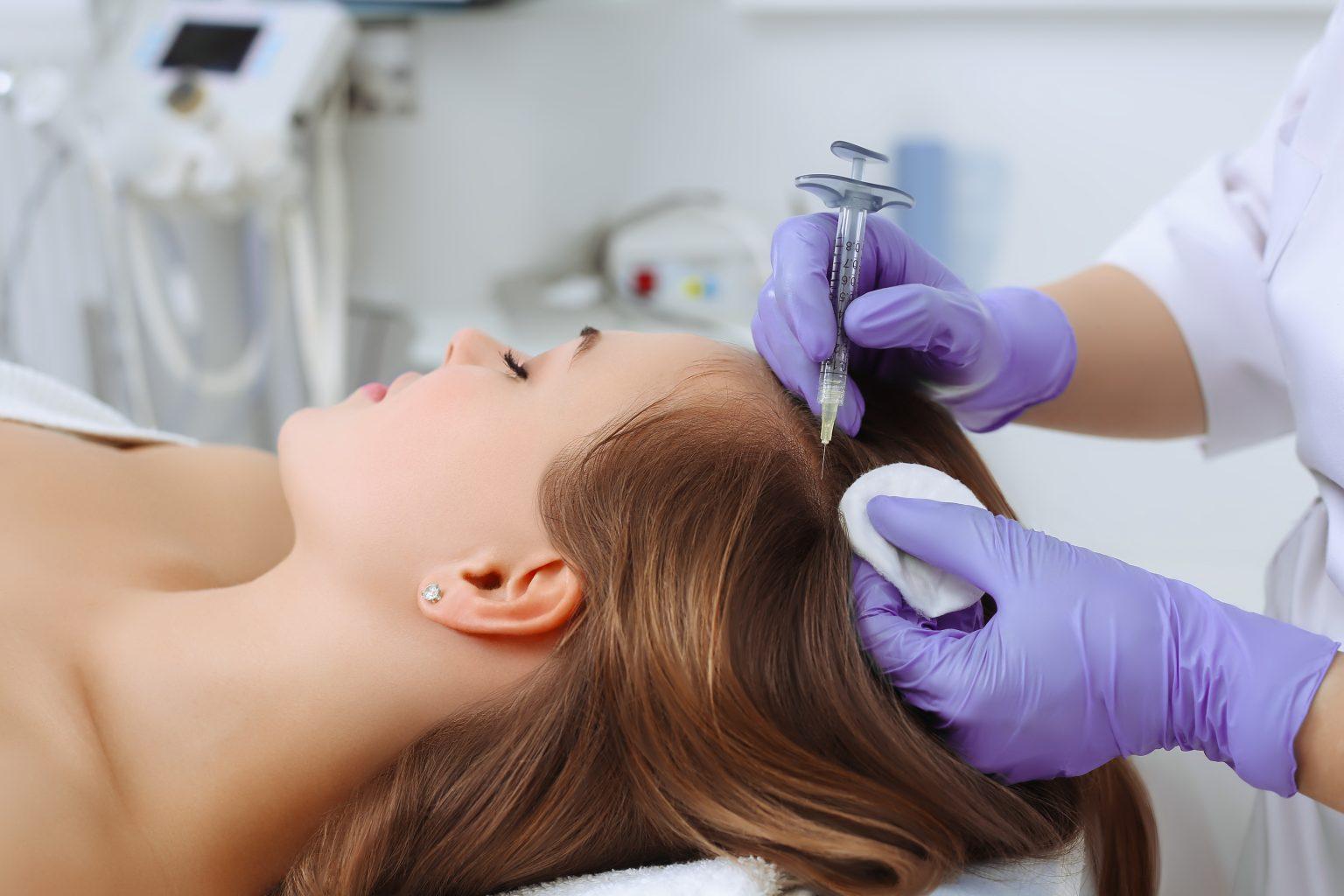
Hair thinning rarely has one simple cause. Genetics, hormonal changes, scalp inflammation, environmental stress, and lifestyle factors can all influence the hair-growth cycle. Exosome Hair Therapy in Dubai is an advanced regenerative approach designed to support the scalp environment and create conditions that may encourage healthier hair activity.
For Dubai residents, scalp care also has an environmental dimension. Strong UV exposure, dry indoor air from prolonged AC use, seasonal humidity changes, and frequent travel can make an already stressed scalp feel less balanced.
How Exosome Hair Therapy Handles Dubai’s Environmental Challenges
The scalp is living tissue, not simply a surface where hair grows. Each follicle sits within a specialized microenvironment containing blood vessels, connective tissue, sebaceous glands, immune cells, and signaling pathways that influence the growth cycle.
Dubai's climate can add another layer of stress. Outdoor heat and UV exposure can alternate with long hours in air-conditioned environments, while humid summer conditions may increase sweat and oil accumulation around the scalp.
Exosome-based treatments are designed around biological signaling rather than simply coating the hair shaft. Exosomes are microscopic extracellular vesicles that can carry signaling molecules involved in communication between cells.
In clinical regenerative medicine, this signaling concept is being studied for its potential role in tissue repair and cellular communication. For hair concerns, the goal is to support the scalp environment surrounding follicles rather than mechanically creating new follicles.
A practical treatment pathway can be understood like this:
Scalp assessment → Identify hair-loss pattern → Prepare treatment area → Target selected scalp zones → Allow the scalp to respond → Monitor hair and scalp changes
The exact treatment plan depends on the patient's pattern of thinning, scalp condition, medical history, and the clinician's assessment.
For someone who regularly travels between Dubai and other climates, consistency can matter just as much as the treatment itself. Changes in sleep, diet, stress, water exposure, and hair-care habits can all affect how the scalp behaves.
Exosome Hair Therapy Compared With Other Hair Treatments
Exosome therapy is not automatically a replacement for every established hair-loss treatment. Different approaches address different biological problems, and the appropriate option depends heavily on the diagnosis.
| Treatment approach | Primary purpose | Typical focus | Downtime | Best suited to |
|---|---|---|---|---|
| Exosome-based therapy | Cellular signaling and scalp support | Follicular environment | Usually limited | Selected patients with thinning or weakened hair |
| PRP | Uses concentrated components from the patient's blood | Scalp and follicular support | Usually short | Certain types of early-to-moderate hair thinning |
| Hair fillers | Provides injectable regenerative support | Scalp and follicular environment | Generally limited | Selected patients seeking non-surgical support |
| Minoxidil | Modifies the hair-growth cycle | Individual follicles | None from application | Appropriate medically evaluated hair-loss patterns |
| Hair transplant | Relocates existing follicles | Areas with permanent loss | Surgical recovery | Suitable candidates with adequate donor hair |
The important distinction is that regenerative therapies generally aim to improve the environment around existing follicles. A hair transplant, by contrast, physically moves follicles from a donor region into an area where density has been lost.
That difference matters when discussing expectations. A treatment intended to support weakened follicles should not be presented as equivalent to replacing follicles that are no longer present.
Clinical Execution and Injection Technique
The quality of an exosome treatment depends on more than the product itself. Proper patient selection, scalp assessment, sterile preparation, treatment depth, distribution, and aftercare all influence the clinical process.
Before treatment, the clinician examines the pattern of thinning and the condition of the scalp. Areas with diffuse reduction in density may require a different approach from a receding hairline or localized thinning.
The scalp has multiple anatomical layers, and the treatment should be planned according to the intended tissue target. The objective is not simply to place material as deeply as possible. Controlled placement within the appropriate scalp tissue is more relevant than injection depth alone.
Treatment zones may be mapped according to areas of visible thinning and the distribution of viable follicles. The clinician may also consider whether there are signs of inflammation, excessive oiliness, scaling, or another scalp condition that should be addressed first.
Patients researching exosome hair treatment in Dubai should therefore look beyond the name of the treatment and ask how their scalp will be evaluated before treatment.
Another practical consideration is sterility. Injectable scalp procedures require appropriate preparation and clinical handling because the skin barrier is intentionally penetrated during treatment.
The procedure itself is generally designed to be minimally invasive. Some patients experience temporary sensitivity, mild redness, tightness, or tenderness around treated areas, although individual responses vary.
Real Patient Concerns and Clinical Realities
“Will exosomes bring back hair where the follicle is completely gone?”
Not necessarily. Regenerative treatments are intended to support the biological environment around existing or weakened follicles. They should not be described as creating brand-new follicles where there is irreversible follicular loss.
“Is one treatment enough?”
Hair biology works on a cycle, so visible changes do not normally happen overnight. Treatment frequency depends on the clinical plan, the underlying cause of hair loss, and how the individual responds.
“Will the treatment work the same way for every type of hair loss?”
No. Pattern hair loss, inflammatory scalp disorders, nutritional deficiencies, hormonal changes, and scarring alopecia have different mechanisms. Establishing the likely cause of hair loss is an important part of responsible treatment planning.
Dubai patients sometimes also assume that frequent washing, heat, or AC exposure directly causes permanent hair loss. These factors can influence scalp comfort and hair-shaft condition, but persistent thinning usually requires a broader clinical assessment.
Exosome Hair Therapy Treatment Roadmap
-
Scalp and hair assessment
The clinician reviews the distribution of thinning, scalp condition, hair density, medical history, and relevant lifestyle factors.
-
Treatment planning
Appropriate scalp zones are identified, and the clinician determines whether exosome-based therapy is suitable or whether another approach may be more appropriate.
-
Scalp preparation
The treatment area is cleaned and prepared according to clinical protocols before the procedure begins.
-
Targeted application
The exosome-based preparation is delivered to selected scalp areas using an appropriate technique based on the treatment plan.
-
Immediate aftercare
Patients receive instructions covering scalp care, washing, exercise, products, sun exposure, and other activities that may need temporary modification.
-
Monitoring
Hair growth follows a biological cycle rather than an immediate cosmetic timeline. Follow-up allows the clinician to assess scalp response and determine whether additional treatment is appropriate.
Long-Term Scalp Health Matters
The most useful way to think about regenerative hair treatments is as part of a broader strategy for scalp and follicular health. A treatment can support the biological environment, but factors such as nutrition, hormonal health, stress, scalp inflammation, genetics, and ongoing hair-loss activity still matter.
Dubai's environment makes sensible scalp care particularly relevant. Protecting the scalp from excessive sun exposure, maintaining appropriate hygiene, avoiding unnecessary chemical or thermal stress, and addressing persistent scalp symptoms can all complement a professionally planned treatment program.
For patients considering advanced hair restoration options, Tajmeels Clinic provides a clinical setting where treatment planning can be based on the individual's hair-loss pattern rather than a one-size-fits-all protocol.
The right question is not simply whether exosomes are advanced. It is whether the treatment matches the biology of the scalp, the cause of the hair concern, and the patient's realistic goals.

 English
 Arabic
 French
 Spanish
 Portuguese
 Deutsch
 Turkish
 Dutch
Dutch
 Italiano
 Russian
 Portuguese (Brazil)
 Greek
Greek