


Giving Sight to Silicon: A Deep Dive into the AI Camera Industry
The Dawn of Perceptive Machines
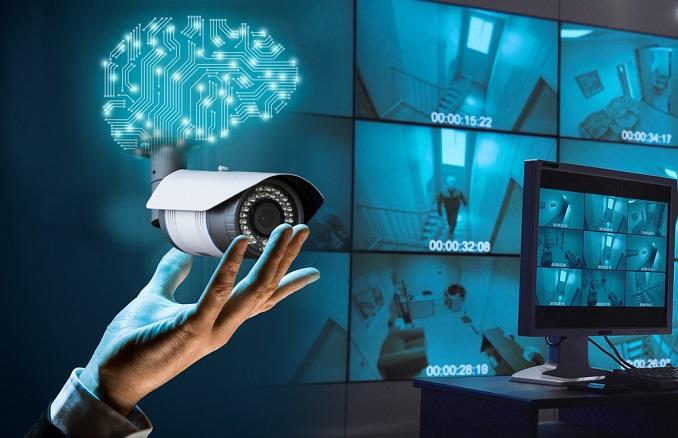
The evolution of the camera has taken a quantum leap, moving beyond a passive device that simply records pixels to an active, intelligent sensor that perceives and understands the world. This revolutionary shift marks the foundation of the modern Ai Camera industry, a sector fundamentally reshaping security, business intelligence, and daily life. An AI camera is not just a lens and a sensor; it is an integrated system with a powerful processor—often a System-on-a-Chip (SoC) with a dedicated Neural Processing Unit (NPU)—embedded directly within the device. This onboard brain allows the camera to run sophisticated artificial intelligence models, a concept known as edge computing. Instead of streaming vast amounts of raw video footage to a centralized cloud server for analysis, the AI camera processes the data locally, in real-time. This capability to analyze events as they happen, identify objects, recognize patterns, and make decisions at the source is what differentiates an AI camera from its traditional counterparts. It transforms the device from a simple recording tool into a proactive data-gathering and insight-generating machine, heralding a new era of ambient intelligence and automated perception across countless applications.
Unpacking the Technology: How AI Cameras See
The process by which an AI camera translates visual data into actionable intelligence is a marvel of modern engineering. It all begins with a high-quality image sensor capturing light and converting it into a digital video stream. This is where a traditional camera's job ends, but for an AI camera, it's just the beginning. The raw video data is then fed directly into the onboard processor. Here, the first step is often pre-processing, which can include image stabilization, noise reduction, and adjustments for lighting conditions to ensure the highest quality input for the AI engine. The core of the system, the inference engine, then takes over. This engine runs a pre-trained neural network, most commonly a Convolutional Neural Network (CNN), which has been optimized to run efficiently on the device's specific hardware. The CNN processes the video frames, analyzing them to perform tasks like object detection (identifying cars, people, and other objects), facial recognition, license plate reading, or behavioral analysis (detecting a fall or an unusual gathering). The crucial output is not the video itself, but structured metadata—compact, text-based information like "car detected at timestamp X, location Y" or "crowd density is 75%." This intelligent output is what makes the system so powerful and efficient.
The Technological Pillars of Intelligent Vision
The rapid emergence of the AI camera industry is not the result of a single breakthrough but the convergence of several key technological advancements. The first and most critical pillar is the development of powerful yet energy-efficient semiconductors. Companies like Nvidia, Intel, and Qualcomm have engineered specialized processors (e.g., Nvidia Jetson, Intel Movidius) that are designed specifically to accelerate the complex mathematical calculations required for running deep learning models. These chips make it possible to perform complex AI tasks on a small, low-power device at the edge. The second pillar is the maturation of AI and computer vision algorithms. The development of highly efficient neural network architectures, such as YOLO (You Only Look Once) and MobileNet, has made it feasible to achieve high accuracy in real-time on resource-constrained hardware. These models are the "software brains" that give the cameras their perceptive abilities. The third pillar is the continuous improvement in image sensor technology. Modern sensors offer higher resolutions, better performance in low-light conditions (crucial for 24/7 security), and wider dynamic ranges, providing the AI models with cleaner, richer data to analyze, which in turn leads to more accurate and reliable results.
A Spectrum of Applications Transforming Our World
The practical applications of AI cameras are incredibly diverse, spanning across nearly every major industry and public sector. In the realm of smart cities, these cameras are the primary sensors for intelligent transportation systems, where they monitor traffic flow, detect accidents, manage parking availability, and identify traffic violations in real-time. This data allows city planners to optimize traffic light timing and reduce congestion. For public safety, they can detect unauthorized access to restricted areas, identify abandoned packages, and perform crowd analysis to ensure safety during large public events. In the retail sector, AI cameras are revolutionizing business intelligence. They provide invaluable data on customer footfall, create heatmaps to show which areas of a store are most popular, measure dwell times to gauge interest in products, and manage queues to improve the customer experience. The automotive industry is another massive adopter, where AI cameras form the core of Advanced Driver-Assistance Systems (ADAS), enabling features like lane-keeping assist, pedestrian detection, and automatic emergency braking. In our homes, they power smart security systems that can differentiate between a person, a pet, and a passing car, reducing false alarms and providing true peace of mind.
The Paradigm Shift from Cloud to Edge
The most fundamental shift brought about by AI cameras is the move from a cloud-centric to an edge-centric architecture for video analysis. In the traditional model, a fleet of IP cameras would stream continuous, high-resolution video to a central cloud server. This approach is fraught with challenges. It consumes enormous amounts of network bandwidth, leading to high operational costs. The round-trip journey of data to the cloud and back introduces significant latency, making it unsuitable for applications that require immediate action, like an industrial safety system or an autonomous vehicle. Furthermore, sending raw video footage, which may contain sensitive personal information, to a third-party server creates significant privacy and security risks. AI cameras, by performing analysis at the edge, directly solve these problems. Since only small packets of metadata are typically sent to the cloud instead of the full video stream, bandwidth requirements are drastically reduced by over 90%. The local processing ensures near-instantaneous response times (low latency). Most importantly, it enhances privacy and security, as the raw video can be processed and discarded on the device itself, without ever being transmitted or stored externally, making it far easier to comply with strict data privacy regulations like GDPR.
➤ Latest Market Intelligence from Market Research Future:

 English
 Arabic
 French
 Spanish
 Portuguese
 Turkish
 Dutch
Dutch
 Italiano
 Russian
 Romaian
 Portuguese (Brazil)
 Greek
Greek