


qEEG Brain Mapping: Understanding Brain Activity Through Advanced Assessment
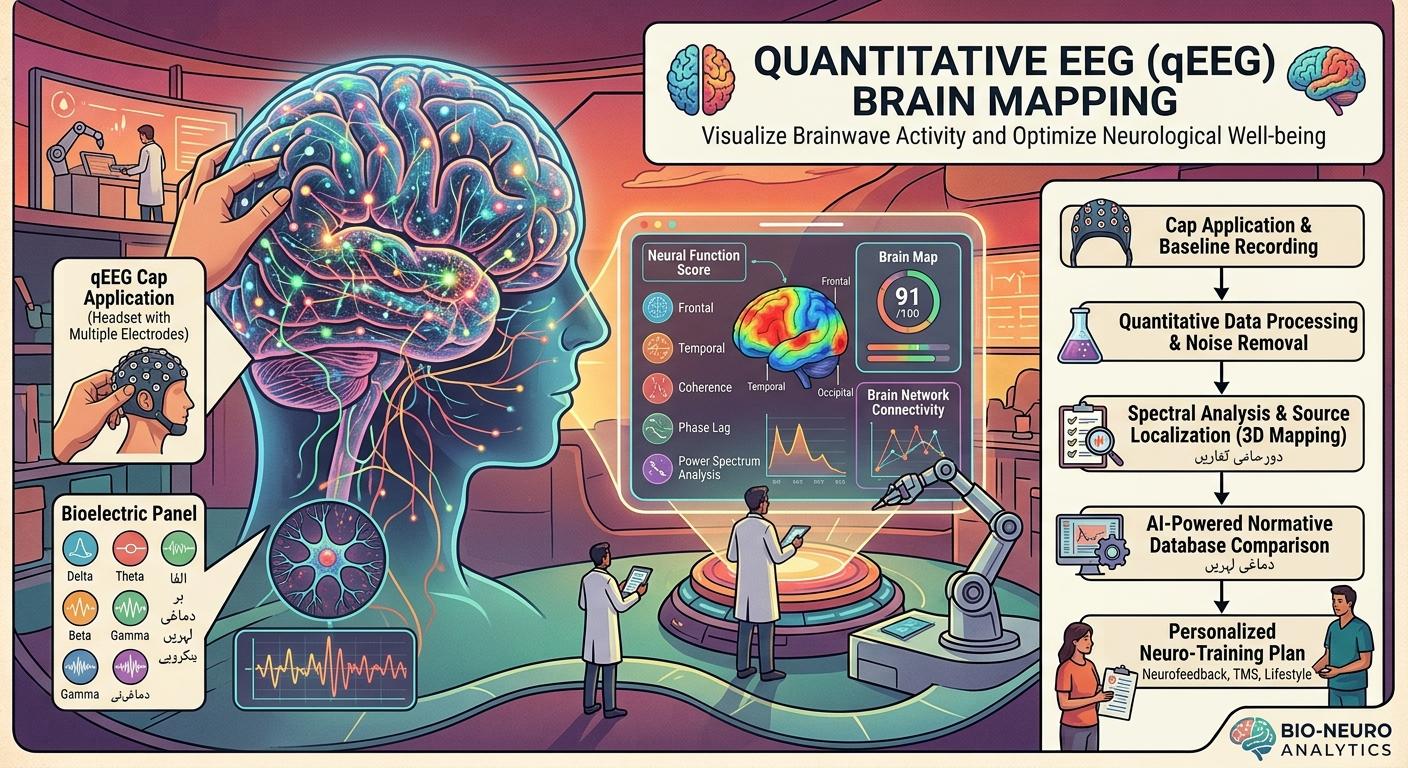
Understanding how the brain functions can provide valuable information when someone is experiencing changes in attention, sleep, mood, memory, or cognitive performance. One technology used to assess brain activity is qEEG brain mapping, which combines electroencephalography (EEG) with computer-based analysis.
Unlike a standard EEG that primarily focuses on identifying and interpreting electrical activity, qEEG can provide quantitative information about patterns of brain activity. When appropriately used and interpreted by qualified professionals, this information may contribute to a broader assessment of brain function.
What Is qEEG Brain Mapping?
qEEG brain mapping stands for quantitative electroencephalography. It involves recording electrical activity from the brain using an EEG and then applying computer-based analysis to the recorded data.
The results may be presented as visual maps or numerical measurements that show patterns of brain activity across different areas. These results can then be reviewed alongside clinical information and other assessments.
qEEG is not simply a picture of the brain's anatomy. Instead, it provides information about electrical activity and patterns that occur while the brain is functioning.
How Does qEEG Brain Mapping Work?
During a qEEG assessment, sensors are placed on the scalp to record electrical signals produced by brain activity. The process is generally non-invasive.
The recording may be performed under specific conditions, such as resting with the eyes open or closed, depending on the purpose of the assessment. The collected EEG data can then be processed using specialized software.
The analysis may examine different frequency ranges and patterns of activity. A qualified professional can interpret these findings in relation to the individual's symptoms, history, and assessment goals.
What Can a qEEG Assessment Measure?
A qEEG assessment can provide quantitative information about electrical brain activity. Depending on the assessment and analysis method, it may examine patterns across different frequency bands.
These can include measurements associated with:
-
Brainwave frequency patterns
-
Relative and absolute power
-
Symmetry between brain regions
-
Connectivity or coherence measures
-
Differences in activity across regions
-
Changes in brain activity over time
The significance of these measurements depends on the testing method and clinical context. A qEEG result should not be interpreted in isolation.
Why Is Brain Mapping Used?
Professionals may use brain mapping as one component of a broader evaluation. It can provide additional information that may complement interviews, questionnaires, cognitive assessments, medical history, and other relevant evaluations.
People may become interested in qEEG when they are looking for a better understanding of certain cognitive or neurological concerns.
However, qEEG should not automatically be considered a diagnostic test for every condition. The appropriate role of the assessment depends on the individual situation and the professional interpreting the results.
qEEG Brain Mapping and Cognitive Performance
Cognitive performance involves areas such as attention, memory, processing speed, learning, and executive functioning. Brain activity measurements may provide additional information when these areas are being evaluated.
For example, someone experiencing difficulty maintaining attention may undergo several forms of assessment. qEEG could potentially provide information about brain activity that complements other clinical findings.
A comprehensive evaluation is generally more informative than relying on a single measurement.
What Happens During a qEEG Session?
A typical qEEG session begins with an explanation of the assessment process. Sensors or an EEG cap are positioned on the scalp to record electrical activity.
The individual may be asked to remain still and follow simple instructions while the recording is collected. Depending on the protocol, the assessment may involve different resting conditions.
The recording itself is generally painless and non-invasive. Afterward, specialized software can process the data for quantitative analysis.
Understanding qEEG Brain Mapping Results
qEEG results can sometimes be presented through charts, graphs, or color-coded maps. These visualizations are designed to help professionals examine patterns in electrical brain activity.
It is important to understand that a visual brain map does not automatically indicate a specific diagnosis. Results need to be interpreted alongside symptoms, medical history, behavioral observations, and other appropriate assessments.
A qualified professional can explain what the measurements mean and whether additional evaluation may be necessary.
What Are the Benefits of a Quantitative EEG Assessment?
One potential advantage of quantitative EEG is that it provides structured measurements from recorded EEG activity. This can allow professionals to examine patterns that may be difficult to describe using symptoms alone.
Potential uses of quantitative EEG brain mapping include:
-
Supporting a broader brain-function assessment
-
Establishing baseline measurements
-
Monitoring changes over time
-
Providing additional information for clinical evaluation
-
Helping professionals visualize patterns of electrical activity
The usefulness of the assessment depends on the quality of the recording, analysis method, and professional interpretation.
Choosing a qEEG Brain Mapping Provider
If you are considering qEEG brain mapping, choosing an experienced provider is important. Ask about the professional's qualifications, the assessment process, and how the results will be interpreted.
Questions to consider include:
-
Who performs the EEG recording?
-
Who interprets the qEEG data?
-
What type of equipment is used?
-
What conditions are assessed during the recording?
-
How are results explained to patients?
-
Will qEEG findings be combined with other assessments?
-
What happens after the results are reviewed?
A provider should be able to clearly explain both the potential value and limitations of qEEG testing.
qEEG Is One Part of a Broader Assessment
Brain function is complex, and no single test can provide a complete picture of an individual's neurological or cognitive health.
qEEG brain mapping can provide information about electrical activity, but that information is most useful when considered alongside other relevant factors.
Depending on the person's concerns, a professional evaluation may also include medical history, cognitive testing, behavioral assessments, sleep information, and other appropriate examinations.
Final Thoughts
qEEG brain mapping offers a quantitative approach to examining electrical brain activity through EEG recording and computer-based analysis. By providing measurements and visual representations of brainwave patterns, qEEG can contribute useful information to certain types of brain-function assessments.
If you are considering a qEEG assessment, choose a qualified provider who can explain the process, interpret results responsibly, and place the findings within the context of your overall health and individual concerns. Read more blogs

 English
 Arabic
 French
 Spanish
 Portuguese
 Deutsch
 Turkish
 Dutch
Dutch
 Italiano
 Russian
 Romaian
 Portuguese (Brazil)