


Hedge Trimming in Christchurch for Privacy Light and a Manageable Garden
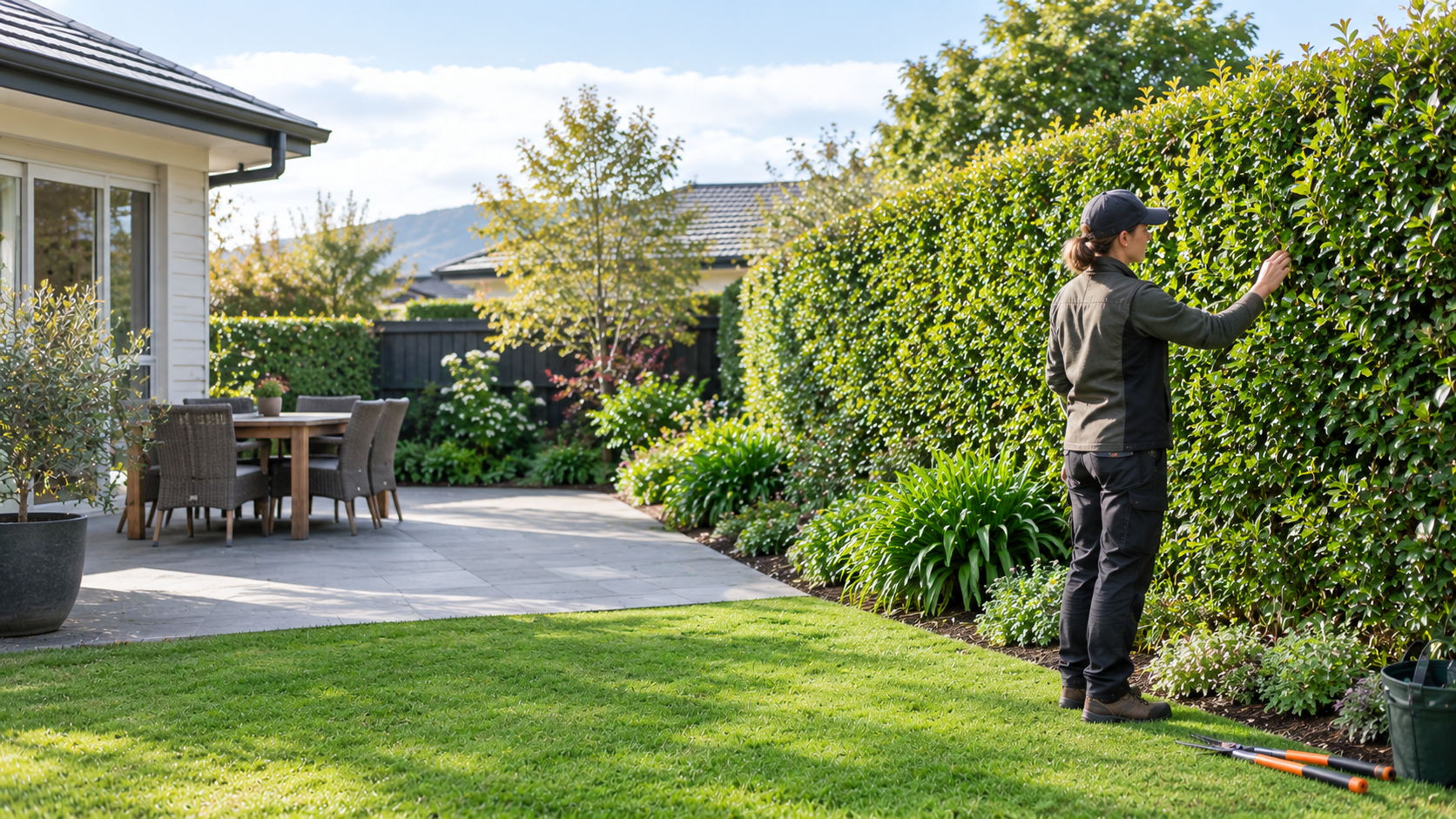
A hedge can provide privacy, define a boundary and make a Christchurch garden feel settled. It can also narrow a path, block useful daylight and become difficult to maintain when its growth is left unchecked. Good hedge care begins with deciding what the hedge is meant to do. A screen beside a patio needs a different result from a low border along a front path, even if both have become overgrown.
When comparing hedge trimming in Christchurch, look for a plan that accounts for the plant species and the shape you want to retain. Garden & Tree Men offers hedge and shrub trimming, including work on difficult-to-reach hedges. The useful discussion is about maintaining a suitable screen or boundary over time, rather than achieving an arbitrary height on a single visit.
Define the hedge's purpose before choosing its size
Stand in the areas where the hedge provides a benefit. Look from the living room, the outdoor seating area and the street-facing entrance. You may discover that only part of its height is needed for privacy, while a lower section could admit more light. Conversely, a heavy reduction may expose a view you had not considered. Make those tradeoffs visible before agreeing the work.
Think about seasonal use too. A hedge that shades a winter window may provide welcome shelter around a summer dining area. The result should fit the household across the year. Photographs taken in different seasons help when a current view does not show the full problem. If you are new to the property, allow time to observe how light and privacy change before making a large irreversible alteration.
Consider the mature hedge in relation to available space. Its width matters as much as its height. A screen that grows across a narrow passage will keep causing access problems if the chosen plant cannot reasonably be maintained within that footprint. Trimming may help, but the long-term answer could involve a different maintenance schedule or a staged planting change. A professional assessment can explain which option is realistic.
Identify the plants in the hedge
Different hedge species respond differently to trimming and reduction. Some can produce growth from older wood more readily than others. Some tolerate regular clipping, while flowering shrubs may lose flowers when cut at the wrong time. A mixed hedge adds another layer of complexity because one section may need different treatment from the next. Species identification should come before a plan to remove a large amount of growth.
Do not assume that a green outer surface means there is healthy foliage throughout the hedge. Dense screens can have bare interiors. Cutting far back into those areas may leave gaps that recover slowly or fail to recover as expected. Ask what the hedge is likely to look like immediately after the work and what regrowth can reasonably be anticipated. This helps you compare an instant reduction with a gradual approach.
If you do not know the plant names, provide photographs of leaves, stems and the whole hedge, then ask for confirmation during the site visit. Avoid relying on a single online image match when planning substantial work. Closely related plants may differ in growth habit, and a mistaken identification can change the pruning advice. Accurate identification is one of the simplest ways to prevent an expensive disappointment.
Understand maintenance trimming and renovation
Maintenance trimming generally keeps an established hedge near its intended dimensions by managing new growth. Renovation addresses a hedge that has outgrown its space or developed an uneven structure. The second task may require more judgement, a different season and more than one stage. Quotes should make clear which job is being proposed. A brief visit priced for light clipping cannot necessarily deliver a major reduction safely or successfully.
A renovation plan should explain the amount of growth being removed and the likely effect on screening. If the hedge separates outdoor living areas, temporary gaps may matter to both households. Discuss whether the work can be phased and how long the altered appearance might persist. Recovery depends on the plant and its condition, so avoid treating a fixed regrowth date as a guarantee.
There are situations where replacing part of a hedge is more practical than repeatedly forcing it into an unsuitable space. That decision should consider removal, replacement planting, establishment care and the loss of immediate privacy. The cheapest initial cut may create a larger expense later if the screen fails. Compare the whole sequence of work rather than only the cost of the first intervention.
Choose a shape that serves the plants
A hedge's shape affects light reaching its lower growth. For many clipped hedges, a profile that is slightly wider at the base can help prevent the lower portion being shaded by the top. The appropriate shape still depends on species and the desired appearance. Discuss the profile rather than asking only for a flat top, especially if the bottom has become thin or bare.
Look for practical access around the hedge. A shape that is easy to maintain from one side may be difficult where a fence blocks the other side. If branches grow through wire or around fence posts, trimming needs to account for those obstructions. A close inspection can prevent damage to equipment and property. It also helps explain why a narrow boundary hedge may take longer than an open, equally long screen.
Natural-looking hedges and formally clipped hedges have different visual goals. Be clear about your preference and show examples if useful. Avoid requesting an exact replication of a photograph without considering the plant species and existing structure. A formal line may be achievable through routine trimming, while a loose flowering screen may need selective pruning. The method should support the result you actually want.
Plan timing around growth and weather
A regular trimming schedule should reflect growth rate rather than follow a universal interval. Some hedges need more attention during active growth; others require less frequent work. Weather and plant stress can affect timing. A heavily stressed plant may need assessment before a substantial cut, and a flowering hedge may need a schedule that preserves the growth carrying next season's flowers.
For an overgrown boundary, combining hedge work with ongoing garden maintenance can make the follow-up clearer. Garden & Tree Men offers both recurring and one-off garden care, so the initial trim can be discussed alongside the routine that keeps the hedge manageable. Ask which parts of the garden will be included on later visits and whether hedge frequency changes through the year.
Check for active bird nests before work begins and discuss any wildlife concerns with the provider. A hedge can be habitat as well as a property feature. If a nest or other protected wildlife issue is found, pause and obtain appropriate advice rather than continuing because the visit is already booked. Planning ahead gives more flexibility to change the work or timing without rushing a decision.
Treat tall hedges as a specialist access problem
Height changes the task substantially. A hedge that can be reached safely from the ground is different from one requiring work above head height or access on a slope. Do not balance on makeshift platforms or lean from a household ladder while handling powered equipment. The provider should choose suitable access equipment and establish a work area that keeps people away from falling material and moving tools.
Describe obstacles during the initial enquiry. These may include a retaining wall, glasshouse, conservatory, garden pond or narrow passage. Mention nearby overhead lines too. Their presence may require additional coordination and qualified specialist involvement. A routine hedge service should not be assumed to include every kind of work around electrical infrastructure. Clear information helps the provider assess the job before arriving.
In a Christchurch suburb such as Merivale or St Albans, the main challenge could be confined access beside a house. On another property in Cashmere, it could be the slope beneath the hedge. These are individual site conditions, not rules about each suburb. The quote should be based on the actual section and the method needed to reach the hedge responsibly.
Discuss boundaries before the appointment
Establish who owns the hedge and whether the proposed work affects neighbouring property. A screen planted near a fence may be treated differently by the households on each side. Agree access and expectations before tools arrive. If the neighbour values a height you want reduced, early conversation can reveal a workable compromise or identify a dispute that needs resolution before cutting.
Do not rely on a general assumption about boundary rights where the circumstances are uncertain. Ownership, protection rules and other conditions can matter. Obtain appropriate advice if needed, and check with the relevant council when a protected tree or other restriction may be involved. An agreeable neighbour conversation helps with cooperation, but it does not by itself establish every permission required for the work.
If access from the neighbouring side is necessary, confirm when and where it is allowed. Ask how clippings will be collected and who will restore the area afterwards. A clear arrangement prevents the neighbour inheriting debris or finding that a garden bed has been used as a work platform without agreement. Boundary work succeeds more easily when practical details are settled in advance.
Include cleanup in the scope
Hedge trimming generates more material than many homeowners expect. Fine clippings can remain trapped in the hedge, while larger branches may cover beds or paths. Ask whether the quoted work includes collection from both sides and removal from the property. If some material is to remain, agree a suitable location and intended use. A finished hedge should not leave the rest of the garden difficult to use.
Discuss how vulnerable plants beneath the hedge will be protected. Dense planting can make collection slower, and heavy branches may need careful handling. Let the provider know about irrigation lines, decorative edging or newly planted areas. These details influence the work rather than merely adding to a cleanup checklist. A site assessment helps set realistic expectations for access and disturbance.
When comparing quotes, make sure they describe the same height, width, faces and disposal requirements. A price for one accessible face is different from a price for the top and both sides of a tall hedge. Specify whether a reduction is measured from ground level or from the existing top. Photographs and a written description reduce the chance that two people imagine different finished dimensions.
Make the next visit easier to plan
After the trim, record the date and take photographs from the same positions used before the work. Note whether the privacy, light and access outcomes match your brief. The next schedule can then be based on how quickly the hedge grows beyond the preferred dimensions. This is more useful than waiting until it becomes difficult and repeating an expensive corrective job.
Between visits, observe plant condition as well as shape. A sudden patch of discolouration, dieback or unusual thinning deserves investigation. Avoid assuming every problem can be corrected by another trim or more fertiliser. Watering, root conditions, disease and damage can all affect appearance. Ask for an assessment where the cause is unclear, particularly before removing more growth from an already struggling section.
If your time or physical capacity changes, review the hedge's ongoing demands. A screen that once suited the household may now need a simpler routine or partial redesign. Think through replacement establishment and temporary privacy before deciding. Keeping a healthy hedge is often valuable, but a realistic maintenance arrangement is essential if it is to remain an asset rather than a recurring source of difficult work.
Review a new hedge before problems develop
A recently planted hedge needs establishment care as well as a future trimming plan. Ask how its structure will be developed and when the first appropriate trim should occur. Leaving young plants untouched until they become a tall screen is not always the best route to the shape you want. The advice should fit the species and the condition of the planting.
Record the spacing, watering arrangement and expected mature dimensions. If some plants struggle while others grow strongly, investigate that difference before making every plant the same height. Missing or weak sections can affect the screen for years. Early attention to growing conditions may be more useful than repeatedly clipping the stronger plants to disguise an uneven start.
For Christchurch homeowners, well-planned hedge care begins with the screen's purpose and continues through species identification, suitable timing and complete cleanup. The same questions apply to properties in the confirmed Kaiapoi and Rangiora service area. To discuss a routine trim or a larger renovation, ask Garden & Tree Men for a hedge assessment with photographs and a clear description of the privacy, light and access you want to preserve.

 English
 Arabic
 French
 Spanish
 Portuguese
 Deutsch
 Dutch
Dutch
 Italiano
 Russian
 Romaian
 Portuguese (Brazil)
 Greek
Greek