


Video Streaming Platform Development: How Startups Can Monetize Content and Support Creators
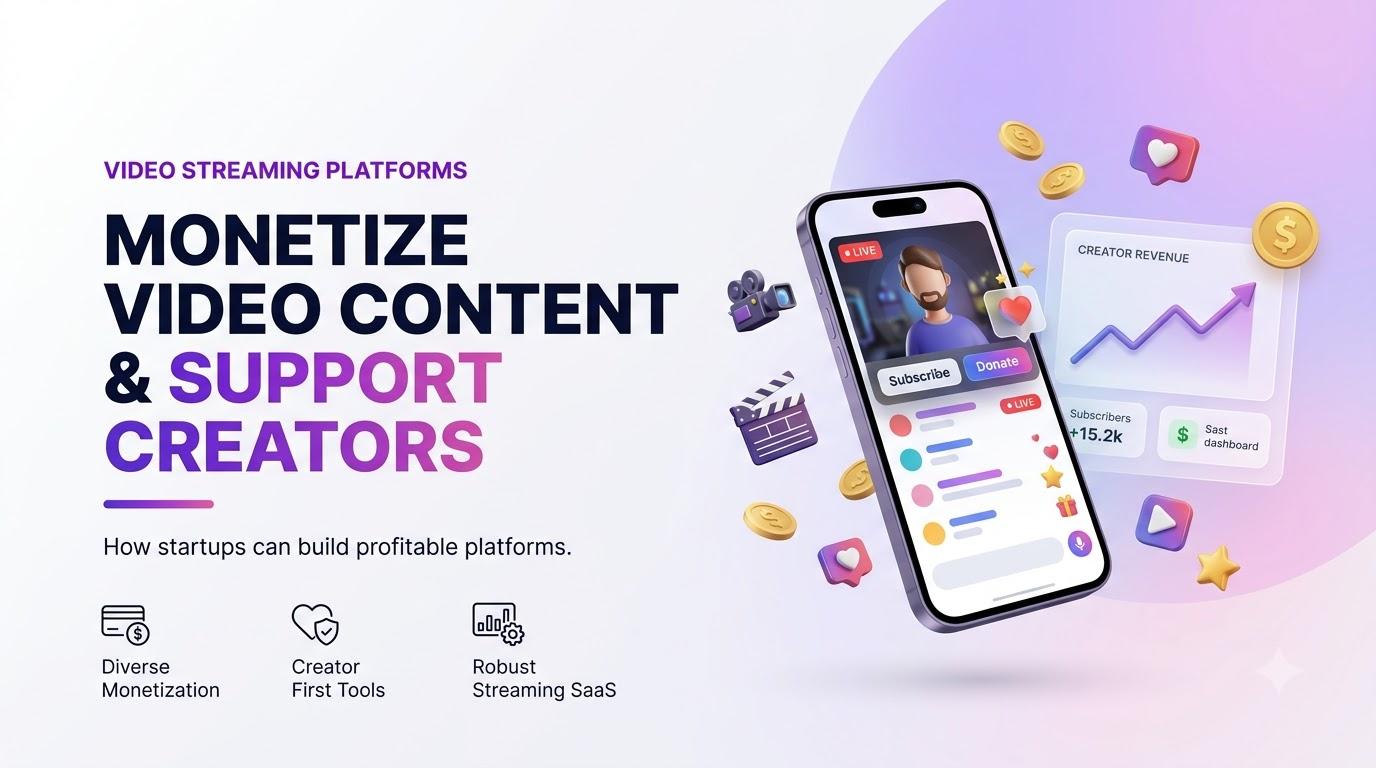
Video streaming has changed how people watch entertainment, attend online classes, follow creators, and access digital content. Instead of depending only on traditional television or social media platforms, businesses can now offer their own branded streaming services with direct access to their audiences.
For startup founders, this creates opportunities beyond simply uploading videos. A streaming business can generate revenue through subscriptions, advertising, pay-per-view content, live events, and creator partnerships.
However, successful video streaming platform development requires more than an attractive application. Businesses must consider content delivery, payment systems, user engagement, creator earnings, and operating costs.
A platform that attracts viewers but fails to retain creators may struggle to grow its content library. Similarly, a platform with strong content but limited monetization options may find it difficult to become profitable.
Understanding how these elements work together helps entrepreneurs develop a streaming business that serves viewers, creators, and platform operators.
What Is Video Streaming Platform Development?
Video streaming platform development is the process of creating a digital service that allows users to watch live or recorded video content through websites, mobile applications, or connected devices.
These platforms can support entertainment, education, fitness, gaming, professional training, and creator-led communities.
Unlike a basic video hosting website, a complete streaming platform includes several connected systems. These typically handle content uploads, video processing, playback, user accounts, subscriptions, payments, analytics, and administration.
For example, a regional entertainment company might operate a streaming service where customers pay monthly to watch movies and original series. An educational business might sell individual courses, while an independent creator network could offer paid memberships and exclusive videos.
The underlying technology may be similar, but the audience experience and revenue model will differ.
Businesses evaluating a white-label video streaming platform can begin with existing streaming, subscription, rental, and content management workflows rather than developing every component from the beginning.
The important decision is selecting a platform foundation that matches the intended business model.
Why Video Streaming and Creator Monetization Work Together
Video streaming platforms depend on content that gives viewers a reason to return. Creators, filmmakers, educators, and other content producers provide that value.
However, producing quality content requires time, resources, and financial investment. Without suitable earning opportunities, creators may prefer platforms that offer more predictable income.
Creator monetization helps address this challenge by connecting content performance and audience engagement with financial rewards.
Benefits for Platform Owners
A streaming business that supports creator earnings can attract a wider variety of content producers.
Instead of purchasing or producing every video internally, the platform may establish partnerships with independent creators and studios.
This approach can help expand the content library while distributing production responsibilities across multiple contributors.
However, revenue-sharing agreements, content rights, quality standards, and moderation responsibilities must be clearly defined.
Benefits for Content Creators
Creators benefit when they have several ways to earn from their audiences.
For example, a fitness instructor might sell premium workout videos, offer monthly memberships, and organize paid live sessions.
A documentary producer might receive revenue based on rentals or agreed viewing-based compensation.
These options allow creators to select earning methods that suit their content and audience.
Popular Video Monetization Models for Streaming Startups
Choosing the right revenue model is one of the most important decisions in video streaming platform development.
Different audiences have different expectations about paying for content. A business should evaluate its content category, viewing frequency, and customer purchasing behavior before selecting a model.
Subscription-Based Video Streaming
Subscription video on demand, commonly called SVOD, allows customers to pay a recurring fee for access to a content library.
Subscriptions can provide predictable recurring revenue when viewers continue renewing their plans.
This model works well for businesses offering regularly updated entertainment, educational programs, fitness classes, or premium communities.
However, subscriptions also create an ongoing responsibility to deliver enough value to justify renewal.
Advertising-Based Streaming
Advertising-supported video streaming allows viewers to access content for free or at a reduced price while the platform earns revenue from advertisements.
Advertising may be suitable for platforms targeting broad audiences that are less willing to pay subscription fees.
Revenue depends on factors such as audience size, viewing activity, advertiser demand, and ad pricing.
Operators must also manage advertisement frequency carefully because excessive interruptions can reduce viewer satisfaction.
Pay-Per-View Content
Pay-per-view allows customers to purchase access to individual videos, events, or premium experiences.
This model is useful for live concerts, sports events, professional workshops, special interviews, and exclusive entertainment releases.
For example, an online training company could sell access to a single expert session without requiring customers to purchase a monthly subscription.
Creator Subscriptions and Digital Tipping
Creator subscriptions allow fans to pay individual content producers for exclusive access, premium posts, or community benefits.
Digital tipping and gifting provide another way for audiences to support creators directly.
A dedicated creator monetization platform can support these business models through creator profiles, subscriptions, pay-per-view content, tipping, live engagement, and payment management.
For businesses serving independent creators, combining recurring subscriptions with optional purchases can provide more flexibility than relying on one revenue source.
Essential Features of a Successful Video Streaming Platform
A streaming platform must deliver a reliable viewing experience while supporting the operational needs of the business.
The following features are particularly important when planning a commercial product.
Smooth Video Playback and Content Delivery
Users expect videos to start quickly and play without frequent buffering.
Adaptive bitrate streaming helps deliver suitable video quality based on available internet speed and device conditions.
Content delivery networks can distribute video files closer to viewers, improving delivery performance across different regions.
Founders should also consider bandwidth expenses because video delivery costs can increase as viewing hours grow.
User Accounts and Personalized Discovery
User accounts help viewers manage subscriptions, watchlists, playback history, and preferences.
Search filters, content categories, recommendations, and continue-watching features make it easier to find relevant videos.
For a growing platform, effective discovery is especially important because valuable content can remain unnoticed if viewers cannot find it.
Secure Payments and Subscription Management
Payment systems should support the platform's selected revenue models.
Important capabilities include subscription billing, payment confirmations, renewal management, refunds, and access control.
Businesses operating internationally may also need multiple currencies, regional payment methods, and appropriate tax handling.
Clear billing information helps reduce customer confusion and support requests.
Creator Dashboard and Revenue Reporting
Creators need visibility into how their content performs and how earnings are calculated.
A useful creator dashboard may include video uploads, audience statistics, subscription activity, earnings summaries, and payout requests.
Transparent reporting helps creators understand the financial results of their work.
Content Moderation and Administrative Controls
Platform administrators must manage uploaded content, user reports, access permissions, and policy violations.
Moderation workflows should be appropriate for the platform's audience and content category.
Businesses should also establish procedures for copyright complaints, account disputes, and prohibited material.
These responsibilities become increasingly important when independent creators can publish directly.
How Startups Can Choose the Right Streaming Business Model
Not every streaming startup needs to compete with large entertainment services.
Smaller businesses can establish a clearer market position by focusing on a specific audience.
Regional Entertainment Platforms
Regional streaming services can focus on local films, language-specific programs, independent productions, and culturally relevant entertainment.
Their value comes from serving audiences whose preferences may not be fully addressed by larger platforms.
Subscriptions, rentals, and advertising can support different customer segments.
Educational and Professional Video Platforms
Educational businesses can offer recorded courses, expert sessions, professional training, and paid learning communities.
Their monetization options may include course purchases, recurring memberships, and live workshops.
Content quality, instructor credibility, and learning outcomes often matter more than the total number of available videos.
Creator-Led Entertainment Communities
Creator-focused platforms can serve musicians, artists, educators, fitness professionals, and other independent publishers.
These businesses often depend on audience relationships rather than a large centralized content library.
Subscriptions, exclusive content, digital gifts, and paid interactions can support their revenue models.
Companies such as Miracuves provide ready-made and customizable application solutions across entertainment, streaming, and creator-focused business categories.
For founders, the broader opportunity is to select technology that supports a clearly defined audience and commercial strategy.
White-Label Streaming Platforms vs Custom Development
A major decision for entrepreneurs is whether to develop streaming software from scratch or use an existing platform foundation.
Both approaches have advantages, depending on the project's requirements.
White-Label Platform Development
White-label software provides an existing product foundation that can be customized with a company's branding, content, pricing, and operational requirements.
This approach may reduce the amount of initial development needed for standard features such as video playback, subscriptions, user accounts, and administration.
It can be useful for startups that want to test demand before investing in highly specialized technology.
However, founders should verify source-code access, customization rights, deployment control, third-party dependencies, and ongoing maintenance responsibilities.
Custom Streaming Platform Development
Custom development allows businesses to design technology around unique requirements.
This may be necessary for unusual content formats, advanced recommendation systems, specialized rights management, or complex enterprise integrations.
The trade-off is that custom development generally requires more planning, engineering work, testing, and maintenance resources.
The right approach depends on the level of product differentiation required and the resources available.
How to Plan a Video Streaming Platform Step by Step
Founders can reduce unnecessary development work by following a structured planning process.
Step 1: Identify the Target Audience
Define who will use the platform and why they would choose it over existing alternatives.
A regional movie service, professional education platform, and creator membership community require different product experiences.
Audience research should guide the content strategy and initial feature selection.
Step 2: Select the Content and Revenue Strategy
Decide whether content will come from internal production, licensed libraries, independent creators, or a combination of sources.
Next, determine how viewers will pay and how revenue will be distributed.
For example, a platform might combine free introductory videos with paid memberships and premium event access.
Step 3: Estimate Operating Costs
Streaming businesses should account for video storage, transcoding, bandwidth, payment processing, content licensing, moderation, and customer support.
These expenses can affect profitability even when subscriber numbers are increasing.
A practical financial model should estimate revenue and costs based on expected viewing hours, not simply registered users.
Step 4: Develop and Test the Platform
Begin with essential features that support the main viewing and payment experience.
Test playback across devices, subscription access, content discovery, payment failures, and administrative workflows.
Creator-facing platforms should also test uploads, content approval, earnings calculations, and payout records.
Step 5: Measure Performance and Improve
After release, track user activity, subscription conversion, viewing completion, customer retention, and creator participation.
Use these results to identify where the experience needs improvement.
For example, low viewing completion might indicate content quality issues, poor recommendations, or playback problems.
Making decisions from actual user behavior is more useful than adding features without evidence of demand.
Common Challenges in Video Streaming Platform Development
Streaming businesses face several challenges beyond software development.
Content licensing is one of the most important. Operators must obtain appropriate rights to distribute videos in their intended markets.
Security is another concern. Access controls, secure payments, account protection, and appropriate content safeguards help reduce operational risks.
Audience retention can also be difficult. Even a technically reliable platform may struggle if its content library becomes repetitive or its pricing does not match customer expectations.
Creator-focused businesses have additional responsibilities involving revenue-sharing terms, payout accuracy, moderation, and dispute handling.
Businesses evaluating video streaming and creator monetization solutions should consider these operational requirements alongside playback technology and monetization features.
A sustainable platform needs reliable technology, clear business rules, and content that audiences genuinely value.
Future Opportunities in Video Streaming and Creator Monetization
The video streaming market offers opportunities for businesses serving specific audiences and content formats.
Personalized content discovery can help viewers find relevant programs, while multilingual interfaces and subtitles can make regional content accessible to broader audiences.
Interactive live sessions, creator memberships, and digital gifting can support stronger audience participation.
Hybrid monetization is another option. Businesses can combine advertising, subscriptions, rentals, and individual creator purchases to serve customers with different spending preferences.
However, adding more revenue features does not automatically increase profitability.
Founders should introduce new monetization methods only when they fit audience behavior and do not unnecessarily complicate the viewing experience.
The long-term opportunity lies in connecting valuable content, reliable delivery, transparent creator earnings, and a business model that customers understand.
Conclusion
Video streaming platform development gives entrepreneurs an opportunity to operate digital content businesses across entertainment, education, live events, and creator communities.
However, technology alone does not determine success. Businesses need a clear audience, relevant content, reliable streaming infrastructure, and practical monetization strategies.
Subscriptions, advertising, pay-per-view access, and creator revenue sharing can each support different business requirements.
For startups, the most effective approach is to begin with a focused market, validate customer demand, manage operating costs, and expand features based on actual performance.
By combining a strong viewing experience with fair creator earning opportunities, businesses can establish a platform that provides lasting value to both audiences and content producers.

 Arabic
 French
 Spanish
 Portuguese
 Deutsch
 Turkish
 Dutch
Dutch
 Italiano
 Russian
 Romaian
 Portuguese (Brazil)
 Greek
Greek