


Does Root Canal Treatment Require a Dental Crown?
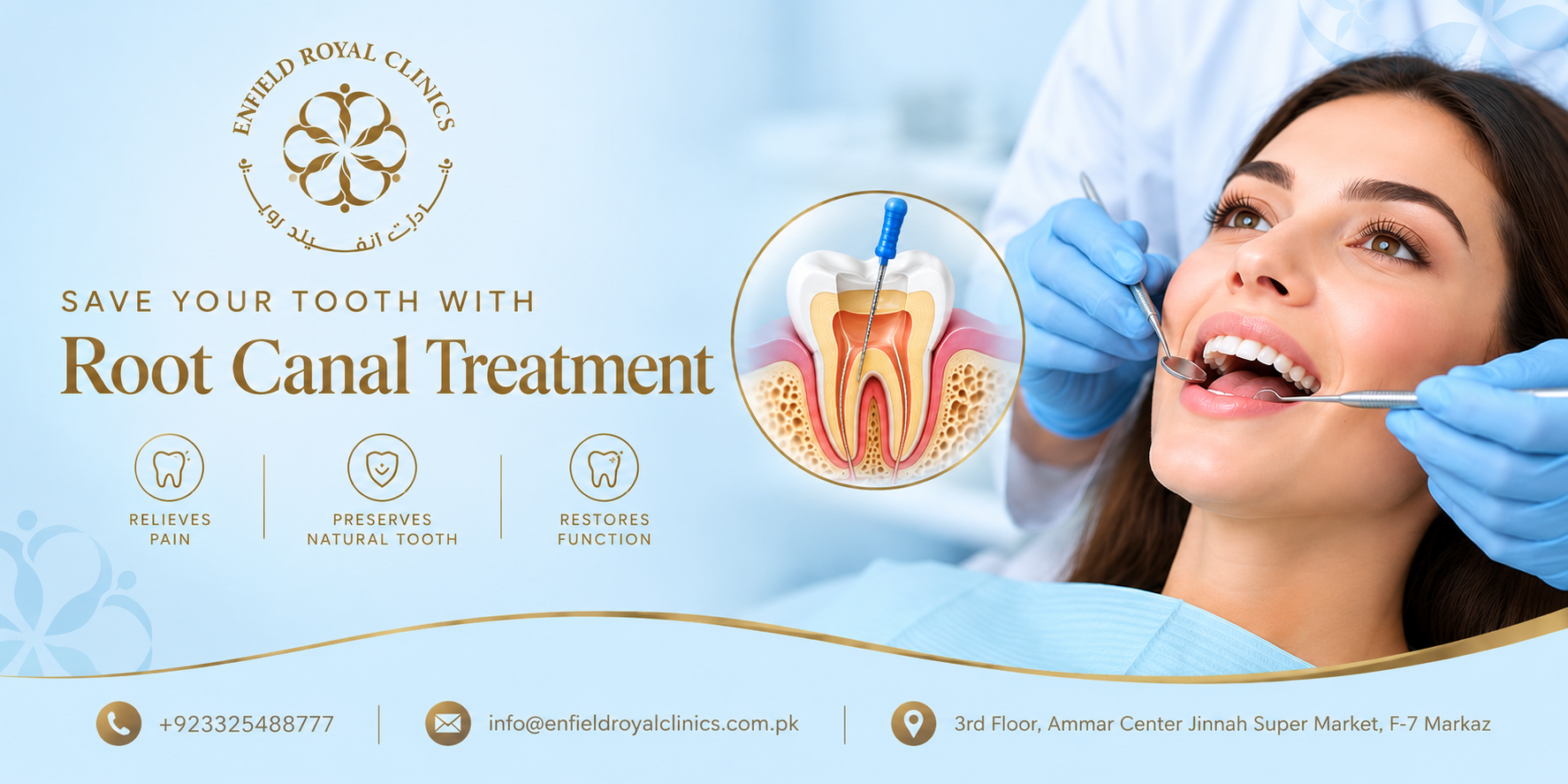
Root canal treatment helps save a tooth when its inner pulp becomes infected or irreversibly inflamed. During the procedure, the dentist removes the damaged pulp, cleans the root canals, and seals them to prevent further infection. Afterward, the tooth needs a suitable restoration to protect it and restore normal function. In many cases, a dental crown provides this protection, but not every tooth treated with a root canal automatically requires one.
Whether a crown is necessary depends on the tooth's location, the amount of healthy tooth structure remaining, and the extent of damage caused by decay or injury. Patients considering Root Canal Treatment in Islamabad can benefit from understanding how crowns work, when they are recommended, and what alternatives may be appropriate. A dental examination helps determine the most suitable way to restore the treated tooth.
1. Why Might a Dental Crown Be Needed After Root Canal Treatment?
A dental crown is a custom-made covering that fits over the visible part of a tooth. It helps restore the tooth's shape, strength, and chewing function while protecting weakened areas from excessive pressure.
A tooth may need a crown after root canal treatment because the original damage can leave it structurally weak. Deep decay, large fillings, cracks, or the removal of substantial tooth structure during treatment may reduce its ability to withstand normal chewing forces.
A crown may help to:
-
Protect weakened tooth walls from breaking.
-
Restore the tooth's shape and chewing ability.
-
Cover and support a heavily restored tooth.
-
Reduce the risk of damage from everyday biting forces.
-
Improve the appearance of a tooth that has become discolored.
The need for a crown is especially common with molars and premolars because these teeth handle considerable pressure during chewing. However, the dentist must assess each tooth individually rather than recommending the same restoration for every patient.
2. Does Every Tooth Need a Crown After Root Canal Treatment?
No. A dental crown is not always necessary after root canal treatment. The decision depends on the tooth's condition before and after the procedure.
Back teeth, such as molars, often require crowns because they experience stronger chewing forces and may have extensive decay or large fillings. A crown can help protect the remaining tooth structure and reduce the likelihood of fractures.
Front teeth, including incisors and canines, may not always need full crowns. If the tooth has retained most of its natural structure and has limited damage, a suitable filling or bonded restoration may provide adequate support.
Factors that influence the decision include:
-
Remaining tooth structure: A tooth with substantial healthy structure may need less coverage.
-
Size of the existing filling: Large restorations can leave the tooth more vulnerable to fracture.
-
Tooth location: Back teeth generally experience greater chewing pressure.
-
Cracks or fractures: Existing damage may affect which restoration is appropriate.
-
Biting habits: Teeth exposed to heavy forces or grinding may need additional protection.
For patients seeking Root Canal Treatment in Islamabad, an individualized treatment plan can help balance tooth protection, appearance, and long-term function.
3. What Is the Difference Between a Dental Crown and a Filling?
A filling and a dental crown both restore teeth, but they serve different purposes.
A filling repairs a damaged area by replacing missing tooth structure. It is commonly used when the remaining tooth is strong enough to support the restoration without full coverage.
A crown covers most or all of the visible portion of the tooth above the gumline. It is generally recommended when the tooth has lost a significant amount of structure or needs greater protection against chewing forces.
The main differences include:
-
Coverage: A filling repairs a specific area, while a crown covers the tooth more extensively.
-
Protection: Crowns can provide greater support for teeth with weakened walls.
-
Tooth preparation: A crown usually requires shaping the tooth to create space for the covering.
-
Suitability: Fillings may work well for selected teeth with limited damage, while crowns are often preferred for extensively weakened back teeth.
Neither option is automatically better in every situation. A dentist considers the amount of healthy tooth remaining, the bite, and the location of the tooth before recommending a restoration.
4. When Should a Dental Crown Be Placed After Root Canal Treatment?
The timing of crown placement depends on the tooth's condition, the progress of treatment, and the type of restoration required.
In many cases, the dentist places a temporary filling after cleaning and sealing the root canals. This protects the opening while the tooth awaits its final restoration. If a crown is recommended, it is generally arranged promptly once the tooth is ready.
Leaving a tooth with a temporary restoration for too long may allow the filling to wear down, leak, or break. Bacteria may then enter the tooth, and weakened areas may fracture. These problems can complicate treatment and sometimes reduce the chance of preserving the tooth.
The process of placing a crown commonly involves the following steps:
-
Tooth assessment: The dentist checks the remaining structure and determines whether a crown is appropriate.
-
Tooth preparation: The tooth is shaped as needed to accommodate the crown.
-
Impression or digital scan: Measurements are taken to create a well-fitting restoration.
-
Temporary protection: A temporary crown may be placed while the permanent one is prepared.
-
Final placement: The permanent crown is checked for fit and bite before being secured.
The exact process varies depending on the tooth and the restoration. Patients should follow their dentist's instructions and avoid chewing hard foods on a tooth that has only a temporary filling or crown.
5. What Types of Dental Crowns Are Available?
Several materials can be used to make dental crowns. The most suitable choice depends on the tooth's position, appearance, biting forces, and individual dental needs.
Common options include:
-
Porcelain or ceramic crowns: These can provide a natural-looking appearance and are often considered for visible teeth.
-
Zirconia crowns: These are known for their strength and can be used in different areas of the mouth.
-
Porcelain-fused-to-metal crowns: These combine a metal structure with a tooth-colored outer layer.
-
Metal crowns: Certain metal options offer durability and may be suitable for back teeth, although their appearance is less natural.
Each material has advantages and limitations. For example, a highly aesthetic material may be desirable for a front tooth, while strength may be a greater priority for a molar. The dentist can explain which options suit the tooth's position and condition.
People considering Root Canal Treatment in Islamabad should also understand that the crown itself does not treat an infection inside the tooth. Root canal treatment addresses the damaged pulp, while the crown restores and protects the tooth afterward when needed.
6. How Can Patients Care for a Tooth After Root Canal Treatment and Crown Placement?
A restored tooth still requires daily care. Although a crown covers and protects the visible part of the tooth, decay can develop along its edges, and the surrounding gums remain vulnerable to disease.
Good oral hygiene can help maintain the restoration and protect neighboring teeth. Patients should brush twice daily with fluoride toothpaste, clean between their teeth every day, and attend regular dental checkups.
Additional care tips include:
-
Avoid chewing very hard objects, such as ice or hard sweets.
-
Follow instructions for temporary restorations.
-
Contact a dentist if the crown feels loose or the bite feels uneven.
-
Seek assessment for persistent pain, swelling, or sensitivity that worsens.
-
Wear a recommended night guard if tooth grinding places excessive pressure on the teeth.
A dental crown can last for many years, but its lifespan depends on the material, oral hygiene, bite forces, and maintenance. Crowns may eventually need repair or replacement.
With appropriate treatment and follow-up, many root canal-treated teeth can continue to function comfortably. The most effective approach is to restore the tooth according to its individual needs rather than assuming every tooth requires the same type of crown.
Frequently Asked Questions
1. Is a crown always necessary after root canal treatment?
No. Crowns are commonly recommended for molars and teeth with extensive damage, but some front teeth with enough healthy structure may be restored with a filling or bonded restoration. The dentist determines the appropriate option after examining the tooth.
2. What happens if a crown is not placed when it is needed?
A weakened tooth may become more likely to crack or break under chewing pressure. Delaying the recommended final restoration may also allow the temporary filling to wear down or leak, potentially exposing the tooth to further problems.
3. How soon should a crown be placed after root canal treatment?
When a crown is recommended, it should generally be arranged promptly after the tooth is ready for its final restoration. The exact timing depends on the clinical situation and the dentist's instructions.
4. Can a root canal-treated tooth last without a crown?
Yes, some teeth can last without a crown when sufficient healthy structure remains and a suitable alternative restoration is used. However, heavily damaged back teeth often benefit from crown coverage to reduce the risk of fracture.

 English
 Arabic
 French
 Spanish
 Portuguese
 Deutsch
 Dutch
Dutch
 Italiano
 Russian
 Romaian
 Portuguese (Brazil)
 Greek
Greek