


Laser Lens: Precision Optics for High-Performance Laser Systems
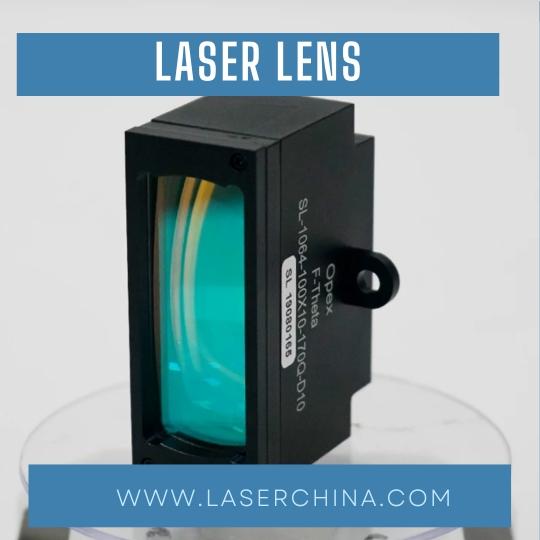
A laser system depends on several essential components to deliver accurate, consistent, and efficient results, and optical components play a particularly important role. A laser lens helps control the direction, focus, and distribution of a laser beam, making it an essential part of many industrial laser applications. From laser cutting and welding to engraving, marking, and cleaning, the right optical lens can influence processing quality and overall machine performance.
What Is a Laser Lens?
A laser lens is an optical component designed to transmit, focus, or redirect laser light according to the requirements of a particular system. Depending on its design and application, it may concentrate a laser beam onto a small spot, maintain beam quality over a specific working distance, or help direct laser energy toward a target surface.
These lenses are used in different types of industrial equipment, including fiber laser cutting machines, laser welding systems, engraving machines, and laser cleaning equipment. Each application requires optical components with suitable specifications to accommodate the laser wavelength, power level, and operating environment.
Selecting the correct lens helps ensure that the optical system performs according to the machine's intended operating conditions.
Common Types of Laser Optical Lenses
Different laser applications require different optical designs. Understanding the available options can help buyers identify suitable components for their equipment.
1. Focusing Lenses
Focusing lenses concentrate laser energy onto a designated point or processing area. They are commonly used in laser cutting, welding, and engraving applications where controlled energy delivery is necessary.
The focal length determines the distance between the lens and the focal point under specified optical conditions. Selecting an appropriate focal length depends on the material, processing requirements, machine configuration, and desired spot size.
2. Collimating Lenses
Collimating lenses help transform diverging light into a beam with reduced divergence. They are frequently used in fiber laser systems to prepare the beam for subsequent optical components.
Proper collimation supports predictable beam delivery and helps maintain the optical arrangement required by the machine.
3. Protective Lenses
Protective lenses are designed to shield sensitive optical components from dust, fumes, splashes, and other contaminants generated during industrial processing. They are particularly important in laser cutting and welding systems.
These components may require regular inspection and replacement depending on the working environment and operating intensity.
4. F-Theta Lenses
F-theta lenses are widely used in laser marking and engraving systems equipped with scanning optics. They are designed to provide a relatively consistent relationship between the scanner's angular movement and the position of the laser spot across a working field.
They are commonly selected for marking serial numbers, logos, barcodes, product information, and other details on metal and selected non-metal materials.
Applications Across Industrial Manufacturing
Laser technology serves a broad range of manufacturing industries, and optical components must be selected according to the requirements of each process.
Laser cutting: Optical components help deliver laser energy to the cutting area. Their condition and compatibility can influence cutting consistency, edge quality, and processing efficiency.
Laser welding: Suitable optics help direct and focus energy onto the joint. Accurate beam positioning is important when joining stainless steel, carbon steel, aluminum, and other compatible materials.
Laser marking and engraving: Scanning optics and associated lenses help position the beam accurately for detailed markings. Applications include electronics, automotive parts, industrial tools, and product identification.
Laser cleaning: Optical components support the delivery of laser energy for removing rust, paint, oxide layers, and selected surface contaminants. The correct optical configuration depends on the cleaning equipment and the material being treated.
Electronics manufacturing: Precision optical systems are used in applications requiring controlled energy delivery and accurate processing of small components.
Materials and Manufacturing Quality
Optical quality is an important consideration when purchasing replacement components or specifying optics for a new laser system. Common optical materials include fused silica and selected optical glasses, with the appropriate choice depending on wavelength, power density, transmission requirements, and thermal conditions.
High-quality manufacturing involves precise surface finishing, accurate dimensions, and suitable optical coatings where required. Coatings are designed for particular wavelength ranges and operating conditions, so compatibility should always be verified before installation.
Buyers should also consider the manufacturer's quality-control procedures, dimensional tolerances, packaging methods, and ability to provide technical specifications. These factors help reduce the risk of receiving components that do not match the intended machine.
How to Choose the Right Laser Lens
Selecting an appropriate optical component requires more than matching its external dimensions. Several technical factors should be considered before making a purchase.
First, identify the laser source and operating wavelength. Different optical materials and coatings transmit different wavelengths with varying levels of efficiency.
Second, confirm the lens diameter, thickness, focal length, and mounting requirements. These specifications must match the optical assembly and equipment design.
Third, check the laser's power and operating conditions. High-power systems can place substantial thermal demands on optical components, making suitable materials and coatings especially important.
Fourth, consider the application. Cutting, welding, cleaning, and marking systems have different optical requirements, so a component suitable for one machine may not perform correctly in another.
Finally, consult the equipment manufacturer's documentation or a qualified optical supplier. Providing the machine model, laser source specifications, and existing component measurements can make it easier to identify a compatible replacement.
Maintenance and Handling Guidelines
Correct handling and regular inspection help preserve optical performance. Even small particles, fingerprints, or scratches can affect laser transmission and may contribute to localized heating under demanding operating conditions.
Always follow the equipment manufacturer's cleaning instructions and use approved optical cleaning materials. Avoid touching optical surfaces directly, and store replacement components in clean, protective packaging.
Inspect protective windows and other exposed optics according to the machine's maintenance schedule. Replace components that show damage, persistent contamination, or signs of deterioration.
Before performing maintenance, follow the manufacturer's shutdown and laser-safety procedures. High-power laser systems can present serious eye and skin hazards, including from reflected beams, so appropriate protective measures are essential.
Finding a Reliable Optical Component Supplier
Working with an experienced supplier can simplify component selection and equipment maintenance. A dependable supplier should provide clear specifications, compatibility guidance, consistent product quality, and responsive technical support.
For industrial buyers, availability is also important. Manufacturers and distributors offering a broad range of optical components may help businesses source replacement parts for different laser machines while reducing procurement complexity.
When comparing quotations, evaluate the complete specification rather than price alone. Confirm the optical material, coating requirements, dimensions, wavelength compatibility, and expected operating conditions. Request technical documentation when necessary, particularly for high-power applications.
A carefully selected laser lens can support reliable beam delivery and help manufacturers maintain the performance expected from their laser equipment.
Final Thoughts
Optical components are essential to the performance of modern laser processing systems. Understanding lens types, materials, specifications, and maintenance requirements helps manufacturers choose suitable products for cutting, welding, cleaning, marking, and engraving applications.

 English
 Arabic
 French
 Spanish
 Portuguese
 Deutsch
 Turkish
 Dutch
Dutch
 Italiano
 Russian
 Romaian
 Portuguese (Brazil)