


Industrial Laser Cleaner: Modern Solutions for Precision Surface Treatment
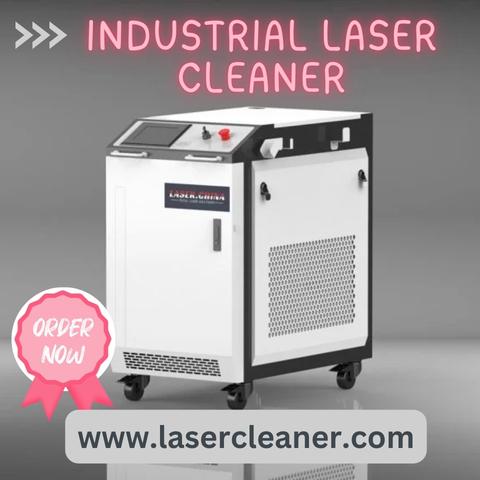
An Industrial laser cleaner is an advanced solution for removing rust, paint, oil, grease, oxides, and other unwanted contaminants from metal and various industrial surfaces. As manufacturing industries continue to improve their production processes, laser cleaning has become an increasingly popular choice for businesses seeking accurate, controlled, and efficient surface preparation.
Unlike traditional cleaning methods that often rely on abrasive materials or chemical products, laser cleaning uses concentrated laser energy to remove contaminants from a target surface. This technology supports applications in automotive manufacturing, aerospace, metal fabrication, shipbuilding, machinery maintenance, and industrial restoration.
What Is an Industrial Laser Cleaner?
An Industrial laser cleaner is a specialized machine that directs a laser beam onto a contaminated surface. The laser energy interacts with unwanted layers, helping detach or vaporize them while allowing the underlying material to remain intact when the process is correctly configured.
The cleaning process depends on several factors, including laser power, pulse characteristics, scanning speed, material type, and the thickness of the contaminant. Operators can adjust these parameters to achieve the desired cleaning results for different applications.
Laser cleaning equipment is available in several configurations, including portable handheld systems and larger industrial machines designed for automated production lines. The appropriate option depends on the working environment, cleaning requirements, production volume, and the materials being processed.
Common Applications of Industrial Laser Cleaning
1. Rust Removal from Metal Surfaces
Rust can weaken metal components, interfere with assembly, and reduce the quality of protective coatings. Laser cleaning provides a controlled method for removing corrosion from steel structures, metal frames, machine components, and industrial tools.
Manufacturers can use laser cleaning before painting, welding, coating, or repairing metal parts. Proper surface preparation helps improve the consistency of subsequent manufacturing processes.
2. Paint and Coating Removal
Removing old paint and protective coatings is an important task in maintenance, restoration, and manufacturing. Traditional approaches may require chemical strippers, abrasive blasting, or extensive manual labor.
Laser cleaning offers an alternative for removing selected coating layers from compatible surfaces. With suitable parameter settings, operators can target specific layers while reducing unwanted effects on the underlying material.
3. Oil, Grease, and Industrial Residue Cleaning
Manufacturing equipment frequently accumulates lubricants, grease, and other residues during regular operation. These contaminants can affect product quality, interfere with bonding, and create problems during maintenance.
Laser cleaning can help prepare surfaces for welding, bonding, and other production processes. The results depend on the type of residue and the compatibility of the substrate with the selected laser settings.
4. Surface Preparation Before Welding
Clean surfaces are essential for producing consistent welds. Rust, oxide layers, oil, and other contaminants may interfere with the welding process or affect the final joint.
Laser cleaning equipment can prepare metal surfaces before welding, helping manufacturers maintain cleaner work areas and improve process consistency. It is particularly useful in fabrication workshops where repeatable surface preparation is important.
Choosing the Right Laser Cleaning Machine
Selecting suitable equipment requires an understanding of the intended application. Laser power is an important consideration because different contaminants and surface conditions require different levels of energy.
Lower-power systems may be appropriate for light contamination or delicate cleaning tasks, while higher-power equipment may be suitable for demanding industrial applications. However, power alone does not determine cleaning quality. Pulse duration, energy density, scanning speed, and the material being cleaned also influence the results.
Businesses should consider the following factors before purchasing a machine:
-
Material compatibility: Identify whether the equipment is suitable for steel, aluminum, or other target materials.
-
Contaminant type: Determine whether the primary task involves rust, paint, grease, oxidation, or another substance.
-
Production requirements: Estimate the surface area, cleaning frequency, and expected processing speed.
-
Equipment configuration: Choose between handheld equipment, integrated automation, and other available system designs.
-
Operating environment: Consider workspace dimensions, electrical requirements, ventilation, and safety provisions.
-
Supplier support: Review technical assistance, operator training, warranty terms, and maintenance arrangements.
Comparing these factors helps businesses identify a machine that meets their operational requirements and long-term production goals.
Industrial Laser Cleaner for Different Industries
Laser cleaning technology serves a wide range of industrial sectors. Automotive manufacturers can use it to prepare components, remove selected coatings, and clean tooling surfaces. Aerospace businesses may apply carefully controlled laser cleaning to compatible parts during maintenance and restoration.
In metal fabrication, laser systems can assist with rust removal, oxide cleaning, and preparation before joining or coating. Shipyards and heavy-equipment maintenance facilities may also use suitable machines to treat metal surfaces affected by corrosion and accumulated coatings.
Electronics, precision manufacturing, and mold maintenance are additional application areas where controlled cleaning can be valuable. Each application requires an appropriate process assessment to prevent unwanted surface damage.
Safety and Maintenance Considerations
Although laser cleaning can reduce dependence on certain chemicals and abrasive consumables, it requires proper safety precautions. Industrial laser beams can cause serious eye and skin injuries, and reflected laser energy may create additional hazards.
Operators should use equipment appropriate for the laser classification, including suitable wavelength-rated protective eyewear and protective barriers. Enclosures, interlocks, controlled work areas, and trained personnel are important components of a safe operating procedure.
Cleaning may also generate airborne particles, fumes, or hazardous decomposition products, depending on the material being removed. Suitable extraction and ventilation systems should therefore be selected for the application. Operators must follow the manufacturer's instructions and applicable workplace safety requirements.
Regular maintenance is equally important. Inspecting optical components, checking cables and connections, maintaining cooling systems, and keeping the work area clean can help preserve equipment performance. Any maintenance procedure should follow the manufacturer's recommendations.
Finding a Reliable Industrial Laser Cleaning Supplier
Choosing a dependable supplier is an important step when investing in an Industrial laser cleaner. A professional supplier should explain the machine's operating requirements, supported materials, available configurations, and expected performance under realistic working conditions.
Businesses should also compare technical specifications, spare-parts availability, training options, warranty coverage, and after-sales service. A supplier that understands your application can help you select suitable equipment rather than relying on power ratings or purchase price alone.
Final Thoughts
An Industrial laser cleaner offers manufacturers a modern approach to surface treatment, rust removal, coating removal, and industrial maintenance. By using concentrated laser energy, businesses can perform targeted cleaning on compatible materials and prepare surfaces for further production processes.

 English
 Arabic
 French
 Spanish
 Portuguese
 Deutsch
 Turkish
 Dutch
Dutch
 Italiano
 Russian
 Portuguese (Brazil)
 Greek
Greek