


Carbon Wrapping Contractors for Structural Rehabilitation
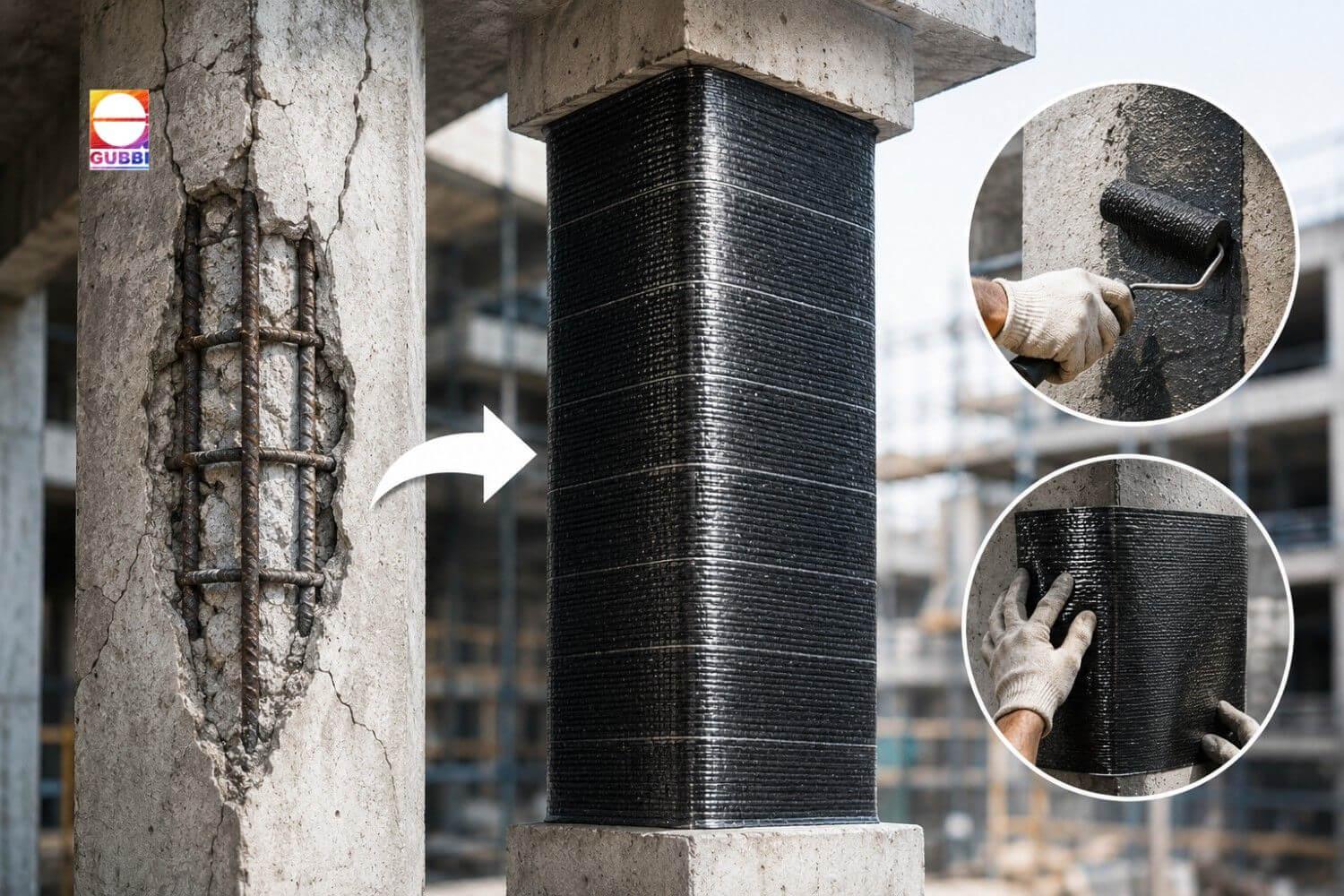
Existing concrete structures can experience deterioration, increased loading demands, and changes in performance as they age. Industrial plants, warehouses, commercial facilities, and infrastructure may require additional structural capacity without extensive demolition or major changes to their original dimensions. Carbon fiber wrapping is one method engineers consider for strengthening suitable reinforced concrete members. Understanding its applications, limitations, and installation requirements helps property owners make informed decisions about structural rehabilitation and long-term asset management.Carbon fiber wrapping services involve using carbon fiber reinforced polymer materials, commonly called CFRP, to strengthen selected structural elements. These materials are bonded to prepared concrete surfaces with a compatible resin system and positioned according to an engineering design. The method can improve specific structural capacities while adding relatively little weight and thickness. However, the results depend on the existing concrete condition, loading requirements, fiber arrangement, bonding quality, and proper execution throughout the project.
What Is Carbon Fiber Wrapping?
Carbon fiber wrapping is a structural strengthening technique that uses high-strength carbon fiber sheets, fabrics, or laminates bonded to an existing structural member. The carbon fibers provide tensile reinforcement, while the resin transfers forces between the concrete surface and the strengthening material. Engineers determine the required fiber orientation, number of layers, and wrapping arrangement according to the intended strengthening objective. This technique is commonly considered for reinforced concrete beams, columns, slabs, and selected infrastructure components.
The term carbon fiber reinforced polymer describes a composite material made by combining strong carbon fibers with a polymer resin. When installed correctly, this composite can help improve flexural or shear capacity in suitable members and provide confinement around certain columns. Its effectiveness depends on the structural configuration and the design requirements. Carbon fiber wrapping is therefore not a universal repair material; it is an engineered strengthening system selected after evaluating the structure and identifying its specific performance limitations.
Why Do Structures Need Carbon Fiber Wrapping?
Increased Structural Loads
Industrial and commercial facilities sometimes undergo changes that increase demands on existing structural members. New machinery, heavier storage arrangements, production upgrades, or additional equipment can change the loads transferred through beams, columns, and slabs. A structure designed for earlier operating conditions may require reassessment before these modifications proceed. Where calculations identify a strengthening requirement, carbon fiber wrapping may form part of an engineered solution, provided the existing concrete and supporting structural system are suitable for the proposed intervention.
Age-Related Deterioration
Concrete structures can deteriorate through moisture exposure, reinforcement corrosion, chemical attack, repeated loading, and inadequate maintenance. Such conditions may reduce the effective performance of individual components or expose underlying construction defects. Before selecting carbon fiber wrapping, engineers must establish whether the damage affects the concrete substrate, reinforcement, or overall load path. Unsound concrete and active deterioration generally require appropriate treatment first. Applying a strengthening layer over an unsuitable surface will not correct every underlying defect or automatically restore structural safety.
Design Changes and Structural Upgrades
A building's original design may no longer match its intended use after years of operation. Converting a warehouse, modifying an industrial production line, or introducing new equipment can require a review of structural capacity. Carbon fiber wrapping may be considered when an assessment identifies a suitable strengthening application. The design must account for existing reinforcement, member dimensions, support conditions, load combinations, and relevant engineering requirements. Any modification should be based on calculations rather than assumptions about the strength of the existing structure.
Common Applications of Carbon Fiber Wrapping Services
Carbon Fiber Wrapping for RCC Columns
Reinforced concrete columns transfer loads from beams and slabs toward the foundations, making their performance important to overall structural stability. Carbon fiber wrapping may be used to provide confinement and improve selected aspects of column behaviour when the design calls for it. This approach can be useful where increasing the column's dimensions substantially would create practical difficulties. However, severely damaged concrete, inadequate foundations, or major load-path problems may require additional repairs or different strengthening measures beyond wrapping alone.
Carbon Wrapping for Beams
Carbon Wrapping for Beams resist bending and shear forces as loads move through a building's structural system. Changes in loading, design deficiencies, deterioration, or alterations to the building can create a need for additional capacity. Depending on the engineering assessment, carbon fiber sheets or laminates may be installed in selected locations to improve flexural or shear resistance. The fiber direction and anchorage details are important because a strengthening system must work with the member's actual force distribution and intended structural behaviour.
Carbon Fiber Wrapping for Concrete Slabs
Concrete slabs support equipment, stored materials, occupants, and other imposed loads depending on the facility's use. When a slab requires strengthening, engineers evaluate its thickness, reinforcement, support arrangement, condition, and load requirements. Carbon fiber systems may be considered for selected slab applications where the design can establish an appropriate bonding and anchorage arrangement. Before installation, the team must also investigate cracks, surface defects, moisture, and other conditions that could affect adhesion or reduce the effectiveness of the proposed strengthening system.
Industrial Buildings and Warehouses
Industrial buildings often contain machinery foundations, production areas, elevated platforms, storage zones, and reinforced concrete framing. Operational changes can introduce additional loads or create requirements that were not part of the original design. Carbon fiber wrapping may be suitable for certain beams and columns where additional structural capacity is needed without introducing substantial extra weight. The project team must coordinate strengthening with equipment access, safety controls, production schedules, and any restrictions required while the affected structural elements are being prepared and reinforced.
Bridges and Infrastructure
Bridges and infrastructure assets experience repeated traffic loading, environmental exposure, and changing maintenance demands throughout their service lives. Carbon fiber reinforced polymer systems may be considered for suitable concrete members requiring additional flexural or shear capacity. However, infrastructure strengthening requires careful evaluation of access, existing deterioration, loading conditions, exposure, and inspection requirements. Engineers must also determine whether traffic management, temporary restrictions, or other protective measures are necessary. The selected system should address the identified structural requirement rather than simply covering visible deterioration.
How Carbon Fiber Wrapping Strengthens Concrete
Carbon fibers possess high tensile strength and are arranged within a composite system to resist forces in specified directions. When bonded to concrete, the strengthening material can participate in resisting the stresses targeted by the design. For example, a properly designed system may help a beam resist bending or shear, while wrapping around a column can provide confinement. The improvement achieved depends on fiber properties, orientation, anchorage, substrate quality, and the member's existing structural condition.
The bond between the carbon fiber system and the concrete surface is a critical part of the strengthening mechanism. Dust, loose particles, unsuitable surface profiles, moisture, or weak concrete can interfere with effective adhesion. Engineers and contractors must therefore establish suitable preparation and installation requirements before work begins. The completed system should be inspected for defects that could affect its performance. Strengthening effectiveness comes from the combined design, substrate, materials, and workmanship, not merely from applying carbon fiber sheets.
Benefits of Carbon Fiber Wrapping
High Strength With Minimal Added Weight
One important characteristic of carbon fiber reinforced polymer is its high strength-to-weight ratio. Compared with some conventional strengthening arrangements, a properly designed CFRP system can add relatively little weight to the existing structure. This may be beneficial when additional dead load is undesirable or when changes to member dimensions would interfere with equipment, circulation, or available space. The actual benefit depends on the structural design, and the material should not be assumed to replace every conventional strengthening method.
Limited Changes to Structural Dimensions
Concrete jacketing and steel jacketing can increase the dimensions of a structural member, depending on the design and installation arrangement. Carbon fiber wrapping is comparatively thin, which can help preserve clearances around columns, beams, and other components. This feature may be valuable in operational industrial facilities where machinery, access routes, or existing services limit available space. Nevertheless, the project must still provide sufficient access for surface preparation, resin application, wrapping, curing, and inspection to achieve the specified installation quality.
Potentially Reduced Operational Disruption
In suitable applications, carbon fiber wrapping may avoid some demolition and reconstruction activities associated with other strengthening methods. This can make it attractive for facilities where operational interruptions need to be carefully managed. However, installation still requires safe access, surface preparation, curing time, and any temporary restrictions identified by the engineering team. The total project duration depends on the number of members, their condition, environmental requirements, and work sequencing. A realistic programme should consider these activities instead of assuming every project can be completed immediately.
Resistance to Corrosion
Carbon fiber materials themselves do not corrode in the same way as conventional steel reinforcement. This property can be useful in selected environments where corrosion resistance is an important consideration. However, applying CFRP does not automatically stop corrosion already occurring within concrete or eliminate moisture-related deterioration. Engineers must assess the condition of existing reinforcement and specify necessary repairs or protective measures. The complete system's performance also depends on resin compatibility, environmental exposure, surface condition, and any protective coating required for the application.
The Carbon Fiber Wrapping Installation Process
Step 1: Structural Assessment
The process begins with an assessment of the affected structural members and their surrounding conditions. Engineers review visible damage, member dimensions, reinforcement information, loading requirements, and the intended purpose of strengthening. Depending on the project, testing or structural calculations may also be necessary. This stage establishes whether carbon fiber wrapping is suitable and identifies the required strengthening arrangement. It also helps determine whether concrete repairs, corrosion treatment, or other corrective measures must be completed before installation can begin.
Step 2: Surface Preparation
The concrete surface must be prepared according to the selected CFRP system's requirements. Preparation may involve removing weak or loose material, eliminating contaminants, grinding uneven areas, and establishing a suitable bonding surface. Cracks and damaged concrete must be assessed separately to determine the required treatment. Surface preparation is essential because the strengthening system relies on effective bonding with the substrate. Any unresolved weakness, contamination, or unsuitable surface condition can interfere with adhesion and reduce the reliability of the completed installation.
Step 3: Repairing Damaged Concrete
Where the assessment identifies spalling, exposed reinforcement, or unsound concrete, appropriate repair work may be required before carbon fiber installation. The damaged material is addressed, reinforcement is treated where necessary, and the affected section is restored using specified repair materials. The repaired surface must meet the requirements of the strengthening design and product system. This step prevents the team from relying on a weak substrate and helps create suitable conditions for bonding the carbon fiber material to the structural member.
Step 4: Resin Application and Fiber Placement
Once the surface is ready, the specified primer, resin, or bonding materials are applied according to the approved procedure. Carbon fiber sheets or laminates are then positioned in the required directions and locations. Installers must follow the design for fiber orientation, overlaps, layer quantities, and anchorage details. Air pockets, folds, contamination, and incomplete bonding should be avoided. Correct placement is important because the fibers must transfer forces as intended by the engineering design, rather than simply cover the concrete surface.
Step 5: Curing and Quality Inspection
After installation, the resin system must cure under the conditions specified by the manufacturer and project requirements. Temperature, humidity, moisture, and other environmental conditions can influence curing and bonding performance. Once the required curing period has been achieved, the completed work should be inspected for visible defects, delamination, wrinkles, and other installation concerns. Inspection records help document compliance with the approved procedure. Any required testing or acceptance checks should be established by the project specification and the responsible engineering team.
Choosing Carbon Wrapping Contractors
Selecting suitable carbon wrapping contractors requires evaluating their understanding of structural strengthening, surface preparation, CFRP materials, and site execution. Contractors should be able to explain the proposed work sequence, equipment requirements, safety arrangements, and quality checks. Relevant project experience is useful, but the proposed methodology must also suit the specific structure. Owners should request a clearly defined scope, including concrete repairs, material specifications, curing requirements, and exclusions, so that quotations can be compared on a consistent technical basis.
When evaluating carbon fiber wrapping contractors, businesses should also examine how the team coordinates with structural engineers and facility management. The contractor needs to follow the approved design and identify site conditions that differ from the assessment. For industrial facilities, the work plan should consider access, equipment movement, nearby operations, and protection of surrounding areas. A well-defined process makes responsibilities clearer and helps prevent avoidable delays, material wastage, and installation defects during the strengthening work.
For industrial, commercial, and infrastructure projects, Gubbi Civil Engineers Limited may be considered when reviewing providers for carbon fiber wrapping and structural strengthening requirements. Before finalising any contractor, the owner should verify the proposed scope, relevant experience, material system, and engineering arrangements against the project's needs. A technical discussion about the existing damage, intended loading, access limitations, and acceptance criteria can help establish whether the recommended solution is appropriate for the structure and its expected operating conditions.
Carbon Fiber Wrapping Versus Traditional Strengthening Methods
Carbon fiber wrapping is not automatically better than concrete jacketing or steel jacketing in every situation. CFRP systems may be attractive when low added weight and minimal changes to member dimensions are important. Concrete jacketing may be more appropriate where a substantial increase in section size or additional reinforcement is required. Steel jacketing may also suit specific design conditions. Engineers compare structural capacity, connection details, fire protection, corrosion exposure, installation access, and project constraints before selecting the strengthening method.
The comparison should include the condition of the existing member and the practical requirements of the facility. For example, a column with extensive concrete deterioration may need significant restoration before any strengthening system can be installed. A beam requiring additional capacity in a particular direction may need a specifically designed fiber arrangement or an alternative intervention. The correct decision comes from engineering analysis, not from a general ranking of materials. Each method must be assessed against the structural objective and site conditions.
Factors Affecting Carbon Fiber Wrapping Cost
Carbon fiber wrapping cost depends on several project-specific factors, including the dimensions of the affected members, the number of layers, the material system, and the extent of surface preparation required. Access conditions, working height, protection arrangements, and operational restrictions can also influence labour and equipment requirements. Additional concrete repairs, reinforcement treatment, testing, or protective coatings may change the overall scope. For these reasons, a reliable estimate usually requires reviewing the site conditions and the intended strengthening design.
When comparing quotations, owners should check whether each proposal includes assessment, preparation, repairs, resin application, fiber installation, curing, inspection, and any required protective treatment. A lower quotation may exclude important activities or specify a different material arrangement. The most appropriate comparison considers the engineering scope, installation quality, safety measures, and expected maintenance requirements alongside price. Clear documentation reduces uncertainty and helps decision-makers understand the work needed to achieve the required structural performance within the available project budget.
Limitations and Important Considerations
Carbon fiber wrapping cannot correct every structural problem. It may not be suitable where concrete is severely deteriorated, the substrate cannot provide reliable bonding, the foundations are inadequate, or the structural system requires a different form of intervention. It also does not automatically resolve water ingress, reinforcement corrosion, fire-related concerns, or movement caused by settlement. These conditions need separate assessment and treatment where necessary. The final strengthening design must address the actual structural deficiency and any relevant environmental or operational constraints.
Fire exposure, ultraviolet radiation, moisture, chemicals, and physical damage may affect the protection requirements of a CFRP system. Resin-based materials can have temperature limitations, so fire performance and any required protective measures must be considered during design. Installation quality also needs to be verified through appropriate inspection and documentation. Owners should ensure the selected system meets the project's specifications and applicable engineering requirements, rather than assuming that carbon fiber's material properties alone guarantee the performance of the finished structure.
Frequently Asked Questions
What are carbon fiber wrapping services?
Carbon fiber wrapping services involve applying engineered carbon fiber reinforced polymer materials to selected structural members to improve specific performance characteristics. The process may include structural assessment, surface preparation, concrete repairs, resin application, fiber placement, curing, and quality inspection. Common applications include reinforced concrete beams, columns, and slabs. The appropriate solution depends on the condition of the structure, the required strengthening, and the design approved by the responsible engineering professionals.
When is carbon fiber wrapping used for RCC structures?
Carbon fiber wrapping may be considered when an RCC member needs additional flexural or shear capacity, column confinement, or another form of engineered strengthening. Common reasons for assessment include increased service loads, changes in building use, design deficiencies, and certain rehabilitation requirements. However, the technique is not appropriate for every damaged member. Engineers must evaluate the concrete condition, existing reinforcement, load requirements, and bonding conditions before deciding whether CFRP is suitable.
How long does carbon fiber wrapping last?
The service life of a carbon fiber wrapping system depends on the materials, design, installation quality, environmental exposure, and maintenance conditions. Correct surface preparation and bonding are important, as are appropriate protective measures where required. Owners should follow the project-specific inspection and maintenance recommendations. No single service-life figure applies to every installation, because exposure conditions, damage risks, and the quality of the completed system can vary considerably between industrial, commercial, and infrastructure projects.
Can carbon fiber wrapping increase structural load capacity?
Yes, a properly designed CFRP system can increase selected capacities of suitable structural members. The improvement depends on the member's original condition, the type of loading, the fiber arrangement, anchorage details, and the design requirements. Carbon fiber wrapping should not be used as a substitute for structural analysis. Engineers must establish the required strengthening and confirm that the member, connections, supporting elements, and overall load path can safely accommodate the intended loading conditions.
How should businesses choose carbon fiber wrapping contractors?
Businesses should review the contractor's relevant experience, understanding of CFRP installation, proposed materials, surface preparation procedures, safety arrangements, and quality-control plan. They should also confirm how the contractor will follow the approved engineering design and document the completed work. A clear quotation should identify the included activities and exclusions. Choosing on technical suitability and execution quality, alongside cost, helps businesses make informed decisions about strengthening existing industrial, commercial, and infrastructure assets.
Carbon fiber wrapping services provide an option for strengthening selected concrete structures where additional capacity is required without substantially increasing member dimensions or weight. Their success depends on a suitable engineering design, sound surface preparation, correct material placement, appropriate curing, and quality inspection. By understanding the method's applications and limitations, owners can compare carbon wrapping contractors more effectively and choose a strengthening approach that addresses the structure's actual requirements and future operating conditions.

 English
 Arabic
 French
 Spanish
 Portuguese
 Deutsch
 Turkish
 Dutch
Dutch
 Italiano
 Russian
 Romaian
 Greek
Greek