


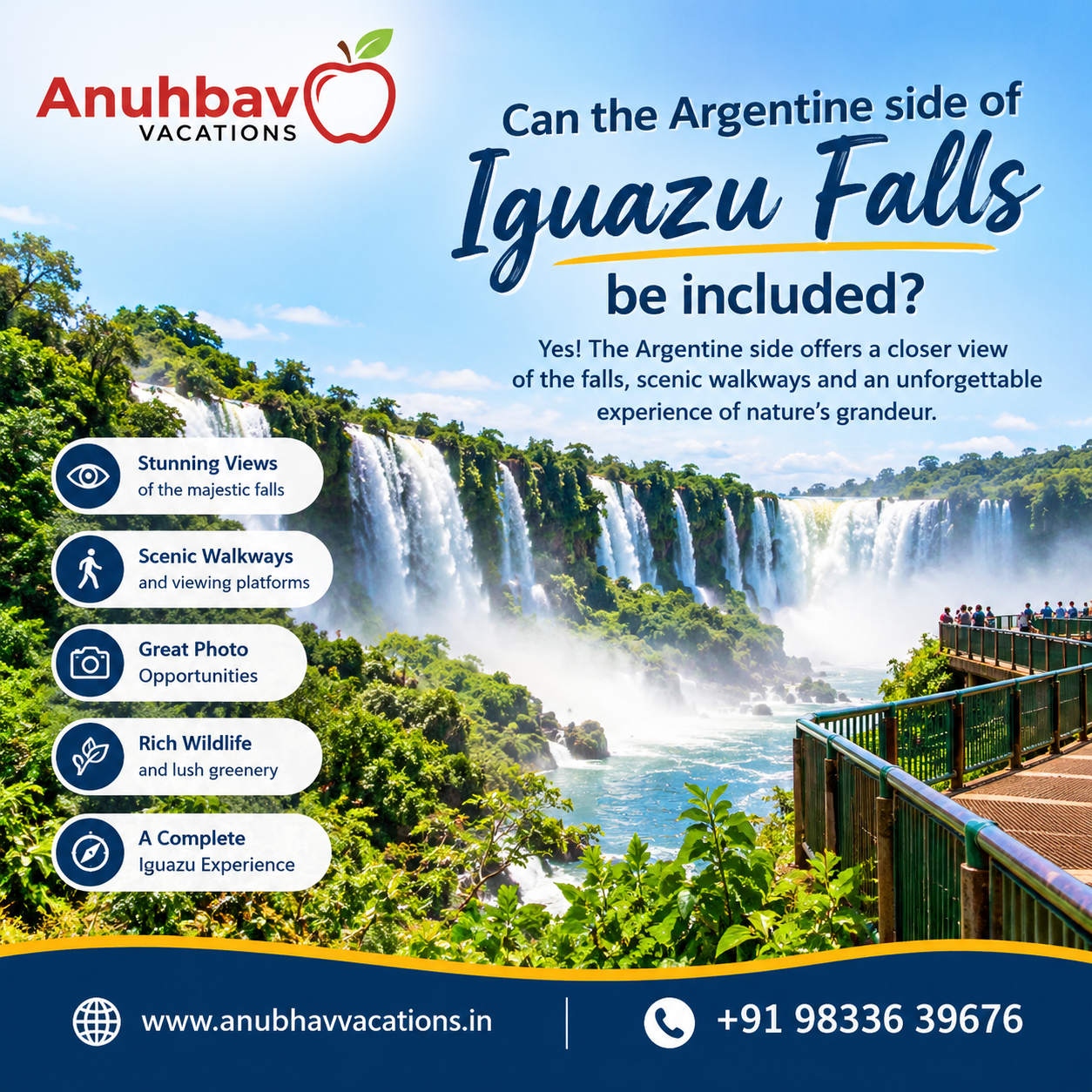
Can the Argentine side of Iguazu Falls be included?
Introduction
Iguazu Falls is one of the most spectacular natural attractions in South America, attracting travelers with its powerful cascades, lush rainforest, and breathtaking viewpoints. Located along the border between Argentina and Brazil, this remarkable waterfall system offers different experiences on each side. While the Brazilian side is famous for its sweeping panoramic views, the Argentine side allows visitors to explore a wider network of walking trails and get closer to individual sections of the falls.
The good news is that the Argentine side can absolutely be included in Tour Packages for Iguazu. In fact, visiting this side is an excellent choice for travelers who want to experience the waterfalls from multiple angles, discover the surrounding national park, and spend more time appreciating the natural environment. Whether you are planning a short holiday, a family vacation, a romantic getaway, or a longer South American adventure, adding the Argentine side can make your itinerary more rewarding.
However, the experience depends on your travel dates, available time, accommodation location, transportation arrangements, and eligibility to enter Argentina. Travelers should also understand that visiting the Argentine side requires entering Argentina, so passport and visa requirements must be checked before departure.
This guide explains what to expect on the Argentine side, the main attractions to explore, how much time to allocate, and how to plan a comfortable visit.
Why Include the Argentine Side of Iguazu Falls?
The Argentine side offers an immersive experience of the Iguazu waterfall system. Instead of viewing the falls primarily from a distance, visitors can follow designated trails, cross elevated walkways, and reach viewpoints overlooking different cascades.
The surrounding Iguazú National Park is home to subtropical vegetation, colorful birds, butterflies, and other wildlife. This makes the experience more than a sightseeing excursion. Visitors can enjoy the natural surroundings while exploring the waterfalls at their own pace.
One of the main advantages of including the Argentine side is the variety of viewpoints. The park has several established circuits, each offering a different perspective. Some trails provide elevated views over the water, while others bring visitors closer to the river and smaller cascades.
The Argentine side is particularly appealing to nature enthusiasts, photographers, couples, and families who enjoy outdoor experiences. Travelers who appreciate walking and exploring can spend several hours discovering the park's different sections.
For visitors comparing Tour Packages for Iguazu, the Argentine side is worth considering because it provides a different experience from the Brazilian side. Rather than choosing one exclusively, travelers with sufficient time and the necessary entry documents can explore both.
What Makes the Argentine Side Different from the Brazilian Side?
Although both countries share the same waterfall system, the visitor experience differs considerably.
A Closer View of the Waterfalls
The Argentine side features an extensive network of walkways and viewing platforms. These routes allow visitors to observe several waterfalls from different elevations and distances.
Depending on the open trails and current park conditions, visitors may see water rushing over rocky ledges, falling into deep channels, and creating mist above the surrounding rainforest. The changing viewpoints make the visit engaging for people who enjoy discovering different aspects of a natural attraction.
More Time for Walking and Exploration
The Argentine national park has multiple walking circuits. Visitors can choose routes according to their interests, available time, and physical comfort.
Some paths are relatively straightforward, while others involve longer walks. Comfortable shoes, drinking water, sun protection, and suitable clothing can make the experience more enjoyable.
Travelers should check the official park website for current route availability, accessibility information, opening hours, and any temporary restrictions before visiting.
Opportunities to Appreciate the Rainforest
The attraction is not limited to the waterfalls. The park's rainforest environment contains a variety of plant species, birds, insects, and other wildlife.
Visitors may notice colorful butterflies along the paths or hear birds calling from the trees. Wildlife sightings are never guaranteed, but observing the environment adds another dimension to the experience.
Visitors should stay on marked trails, avoid feeding animals, and follow park instructions to help protect the ecosystem.
Top Attractions on the Argentine Side
Several areas of Iguazú National Park deserve attention when planning a visit. The exact routes available may change because of weather, maintenance, or safety conditions, so check current park updates before finalizing your day.
1. Devil's Throat
Devil's Throat, known as Garganta del Diablo in Spanish, is one of the most famous features of Iguazu Falls. This enormous cascade creates a dramatic display of water plunging into a deep gorge.
The viewpoint offers a powerful experience as visitors observe the rushing water and the mist rising above the falls. The scale and sound of the cascade make it one of the highlights of the Argentine side.
Access typically involves following the designated park route and walking along elevated platforms. Travelers should allow sufficient time for transport within the park and the walk to the viewpoint.
Access can be affected by high water levels, flooding, or maintenance. Always check official notices before your visit rather than assuming that every walkway will be open.
2. Upper Circuit
The Upper Circuit offers elevated viewpoints over several sections of the waterfall system. Visitors can appreciate the layout of the cascades, the surrounding greenery, and the river flowing through the landscape.
The elevated perspective is especially useful for photography because it allows visitors to capture a wider view of the waterfalls. The circuit also provides opportunities to pause and appreciate the scale of the natural surroundings.
This route can be a good choice for travelers who want to see several waterfalls without relying exclusively on one major viewpoint.
3. Lower Circuit
The Lower Circuit provides a different perspective, with viewpoints that bring visitors closer to parts of the waterfall system and the surrounding rainforest.
The changing elevations and angles help travelers understand the variety of landscapes within the park. Depending on trail conditions, some sections may involve stairs or uneven walking surfaces, so visitors should check accessibility details before setting out.
Travelers who prefer a slower sightseeing pace can plan breaks along the way and avoid trying to complete every route in a single visit.
4. Rainforest Wildlife and Vegetation
The forest surrounding Iguazu Falls is an important part of the destination's appeal. Tropical and subtropical plants create a lush setting, while birds and butterflies add movement and color to the scenery.
Visitors should observe wildlife quietly and from a respectful distance. Feeding animals or approaching them for photographs can be harmful and may violate park rules.
A guided nature walk, where available, can help travelers learn more about the region's ecology, local species, and conservation efforts.
5. Scenic Photography Locations
The Argentine side offers many places to photograph the waterfalls, river channels, forest, and mist. Each circuit provides different angles, allowing photographers to capture both broad landscapes and smaller details.
A waterproof cover for cameras or phones can be useful because mist and rain may affect equipment near the waterfalls. Visitors should also protect electronic devices while walking along wet platforms.
The best photography conditions depend on sunlight, water levels, weather, and crowd levels. Rather than relying on a particular time for perfect lighting, plan enough time to explore several viewpoints.
How Much Time Should You Spend on the Argentine Side?
The amount of time required depends on your interests, walking pace, and the trails open during your visit.
For many travelers, a full day is a practical starting point for exploring the Argentine side. It allows time to reach the national park, follow selected circuits, take photographs, rest, and enjoy the main viewpoints without rushing excessively.
Visitors with limited mobility or those traveling with young children may prefer a more relaxed schedule with fewer walking routes. Nature enthusiasts and photographers may want additional time to observe the surroundings and revisit selected viewpoints.
If you are planning to explore both Argentina and Brazil, consider allocating separate portions of your itinerary to each side. Trying to cover the Argentine park and the Brazilian viewpoints in one tightly scheduled day can leave little room for transport, border formalities, or unexpected delays.
When comparing Iguazu Tours, look for an itinerary that clearly identifies the days and times assigned to each side. Check whether park admission, local transfers, and guided activities are included or arranged separately.
Can the Argentine Side Be Included in a Group Itinerary?
Yes, the Argentine side can be included in a group itinerary, provided the schedule allows enough time for travel, sightseeing, and any required border formalities.
Group travel can be convenient for visitors who prefer a planned schedule and organized transfers. It can also make it easier to coordinate visits to major viewpoints, although the experience will depend on the group size, guide arrangements, and itinerary design.
When reviewing Iguazu Group Tours, check whether the Argentine national park is explicitly included rather than mentioned only as a possible excursion. Confirm the departure point, expected duration, transport arrangements, and whether visitors will have time to explore the circuits.
It is also important to understand the balance between guided activities and independent exploration. Some travelers prefer to move at their own pace, while others appreciate having a guide explain the landscape, history, and ecology.
Before joining a group excursion, confirm that your passport and visa arrangements allow you to enter Argentina. A group reservation does not replace the immigration documents required by the country.
Visa and Entry Requirements for Visiting Argentina
International travelers should check Argentina's entry requirements before booking a visit to the Argentine side of Iguazu Falls. Requirements vary according to nationality, passport type, purpose of travel, and applicable exemptions.
Indian passport holders should verify whether they need a tourist visa or qualify for a specific exemption. Certain eligible Indian citizens holding qualifying valid United States visas or a qualifying US Green Card may be able to enter Argentina for tourism without obtaining a separate Argentine visa, subject to the current conditions. Other travelers may need to apply for an Argentine tourist visa before departure.
Travelers should confirm the latest information with the Argentine Embassy or the appropriate consular authority. Do not rely solely on old travel blogs or informal advice, as visa procedures can change.
Before departure, review the following:
-
Passport validity and blank-page requirements.
-
Whether a tourist visa or an applicable exemption is required.
-
Supporting documents requested by the consulate.
-
Return or onward travel arrangements.
-
Accommodation details and travel itinerary.
-
Transit requirements for any connecting countries.
-
Any additional immigration or health guidance relevant to your route.
If you also intend to visit the Brazilian side of Iguazu Falls, check Brazil's entry requirements separately. Permission to enter Argentina does not automatically authorize entry into Brazil.
Where Should You Stay When Visiting the Argentine Side?
Puerto Iguazú is a common base for visitors exploring the Argentine side of the falls. Staying in or near the town can make it easier to reach the national park and enjoy local restaurants, shops, and other visitor services.
When choosing accommodation, consider the location, airport transfers, transport to the national park, and your overall itinerary. A property close to your planned departure point may help reduce travel time, particularly if you have an early start.
Some travelers prefer to stay in Argentina for the duration of their visit, while others choose accommodation in Foz do Iguaçu on the Brazilian side. Either option can work, but the best choice depends on the planned sightseeing schedule and immigration eligibility.
If you intend to cross the border during your stay, check how transfers are arranged and whether the provider explains the process clearly. Allow additional time for immigration checks and traffic.
Before confirming your hotel, check cancellation terms, check-in arrangements, luggage storage, and transport options. These practical details can be especially useful when international flights arrive late or depart early.
Best Time to Visit the Argentine Side
Iguazu Falls is an attractive destination throughout much of the year, but weather and water conditions influence the visitor experience.
Warmer periods can bring high humidity and sudden showers. Lightweight clothing, comfortable walking shoes, sunscreen, drinking water, and rain protection are useful. Mist from the waterfalls may also leave visitors damp, particularly near exposed viewpoints.
Cooler periods can provide comfortable walking conditions, although rainfall and temperatures remain variable. Popular holiday periods may bring more visitors, so arriving early and checking park entry arrangements can help with planning.
Water levels can fluctuate significantly depending on rainfall. Higher water levels may create a powerful spectacle, but they can also lead to temporary closures of walkways or viewing areas. Lower water levels can reveal more detail in individual cascades, offering a different visual experience.
There is no single perfect time for every traveler. Consider the weather, crowd levels, available flights, and your preferred pace of sightseeing. Always check current park notices shortly before travelling.
Practical Tips for a Comfortable Visit
A little preparation can make your day at the Argentine national park more enjoyable.
Wear comfortable walking shoes. The park involves walking between viewpoints, and some surfaces may be wet or uneven.
Carry rain protection. Mist and sudden showers are possible, so a lightweight rain jacket or protective cover for electronic devices can be useful.
Bring water and sun protection. Warm weather and outdoor walking can be tiring. Follow park rules concerning food, drink, and waste disposal.
Start with a realistic schedule. Prioritize the viewpoints that matter most to you rather than attempting every circuit without breaks.
Check accessibility information. If you are travelling with older adults, young children, or someone with mobility requirements, review current trail details before choosing your route.
Follow wildlife guidelines. Do not feed animals, leave litter, or step outside marked trails.
Keep your documents secure. Carry the required identification and immigration documents, particularly if your itinerary includes an international border crossing.
Check transport arrangements. Confirm pickup times, park access, and return transfers so you can enjoy the visit without unnecessary uncertainty.
How to Choose the Right Iguazu Itinerary
A suitable itinerary should match your available time, travel style, and interest in nature. Travelers who have only a short stop in the region may choose one side of the falls. Those with additional time can explore both Argentina and Brazil for a broader perspective.
Families may benefit from a schedule with regular breaks and manageable walking distances. Photography enthusiasts might prefer more time at viewpoints, while nature lovers may want to include guided activities that explain the rainforest ecosystem.
When evaluating Tour Packages for Iguazu, review the itinerary carefully instead of relying only on the package title. Confirm whether the Argentine side is included, how long the visit lasts, and which attractions are planned. Check the details of accommodation, transfers, park entry, and optional activities.
It is equally important to understand what is not included. International flights, visas, meals, travel insurance, or certain excursions may be handled separately, depending on the arrangement. Ask for clear details before confirming a booking.
A well-planned itinerary should leave enough room to appreciate the destination rather than making every part of the day feel rushed.
Conclusion
The Argentine side of Iguazu Falls can certainly be included in a South American holiday, and it offers an experience that is distinct from the Brazilian side. Its extensive walking circuits, dramatic Devil's Throat viewpoint, elevated waterfall trails, and lush rainforest surroundings make it an excellent choice for travelers who want to explore the attraction in greater depth.
A full day is a useful starting point for planning the visit, although the ideal duration depends on your interests, mobility, and the park routes available. Travelers who want to experience both sides should allow sufficient time for transportation and immigration formalities.
When selecting Iguazu Tours, confirm that the Argentine side is specifically included, check the accommodation and transfer arrangements, and verify your eligibility to enter Argentina. If Brazil is also part of your itinerary, review its entry requirements separately.
With the right preparation and a realistic schedule, visitors can enjoy the waterfalls, discover the surrounding rainforest, and make the Argentine side a memorable part of their South American journey.
FAQ Questions
1. Can the Argentine side of Iguazu Falls be included in a tour package?
Yes, the Argentine side can be included in an itinerary, provided the travel schedule and entry requirements allow it. Iguazu Group Tours may include guided sightseeing, transfers, and time to explore the national park, but travelers should confirm the exact inclusions before booking. Check that the itinerary specifically mentions the Argentine side and allows enough time for the main viewpoints and walking circuits.
2. How many days are needed to explore the Argentine side of Iguazu Falls?
Many travelers allocate one full day to the Argentine side, although visitors who prefer a relaxed pace or want to explore additional trails may need more time. The ideal duration depends on park access, weather, walking speed, and personal interests. Travelers visiting both Argentina and Brazil should also allow time for transfers and border procedures.
3. What are the main attractions on the Argentine side of Iguazu Falls?
The main highlights include Devil's Throat, the Upper Circuit, the Lower Circuit, and the rainforest surrounding the waterfalls. These areas provide different viewpoints and opportunities to appreciate the landscape. Trail availability can change, so visitors should check official park updates before their visit.
4. Do Indian travelers need a visa to visit the Argentine side of Iguazu Falls?
Indian passport holders generally need to check whether they require an Argentine tourist visa or qualify for an applicable exemption. Certain eligible Indian citizens with qualifying valid US visas or a qualifying US Green Card may be exempt from obtaining a separate Argentine visa, subject to current conditions. Travelers should confirm their specific eligibility with the Argentine consular authority before departure.
5. Is the Argentine side better than the Brazilian side of Iguazu Falls?
Neither side is universally better because each offers a different experience. The Argentine side has extensive walking trails and closer views of various waterfalls, while the Brazilian side is known for panoramic views across the waterfall system. Travelers with sufficient time and the required entry documents may enjoy visiting both sides.
Read Our Previous Blog ---------------> Do Indian travelers need visas for Argentina and Brazil?

 Arabic
 French
 Spanish
 Portuguese
 Deutsch
 Turkish
 Dutch
 Italiano
 Russian
 Romaian
 Portuguese (Brazil)
 Greek