


Fiber Welder: Precision Welding Technology for Modern Metal Fabrication
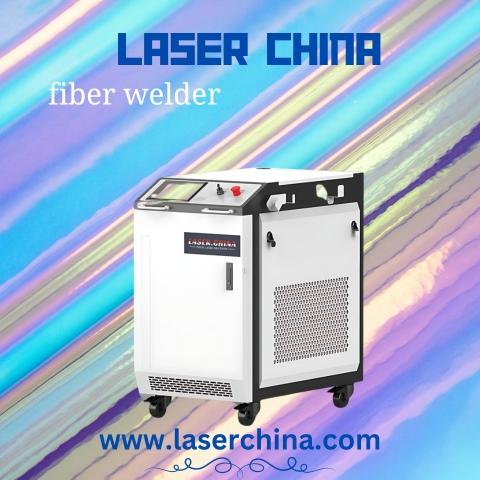
Modern metal fabrication requires reliable equipment that delivers accurate welds, consistent performance, and professional results. A fiber welder is an advanced welding solution designed to join metal components using a concentrated laser beam. It is widely used in manufacturing workshops, automotive production, metal processing, and industrial fabrication.
As businesses look for efficient ways to improve welding quality and production speed, fiber laser technology continues to attract attention. Whether you manufacture stainless steel products, aluminium components, or custom metal structures, selecting the right welding equipment can help improve your workflow and meet demanding production requirements.
What Is a Fiber Welder?
A fiber welder uses fiber laser technology to generate a focused beam of light that heats and joins metal surfaces. The laser energy creates a controlled weld area, allowing operators to work on suitable materials with precision.
Unlike conventional welding methods that rely on an electric arc or flame, laser welding concentrates energy into a relatively small area. This approach can help reduce the heat-affected zone and produce clean, consistent welds when the equipment is configured correctly.
Modern systems are available in different configurations, including handheld machines for flexible operation and automated systems for repetitive industrial production. The appropriate option depends on material thickness, production volume, required weld quality, and the operator's experience.
Common Applications in Metalworking
Fiber laser welding equipment serves a wide range of industries because it can process various metal components with suitable machine settings.
Stainless Steel Fabrication: Manufacturers use laser welding to join stainless steel enclosures, kitchen equipment, metal cabinets, and decorative products. Accurate control helps create neat welds on appropriately prepared surfaces.
Aluminium Manufacturing: Aluminium components are common in transportation, electrical equipment, and industrial products. With the correct laser source, power settings, and welding technique, suitable aluminium grades can be joined effectively.
Automotive Components: Automotive suppliers use laser welding for selected structural parts, brackets, housings, and other metal assemblies. Automated systems can support repeatable welding processes in production environments.
Metal Furniture and Cabinets: Workshops producing furniture frames, storage cabinets, doors, and custom metal products may use laser welding to achieve consistent joints and an attractive finish.
Industrial Equipment: Machinery manufacturers can use laser welding for compatible housings, sheet-metal assemblies, and precision components where controlled heat input is important.
Choosing the Right Machine Power
Machine power is an important consideration when selecting welding equipment. Different power levels support different applications, but the best choice depends on more than wattage alone.
Lower-power systems may suit thin-sheet applications and certain precision jobs. Medium-power machines can accommodate a broader range of fabrication tasks, while higher-power equipment may be appropriate for thicker materials and more demanding production requirements.
Before purchasing a machine, consider the metals you process most frequently, their thickness, the required welding speed, and the joint design. Ask the manufacturer for material-specific welding parameters and sample welds to confirm that the proposed equipment meets your requirements.
A properly matched fiber welder can help manufacturers achieve reliable results without investing in equipment that exceeds their actual production needs.
Important Factors When Selecting Equipment
Choosing industrial welding equipment requires careful evaluation of the complete system rather than focusing exclusively on the advertised price.
First, review the laser source, rated output power, cooling arrangement, and welding head specifications. These components influence how the machine operates under different production conditions.
Next, examine the control interface and available parameter adjustments. Clear controls can make it easier for trained operators to configure suitable settings for different materials and joint types.
Technical support is another important consideration. A dependable supplier should provide operating instructions, maintenance guidance, training resources, and access to replacement components when required.
You should also confirm the machine's compatibility with your workshop's electrical supply, available working space, production schedule, and material requirements. Comparing these factors helps you identify a practical solution for your business.
Operating and Maintaining a Fiber Laser Welding System
Correct operation is essential for maintaining weld quality and workplace safety. Operators should receive appropriate training before using the equipment and follow the manufacturer's instructions for every application.
Before welding, inspect the material surfaces and remove contaminants using an approved cleaning method. Proper preparation helps reduce defects caused by oil, dirt, oxidation, or inconsistent surface conditions.
During operation, use the recommended parameters for the specific metal and joint. Excessive power, unsuitable travel speed, or incorrect focus can cause burn-through, spatter, porosity, or incomplete fusion.
Routine maintenance should include checking cooling performance, inspecting cables and connections, keeping optical components clean according to the manufacturer's procedure, and examining consumable parts for wear.
Laser welding also presents serious eye and skin hazards. Use an appropriately enclosed or controlled laser work area, wavelength-rated protective equipment, suitable fume extraction, and the safety systems specified for the machine. Never look directly at the laser beam or its reflections.
Understanding the Cost of Fiber Welding Equipment
The purchase price varies according to laser power, source quality, automation level, included accessories, and supplier support. A basic handheld configuration will generally differ in cost from an automated production system with integrated fixtures and advanced controls.
When requesting a quotation, ask for a complete specification sheet that identifies the laser source, rated power, cooling system, included welding accessories, warranty terms, and delivery arrangements.
It is also useful to compare training, technical assistance, spare-parts availability, and expected maintenance requirements. These considerations help you evaluate the overall cost of ownership rather than making a decision based only on the initial purchase price.
For businesses planning to expand production, selecting suitable equipment from the beginning can support more consistent manufacturing and reduce avoidable operational interruptions.
Final Thoughts
A fiber welder can be a practical investment for manufacturers seeking precision, repeatable performance, and modern metal fabrication capabilities. The right system depends on your materials, production volume, welding requirements, and available budget.
Before making a purchase, compare technical specifications, request sample welds, and confirm that the supplier offers reliable after-sales support. With appropriate equipment, trained operators, and proper safety procedures, businesses can establish a dependable laser welding process suited to their manufacturing goals.

 English
 French
 Spanish
 Portuguese
 Deutsch
 Turkish
 Dutch
 Italiano
 Russian
 Romaian
 Portuguese (Brazil)
 Greek