


How Effective Medicine Packaging Supports Product Safety and Clear Communication
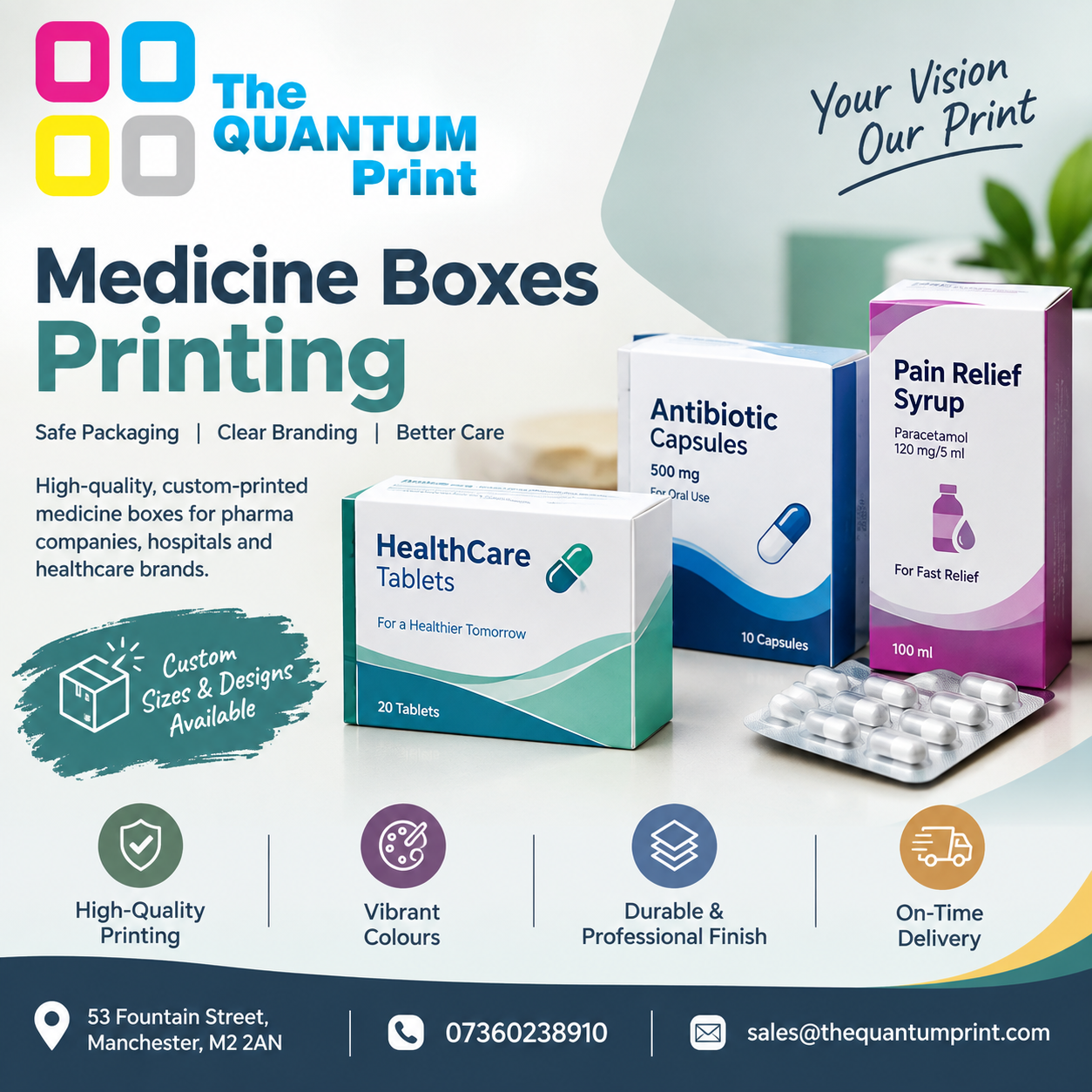
Medicine packaging plays an essential role in the pharmaceutical industry, helping protect products, communicate important information, and support safe handling throughout the supply chain. From retail pharmacies to healthcare distributors, packaging must balance durability, readability, regulatory considerations, and efficient storage. Well-planned Medicine Boxes Printing can help pharmaceutical businesses present essential product information clearly while maintaining consistent packaging standards.
The Role of Medicine Packaging in Pharmaceutical Safety
Pharmaceutical products often require packaging that protects them from environmental conditions, physical damage, and unnecessary handling. Cardboard cartons are commonly used as secondary packaging, holding items such as blister packs, bottles, tubes, or smaller containers. Their suitability depends on the medicine, its storage requirements, and the protection provided by the primary container.

Professionally designed Medicine Packaging Boxes can support several important functions:
- Physical protection: Suitable carton materials help reduce damage during transportation, storage, and distribution.
- Information display: Packaging provides space for dosage instructions, ingredients, warnings, expiry dates, and batch identification where required.
- Product identification: Clear names, strengths, and product details help distinguish medicines with similar appearances.
- Tamper evidence: When designed with appropriate closures or seals, packaging can help indicate whether a product may have been opened or interfered with.
- Supply chain organisation: Consistent carton dimensions and labelling can improve inventory handling and warehouse efficiency.
It is important to remember that secondary cartons do not automatically provide moisture, light, or contamination protection. These properties depend on the complete packaging system, including the primary container, material specifications, and any additional protective features.
Choosing Suitable Materials for Medicine Box Packaging
Material selection affects packaging performance, printing quality, cost, and environmental impact. Pharmaceutical businesses should consider the product’s characteristics, distribution conditions, and applicable packaging requirements before selecting a carton material.

Paperboard is widely used because it can be printed clearly, converted into different carton styles, and stored efficiently. Different grades offer varying levels of stiffness, surface smoothness, and resistance to handling damage.
When evaluating medicine box packaging, businesses should consider the following factors:
- Board strength: The carton should maintain its shape during filling, stacking, and transportation.
- Print compatibility: The surface should reproduce small text, symbols, and product identification details clearly.
- Folding performance: Cartons should fold accurately without excessive cracking or damage to printed areas.
- Storage conditions: Temperature, humidity, and distribution environments may influence material performance.
- Sustainability: Recyclable paperboard and responsible material sourcing can support environmental objectives, subject to local recycling facilities and any coatings or laminations used.
Packaging should also be tested under realistic handling conditions. A carton that looks attractive in a design file may perform differently once printed, folded, filled, and transported.
Printing Accuracy and Regulatory Information
Accuracy is one of the most important considerations in pharmaceutical packaging. Unlike many consumer products, medicine cartons may carry information directly related to safe use. Errors involving product strength, dosage instructions, warnings, or patient information can have serious consequences.

Reliable medicine packaging box production therefore requires careful artwork preparation and quality control.
Before approving a print run, businesses should check:
- Text accuracy: Confirm that the product name, ingredients, strength, directions, and warnings match the approved information.
- Legibility: Ensure that fonts, contrast, spacing, and text size make essential details easy to read.
- Batch and expiry information: Verify that designated areas are suitable for variable data printing or coding where necessary.
- Barcode quality: Test barcodes and other machine-readable elements to ensure they scan correctly.
- Colour consistency: Check that colours remain consistent across production batches, especially where colour helps distinguish product variants.
- Artwork approval: Use a documented review process before releasing files for manufacturing.
In the United Kingdom, applicable requirements may include the Human Medicines Regulations 2012 and relevant Medicines and Healthcare products Regulatory Agency guidance. Requirements vary according to the product and its authorisation. Businesses should verify current rules for packaging particulars, patient information, safety features, and traceability rather than relying on general design practices alone.

Emerging Trends in Pharmaceutical Box Printing
Pharmaceutical packaging continues to evolve as businesses respond to sustainability goals, supply chain demands, and changing expectations around product identification.
One notable development is the use of clearer, more structured layouts. Instead of crowding every panel with decorative elements, designers increasingly prioritise information hierarchy, adequate spacing, and readable typography. These decisions can make packaging easier to navigate for healthcare professionals and consumers.
Digital printing is another relevant development, particularly for shorter production runs, multiple product variations, and packaging that requires frequent artwork updates. Depending on production requirements, it may help reduce setup time and make smaller batches more practical. Conventional printing methods can remain suitable for larger, repeat orders.
Other developments include:
- Greater use of responsibly sourced paperboard.
- Improved integration of variable data and product identification codes.
- More standardised artwork management and approval workflows.
- Packaging designs that support efficient storage and distribution.
- Careful evaluation of coatings, finishes, and adhesives to balance durability with recyclability.
These developments are not universal solutions. The appropriate approach depends on production volume, regulatory requirements, packaging performance, and the overall cost of ownership.

Practical Steps for Better Medicine Box Printing
Successful packaging projects begin before the printing stage. Early collaboration between designers, pharmaceutical teams, packaging suppliers, and quality specialists can help prevent costly errors.
A practical workflow includes defining the packaging specifications, preparing approved artwork, checking dielines, reviewing a physical proof, and confirming production tolerances. Businesses should also establish clear procedures for version control so outdated artwork is not accidentally used.
For organisations researching specialist packaging options, The Quantum Print provides information about pharmaceutical carton solutions through its medicine packaging boxes page. When assessing any packaging provider, businesses should evaluate material specifications, printing capabilities, quality assurance processes, and the ability to accommodate their particular requirements.

Conclusion
Effective pharmaceutical packaging depends on much more than appearance. Material selection, accurate printing, readable information, suitable protection, and consistent quality control all contribute to packaging that performs reliably throughout the supply chain.
Well-executed medicine box printing can support product identification, organised distribution, and clear communication when combined with appropriate packaging design and regulatory review. By prioritising functionality, accuracy, and practical testing, pharmaceutical businesses can make informed decisions that support both operational efficiency and responsible product presentation.
Contact Us : https://www.thequantumprint.com/contact-us/
About Us : https://www.thequantumprint.com/about-us/
Website Link : https://www.thequantumprint.com/

 Arabic
 French
 Spanish
 Portuguese
 Deutsch
 Turkish
 Dutch
 Italiano
 Russian
 Romaian
 Portuguese (Brazil)
 Greek