


Driving Schools in Oldbury West Midlands: A Practical Guide to Learning Safe Driving
Learning to drive is an important step towards greater independence, improved employment opportunities, and easier everyday travel. However, becoming a confident driver involves much more than passing a practical test. Learners need to understand road safety, develop vehicle control, recognise hazards, and make sensible decisions in different traffic conditions. Choosing suitable driving schools in Oldbury West Midlands can help learners build these essential skills through structured lessons and consistent practice.
Oldbury, situated in the West Midlands, offers a variety of driving environments that can help learners prepare for real-world motoring. From residential streets and busy junctions to roundabouts and larger connecting roads, the local area provides opportunities to practise different driving techniques. Understanding what makes a driving school suitable, how lessons are structured, and what learners should expect can make the learning process more productive.
Understanding the Importance of Professional Driving Lessons
Professional driving lessons provide a structured approach to developing safe driving habits. While private practice with a qualified accompanying driver can be useful, professional instruction helps learners identify mistakes, understand traffic rules, and improve their techniques systematically.
A qualified driving instructor can assess a learner's current ability and create lessons that address individual strengths and weaknesses. Beginners may initially concentrate on steering, braking, clutch control where applicable, and moving off safely. As their confidence improves, lessons can progress towards more complicated situations.
Important areas covered during driving lessons typically include:
-
Vehicle controls and cockpit checks.
-
Mirror use, signalling, and positioning.
-
Junction approaches and emerging safely.
-
Roundabouts and lane discipline.
-
Speed management and stopping distances.
-
Hazard perception and defensive driving.
-
Independent driving and following road signs.
-
Manoeuvres such as parallel parking and reversing into a bay.
For learners comparing a driving school in Oldbury, the quality of instruction and the ability to explain these skills clearly should be major considerations. Effective lessons focus on understanding and consistency rather than simply completing a set number of hours.
How to Choose Driving Schools in Oldbury West Midlands
Selecting an appropriate instructor can influence how quickly a learner progresses and how confidently they approach unfamiliar roads. However, the cheapest option or the largest number of advertised lesson packages does not necessarily represent the most suitable choice.
Learners should consider several practical factors before making a decision.
1. Check Instructor Qualifications
In Great Britain, professional driving instructors offering paid car-driving tuition must meet the relevant Driver and Vehicle Standards Agency (DVSA) requirements. Learners should check an instructor's registration and understand the distinction between fully qualified instructors and trainee instructors working under the applicable rules.
A professional instructor should also communicate clearly, explain mistakes constructively, and adapt teaching methods to the learner's experience. Patience is particularly important for people who feel nervous when starting lessons.
2. Compare Lesson Structure and Flexibility
A well-organised lesson should have a clear objective. For example, a session might focus on approaching roundabouts, improving observation at junctions, or practising parking techniques.
Learners should ask about lesson duration, availability, cancellation arrangements, and whether lessons can be scheduled around work, education, or family commitments. Consistent lesson times can make it easier to retain skills between sessions.
3. Understand the Vehicle Options
Some learners prefer manual cars because they want the flexibility to drive both manual and automatic vehicles. Others choose automatic lessons because they would rather concentrate on road awareness without managing a clutch and manual gear changes.
Automatic cars can simplify vehicle control, especially in stop-start traffic. However, learners who pass their practical test in an automatic car generally receive an automatic-only licence entitlement unless they subsequently pass the relevant manual test.
The right option depends on personal confidence, future driving requirements, and the type of vehicle the learner expects to use.
4. Evaluate Communication and Progress Reviews
Good instruction involves regular feedback. After a lesson, learners should understand what they performed well, which areas need improvement, and what they will practise next.
Before committing to a lengthy package, it can be helpful to discuss learning goals and ask how progress is measured. Transparent communication makes it easier to recognise genuine improvement and identify difficulties early.
Preparing for Local Roads and Real-World Driving Conditions
One advantage of learning locally is the opportunity to practise in familiar surroundings. Nevertheless, learners should develop skills that transfer to different roads, traffic levels, and weather conditions.
Oldbury and neighbouring areas of the West Midlands provide varied driving situations. Residential streets can help beginners develop steering accuracy, appropriate speed control, and awareness of pedestrians. Busier roads introduce additional challenges, including lane selection, traffic signals, changing speed limits, and managing gaps in moving traffic.
Roundabouts require particular attention because drivers must assess traffic approaching from several directions while selecting the correct lane and signalling appropriately. Learners should practise these situations gradually, beginning with simpler layouts before progressing to more complex junctions.
Practical preparation should include the following habits:
-
Observe continuously: Check mirrors regularly and remain aware of pedestrians, cyclists, motorcyclists, and other vehicles.
-
Plan ahead: Look well beyond the vehicle immediately in front to anticipate changes in traffic.
-
Maintain safe distances: Allow sufficient space to stop comfortably if traffic slows suddenly.
-
Follow road signs: Recognise speed limits, directional signs, road markings, and temporary restrictions.
-
Adapt to conditions: Reduce speed when visibility is poor, roads are wet, or traffic becomes unpredictable.
-
Avoid distractions: Keep attention on driving and do not allow mobile devices to interfere with concentration.
Learners should also practise in different traffic conditions when their instructor considers them ready. Quiet roads are useful during the early stages, but experience in busier traffic is essential for developing confidence and sound judgement.
Automatic Driving Lessons and Changing Learner Preferences
Automatic driving tuition has become an important option for people who want a simpler introduction to vehicle control. Automatic vehicles remove the need to coordinate a clutch pedal and manual gear changes, allowing learners to devote more attention to observation, positioning, and hazard awareness.
This can be especially helpful for people who find coordinating several controls stressful or who expect to drive an automatic vehicle after passing their test.
However, automatic lessons still require concentration and consistent practice. Learners must understand speed control, safe braking, road positioning, observation routines, and the Highway Code. Removing manual gear changes does not remove the responsibility to anticipate hazards or make safe decisions.
When researching driving schools in Oldbury, learners should consider whether automatic tuition matches their future needs. Those who expect to drive an automatic car regularly may find this route practical, while learners who require manual driving privileges should consider manual tuition from the beginning.
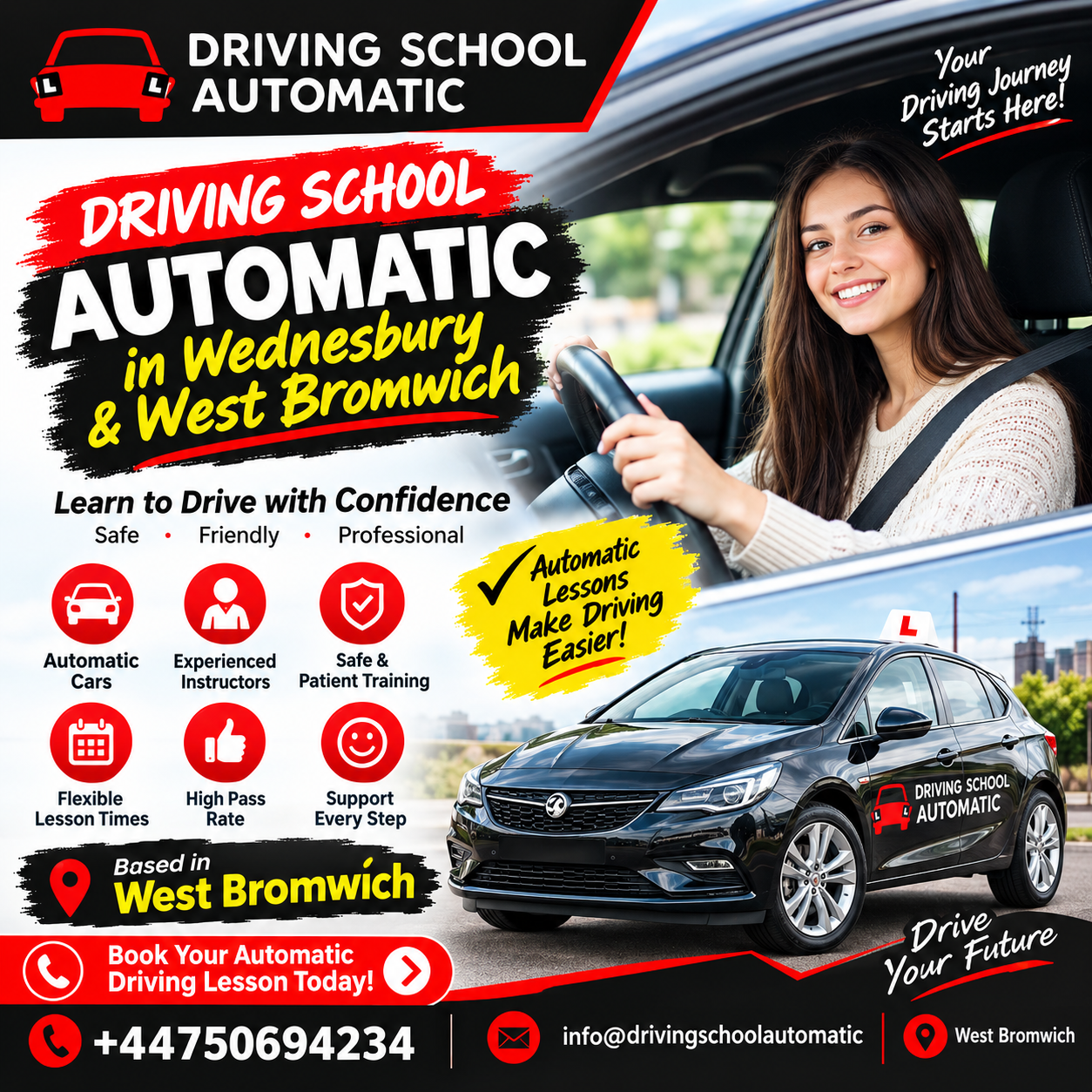
Driving School Automatic is one example of a provider name learners may encounter when researching automatic driving tuition and local lesson options. As with any provider, prospective learners should assess instructor qualifications, availability, teaching methods, and suitability for their individual goals rather than relying on a name alone.
Common Challenges Learners Face and How to Overcome Them
Learning to drive can feel demanding because it requires physical coordination, observation, decision-making, and an understanding of traffic rules at the same time. Recognising common difficulties can help learners approach lessons with realistic expectations.
Managing Driving Anxiety
Nervousness is common among beginners, particularly when approaching junctions, driving near larger vehicles, or entering roundabouts. Rushing through these situations can make mistakes more likely.
The most useful approach is gradual progression. Learners should communicate their concerns to their instructor, practise difficult skills in manageable stages, and avoid comparing their progress with that of other drivers.
Confidence should develop through competence and experience rather than pressure.
Improving Observation Skills
Some learners concentrate too heavily on the road directly ahead and overlook mirrors, blind spots, or developing hazards. This can affect decisions when changing lanes, turning, or moving away from the kerb.
Instructors can help by reinforcing observation routines and explaining why particular checks are necessary. Learners should practise these routines consistently until they become natural habits.
Balancing Lesson Costs and Progress
Driving lessons represent an investment, so learners often want to make each session worthwhile. Booking lessons without practising between them may slow progress, while taking too long between sessions can make previously learned skills less familiar.
A practical solution is to agree on clear learning objectives, review feedback after each session, and schedule lessons regularly where possible. Private practice may also help when it is legal, insured, appropriately supervised, and suitable for the learner's current ability.
Keeping a simple record of completed skills and outstanding challenges can make progress easier to track.
Preparing for the Practical Test
Passing the driving test requires more than memorising routes. Candidates must demonstrate safe, independent driving and respond appropriately to changing road conditions.
Learners should become familiar with the test format, practise independent driving, revise the Highway Code, and work on any weaknesses identified during mock tests. They should also understand the required eyesight checks and be prepared to complete a vehicle safety question.
A realistic assessment with an instructor can help determine whether the learner is ready to book a test.
Building Safe Driving Habits Beyond the Test
Passing the practical driving test is a significant achievement, but it marks the beginning of independent driving rather than the end of learning. Newly qualified drivers continue to develop judgement as they encounter unfamiliar routes, difficult weather, heavy traffic, and unexpected hazards.
Safe drivers maintain appropriate following distances, obey speed limits, avoid distractions, and recognise when conditions require additional caution. They also understand the importance of vehicle maintenance, tyre condition, functioning lights, and clear visibility.
Learners should remember that driving standards are built through repetition. Practising observation, planning, and hazard awareness during lessons helps establish habits that remain useful long after the test.
Conclusion
Choosing suitable driving schools in Oldbury West Midlands involves more than comparing lesson prices or availability. Learners should consider instructor qualifications, teaching quality, lesson flexibility, vehicle type, and opportunities to practise a broad range of road situations.

 English
 Arabic
 French
 Spanish
 Portuguese
 Deutsch
 Turkish
 Dutch
 Russian
 Romaian
 Portuguese (Brazil)
 Greek