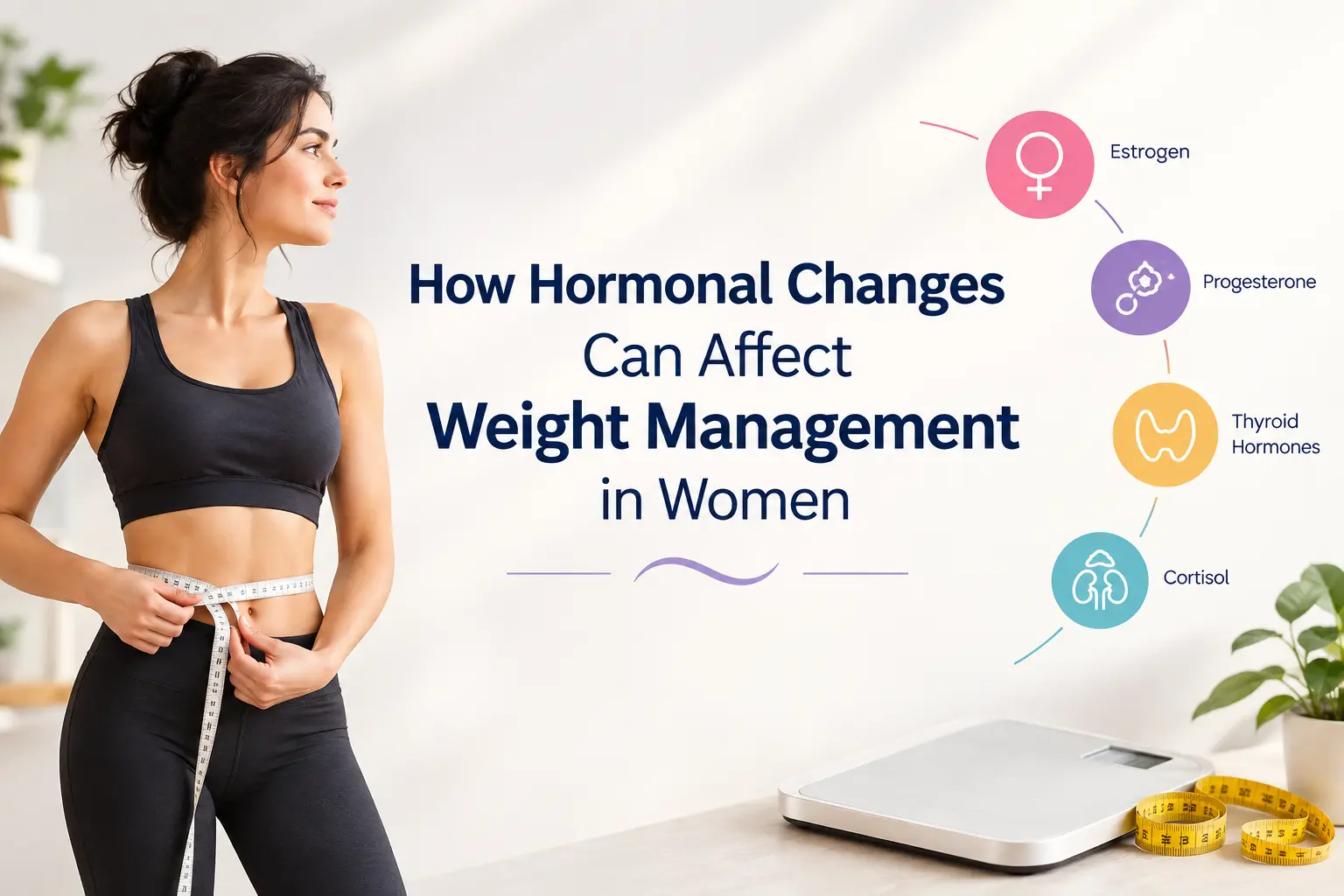
How Hormonal Changes Can Affect Weight Management in Women - biogripnaturals.com
A lot of women come to me saying the same thing. “I eat clean. I walk every day. Nothing’s changed in my routine. So why am I still gaining weight?” Honestly? It’s rarely about willpower. Most of the time, it’s hormones doing their thing quietly in the background, and nobody bothers to explain that part. So let’s actually talk about it. Your hormones run the show more than you think Think of hormones like little messengers running around your body all day. They tell your cells when to store fat, when to burn it, when you’re hungry, when you’re full. When they’re balanced, you barely notice them. When they’re not, suddenly everything feels harder — food doesn’t digest the same, energy crashes by 3pm, and weight creeps up even though your plate looks exactly the same as last year. Women deal with more of these shifts than men do. Periods, pregnancy, postpartum recovery, perimenopause, menopause. Each stage rewires things a little. It’s not fair, but it’s real. The thyroid nobody checks until it’s a problem Here’s one that gets missed constantly — the thyroid. It’s this small gland in your neck, and it basically sets the pace for your metabolism. When it slows down (doctors call this hypothyroidism), your whole body slows with it. You get tired for no reason. Your hands feel cold even in warm weather. Your hair starts thinning a bit. And weight just… shows up, without much explanation. I’ve talked to women who spent months blaming themselves for gaining weight, only to find out later their thyroid numbers were off the whole time. It’s more common than people realize, especially in women. This is actually where something like Thyromet Care from Biogrip comes in — not as some overnight fix, but as gentle support to help the thyroid function the way it’s supposed to, alongside decent sleep and food. Estrogen changes where your body stores fat This one surprises people. Estrogen isn’t just about periods and pregnancy. It actually decides where your body tends to store fat. When estrogen is doing fine, fat tends to sit around hips and thighs. But once estrogen starts dropping — usually in your late 30s onward, and more noticeably in perimenopause — fat starts shifting to the belly instead. So if you’ve noticed your body shape changing even without gaining much actual weight, that’s probably why. It’s not you letting yourself go. It’s just biology doing its thing. Nobody talks about the liver Okay, this part gets skipped in almost every article about hormones and weight. But it matters a lot. Your liver is the organ that clears out extra hormones from your body, especially estrogen. If your liver is sluggish or overloaded, those hormones don’t get processed properly. They just sit there, building up. Some people call this estrogen dominance, and it tends to show up as bloating, stubborn weight, and mood swings that feel random. A tired liver also just makes fat metabolism slower overall. You could be eating perfectly and still not see results because your liver’s working overtime and can’t keep up. This is honestly one of the more overlooked pieces of the puzzle. Supporting liver health — something like BioLivCare from Biogrip — can help the body process hormones the way it’s supposed to, instead of letting them pile up. Stress is not just “in your head” Stress hits your body, not just your mood. When you’re stressed, cortisol goes up. Short term, that’s fine, it’s how your body handles pressure. But if stress becomes your normal — deadlines, family stuff, no real rest — cortisol stays high for too long. And high cortisol tells your body to hang onto fat, especially around the stomach. It also makes you crave sugar and junk food, because your body thinks it needs quick fuel to deal with whatever “threat” it’s sensing. So you end up stressed, eating more, gaining weight, and then stressed about that too. It’s a loop. A frustrating one. PCOS and insulin — the connection people don’t mention enough Insulin’s job is to help your body use sugar for energy. But sometimes cells stop listening to insulin properly. That’s insulin resistance, and it means sugar hangs around in your blood longer, and your body starts storing more of it as fat. This shows up a lot with PCOS, which affects a huge number of women and rarely gets talked about openly. Along with irregular periods, PCOS often brings weight that just won’t move no matter what you try. It’s not something that fixes itself in a week. It takes steady, consistent support over time. Metabolism just slows down with age, period This one’s simple biology, not even really a hormone thing on its own, though hormones make it worse. As you get older, you naturally lose some muscle. Less muscle means your body burns fewer calories just existing. Combine that with hormonal shifts, and it’s no wonder weight management gets tougher in your 40s and beyond than it was in your 20s. Something gentle like Biofresh Green Tea can help support metabolism naturally, thanks to the antioxidants in it. It’s not a replacement for good habits, more like a helpful nudge alongside them. So what actually helps? Honestly, a few things: Get bloodwork done. Don’t guess about your thyroid or hormones, just check. Take care of your liver. It’s doing more work than people give it credit for. Actually deal with stress, even in small ways. A walk, better sleep, ten minutes of quiet. Lift something heavy sometimes. Muscle matters more as you age. Be patient. This didn’t happen overnight and it won’t reverse overnight either. And if you want some natural support alongside all this, Biogrip’s Thyromet Care, BioLivCare, and Biofresh Green Tea are built around exactly these issues — thyroid, liver, and metabolism — the three things that quietly run your weight in the background without you even realizing it. Your body isn’t working against you. It’s just asking for a






 English
 Arabic
 French
 Spanish
 Deutsch
 Turkish
 Dutch
Dutch
 Italiano
 Russian
 Romaian
 Portuguese (Brazil)
 Greek
Greek