


How AI-Driven Worker Safety Monitoring Software Prevents Workplace Risks?
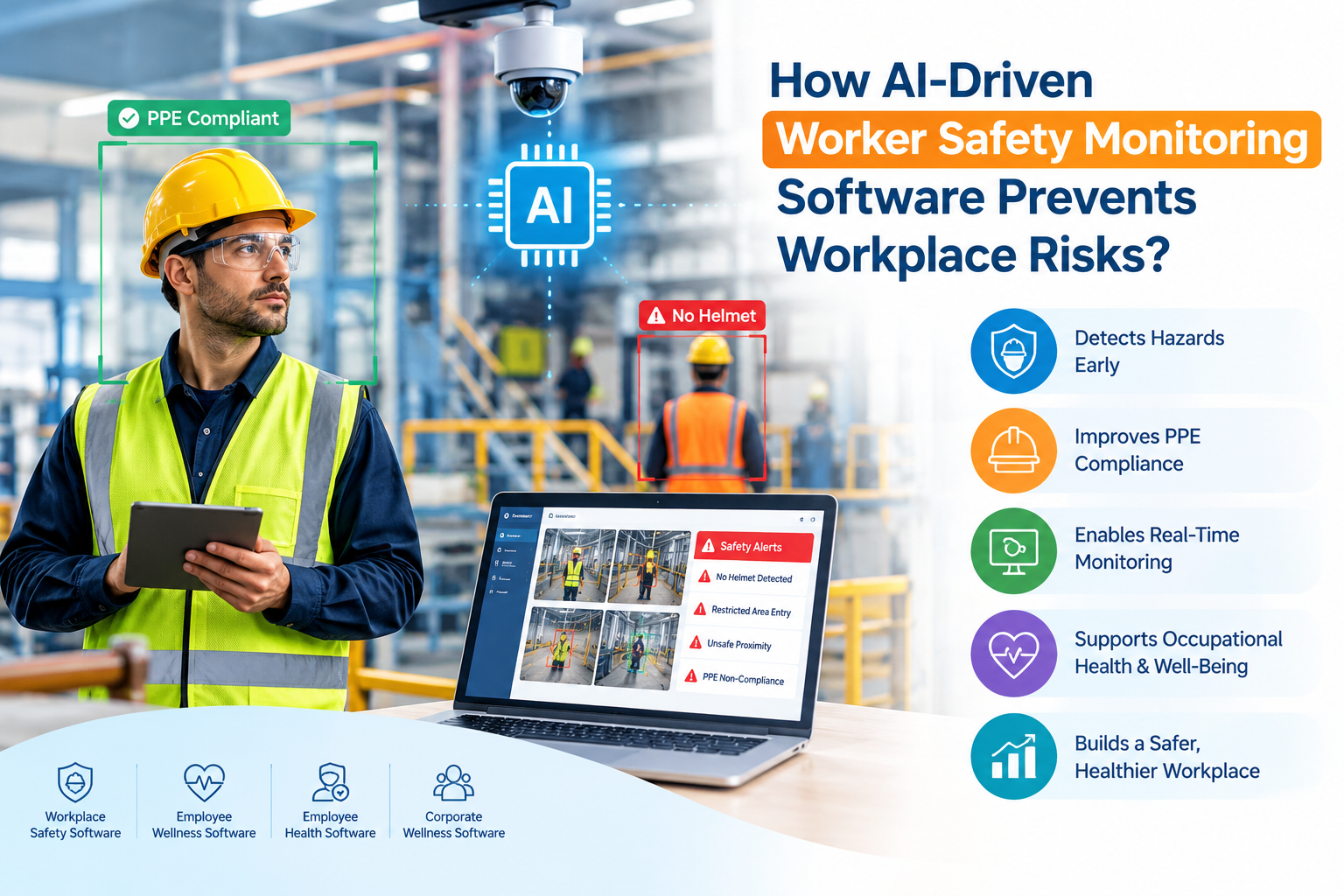
Workplace safety is a major priority for businesses operating in manufacturing, construction, healthcare, logistics, and other high-risk industries. Employees may face hazards such as unsafe machinery, falls, fatigue, improper use of protective equipment, and exposure to dangerous substances. When these risks go unnoticed, they can lead to workplace injuries, operational disruptions, and increased business costs.
Traditional safety inspections and manual reporting remain important, but they may not always identify hazards as they develop. AI-Driven Worker Safety Monitoring Software powered by artificial intelligence helps businesses detect potential dangers earlier, monitor safety conditions, and support faster preventive action. By combining AI technology with effective safety practices, organizations can build a more proactive approach to workforce protection.
What Is AI-Driven Worker Safety Monitoring Software?
AI-driven Worker Safety Monitoring Software uses technologies such as computer vision, sensor data analysis, and intelligent alerts to help identify potential workplace hazards. Depending on its capabilities and configuration, the software can analyze camera feeds, monitor selected safety conditions, and notify authorized personnel when predefined risks are detected.
For example, an AI-enabled system may identify a worker entering a restricted zone, detect missing personal protective equipment, or flag an unsafe interaction with machinery. Safety teams can then investigate the alert and take appropriate action.
Unlike systems that rely entirely on manual reporting, AI-enabled solutions can support continuous monitoring in suitable environments. However, their effectiveness depends on accurate configuration, reliable data, appropriate infrastructure, and human oversight.
1. Detect Workplace Hazards Before Accidents Occur:
Many workplace accidents begin with hazards that could have been identified earlier. Blocked walkways, unsafe work practices, equipment malfunctions, and restricted-area violations can create serious risks when left unaddressed.
AI-powered monitoring systems can help identify certain unsafe conditions as they develop. For instance, a solution configured for industrial environments may recognize when a person enters a hazardous zone or when an activity violates established safety rules.
When a potential issue is detected, the system can send an alert to the relevant safety personnel for review. This gives teams an opportunity to assess the situation and respond before the hazard results in an incident.
By integrating these capabilities into broader Workplace Safety Software, businesses can connect hazard detection with incident reporting, corrective-action tracking, and safety inspections.
2. Improve Personal Protective Equipment Compliance
Personal protective equipment plays an important role in reducing exposure to workplace hazards. Depending on the task, employees may need helmets, safety goggles, protective gloves, high-visibility clothing, or other specialized equipment.
However, manually checking PPE compliance across large facilities can be challenging. AI-based computer vision may help identify visible PPE issues in supported environments, such as a missing safety helmet or high-visibility vest.
When the system flags a possible violation, a supervisor can verify the alert and address the concern through training, reminders, or established safety procedures.
AI monitoring should support rather than replace workplace supervision. Lighting conditions, camera angles, equipment variations, and other environmental factors can affect detection accuracy, so businesses should test systems carefully before relying on them.
3. Strengthen Real-Time Safety Monitoring
Workplace conditions can change rapidly, particularly in factories, warehouses, construction sites, and industrial facilities. A previously safe area may become hazardous because of moving equipment, temporary obstructions, or changes in work activity.
AI-driven monitoring can help safety teams maintain better visibility into selected workplace conditions. Configured alerts may highlight unsafe proximity to machinery, entry into restricted zones, or other predefined events requiring attention.
When combined with Worker Safety Monitoring Software, incident management workflows, and clear escalation procedures, these alerts can help teams prioritize risks and coordinate their responses.
Businesses should define who receives alerts, how quickly they should respond, and how each incident will be documented. A monitoring system delivers greater value when its alerts lead to clear and accountable safety actions.
4. Support Occupational Health and Employee Well-Being
Workplace risks involve more than immediate physical accidents. Repetitive movements, excessive physical demands, fatigue, environmental exposure, and prolonged workplace stress can also affect employee health.
Occupational Health Services help organizations identify work-related health concerns through appropriate assessments, preventive programs, health surveillance, and employee support. AI-based safety monitoring may complement these services by helping identify relevant workplace patterns that warrant further investigation.
For example, recurring safety events in a particular work area may encourage an organization to review staffing levels, work procedures, equipment design, or employee training.
Employee Health Software can help manage health examination schedules and relevant occupational health records, while Employee Wellness Software can support preventive health campaigns and wellness activities. These systems address different aspects of workforce health and can complement workplace safety programs when integrated appropriately.
5. Use Safety Data to Improve Risk Prevention
One of the major advantages of digital safety systems is their ability to organize information from multiple workplace activities. Incident reports, hazard observations, inspection findings, and monitoring alerts can help organizations identify recurring problems.
For example, if repeated alerts occur around a particular machine or work area, safety managers can investigate the underlying causes. They may discover that additional barriers, improved signage, updated training, or changes to operating procedures are needed.
Analyzing these patterns helps businesses move from responding to individual incidents toward addressing the conditions that contribute to risk.
AI-generated insights should be treated as decision-support information rather than unquestionable conclusions. Safety professionals need to validate findings, consider the workplace context, and determine the most appropriate corrective actions.
Conclusion
AI-driven Worker Safety Monitoring Software can help businesses identify potential hazards, improve PPE oversight, support timely interventions, and recognize recurring workplace safety issues. When integrated with Workplace Safety Software and effective safety procedures, it can strengthen preventive risk management and improve visibility into workplace conditions.
Combining AI-enabled monitoring with Occupational Health Services, Employee Health Software, Employee Wellness Software, and Corporate Wellness Software can further support a broader approach to workforce protection.
Ultimately, technology alone cannot eliminate workplace risks. The strongest results come from combining reliable digital tools with trained safety professionals, employee participation, regular risk assessments, and a commitment to continuous improvement.

 English
 Arabic
 French
 Spanish
 Portuguese
 Deutsch
 Turkish
 Dutch
 Italiano
 Russian
 Romaian
 Portuguese (Brazil)